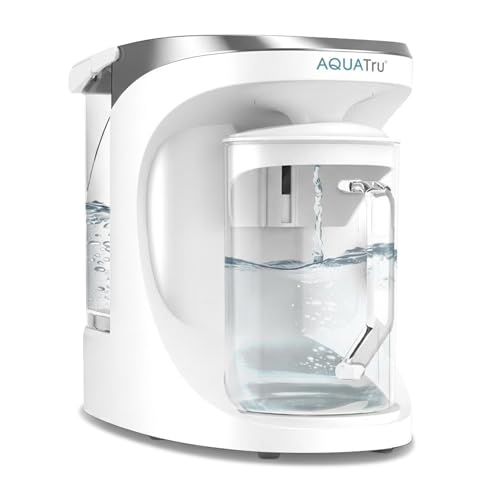
The best water filter for lead for most homes is the AquaTru Carafe: countertop reverse osmosis certified by IAPMO R&T to NSF/ANSI 58 for lead, plus fluoride, arsenic, nitrate, and PFOA/PFOS, with no plumbing. If lead is your only concern, the Brita Elite pitcher is certified for it for far less.
The catch: It needs an outlet and counter space, and makes half a gallon at a time.
Health information, not medical advice. Guidance differs for infants, pregnancy, and existing conditions. Test your own water and speak to a doctor or your local health authority. We may earn a commission when you buy through our links; it never affects our scores.
The short answer
A water filter for lead should be certified for lead reduction under NSF/ANSI 53 (carbon filters) or NSF/ANSI 58 (reverse osmosis) by NSF International, IAPMO R&T, or WQA. Every pick below is. The EPA’s health-based goal for lead in drinking water is zero, and lead usually enters water from service lines, solder, and fixtures on the way to your tap, so filtering at the tap is where certification matters. See our lead guide.
- Best overall: AquaTru Carafe, lead plus fluoride and PFOA/PFOS, no plumbing.
- Best under the sink: Aquasana Claryum Max Flow (no wastewater) or Waterdrop G3P800 (reverse osmosis).
- Cheapest certified for lead: Brita Elite, certified by all three certifiers in most Brita pitchers.
How Do the Certified Lead Filters Compare?
Eight filters certified for lead, ranked by overall score. Every one is certified for lead; the table shows what else each covers. How we score
| # | Filter | Score | Certified by | Lead | PFAS | Fluoride | Running cost | Price |
|---|---|---|---|---|---|---|---|---|
| 01 | AquaTru CarafeBest overallCountertop RO | 4.6 | IAPMO R&T | Certified | Certified | Certified | $0.33/gal | See priceon Amazon › |
| 02 | Aquasana Claryum Max FlowBest under-sink, no wastewaterUnder-sink carbon | 4.3 | WQA | Certified | Certified | No | $0.11/gal | $449.99on Amazon › |
| 03 | Waterdrop G3P800Best under-sink ROUnder-sink RO | 4.3 | IAPMO R&T | Certified | Certified | Certified | About $160/yr | $759.00on Amazon › |
| 04 | Aquasana Clean Water MachineBest countertop, no wastewaterCountertop carbon | 4.3 | WQA | Certified | Certified | No | $0.12/gal | $199.99on Amazon › |
| 05 | APEC RO-90Best budget under-sink ROUnder-sink RO | 4.2 | WQA | Certified | No | Certified | $60 to $75/yr | $209.99on Amazon › |
| 06 | Culligan ZeroWaterBest pitcher, adds fluoridePitcher | 4.2 | IAPMO R&T | Certified | Certified | Certified | $0.68 to $0.93/gal | See priceat Culligan › |
| 07 | Brita EliteCheapest certified for leadPitcher | 4.1 | IAPMO, WQA, NSF | Certified | Claim | No | $0.14/gal | $47.99on Amazon › |
| 08 | PUR PLUS PitcherBest pitcher, adds Total PFASPitcher | 4.0 | IAPMO, WQA, NSF | Certified | Certified | No | About $0.25/gal | $28.12on Amazon › |
Certified: Certified by an independent body (named in each pick). Lab test: Tested by a named independent lab, not certified. Claim: The maker's claim, not certified. No: No claim. PFAS means PFOA/PFOS, or Total PFAS where the pick says so.
Our Eight Picks in Detail
What each filter is certified for, who certifies it, and who it suits.
AquaTru Carafe
One of the broadest certified claim lists we've seen, including fluoride and arsenic, with no plumbing. It needs an outlet and makes half a gallon at a time, and its filters work out to about $0.33 a gallon at AquaTru's prices.
Aquasana Claryum Max Flow
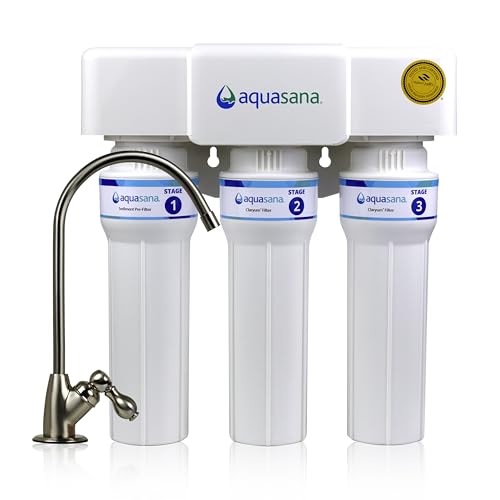
Certified lead and PFOA/PFOS reduction without reverse osmosis: it keeps minerals, wastes no water and pours 0.72 gallons a minute. Filters are about $0.11 a gallon. It doesn't reduce fluoride.
Waterdrop G3P800
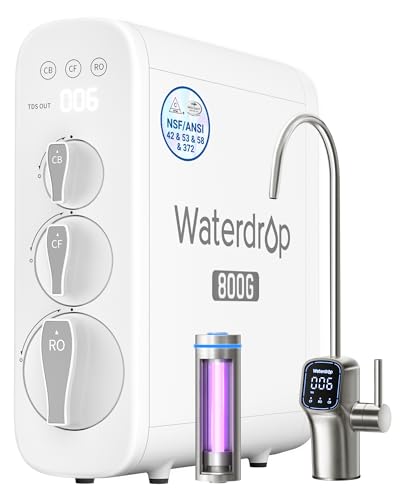
Tankless reverse osmosis with certified lead, fluoride and PFOA/PFOS reduction from its own faucet. It needs a power outlet under the sink, and filters cost about $160 a year.
Aquasana Clean Water Machine
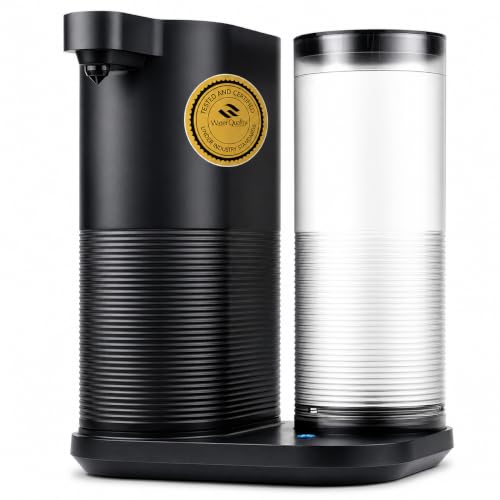
Certified for lead, PFOA/PFOS and microplastics with no wastewater, and Aquasana says it fills an 8-ounce glass in about 8 seconds. It doesn't reduce fluoride or dissolved solids, which takes reverse osmosis. Filters run about $0.12 a gallon in a 2-pack.

APEC RO-90
One of the broadest certified claim lists in under-sink RO, including lead, fluoride and arsenic V, and filters cost about $60 to $75 a year. No PFAS claim and no mineral stage.
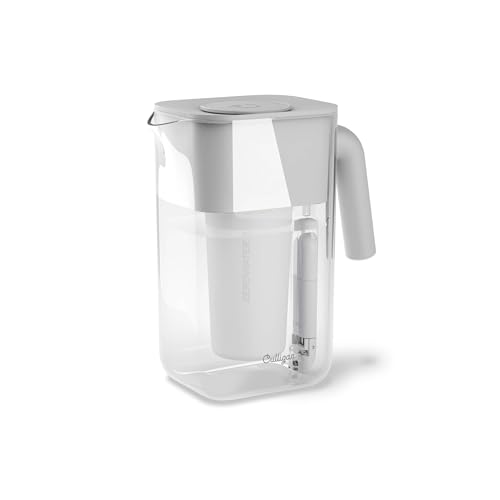
Culligan ZeroWater
One of few pitchers with certified fluoride reduction, plus Total PFAS. Filters cost $0.68 to $0.93 a gallon and run out faster on hard water.
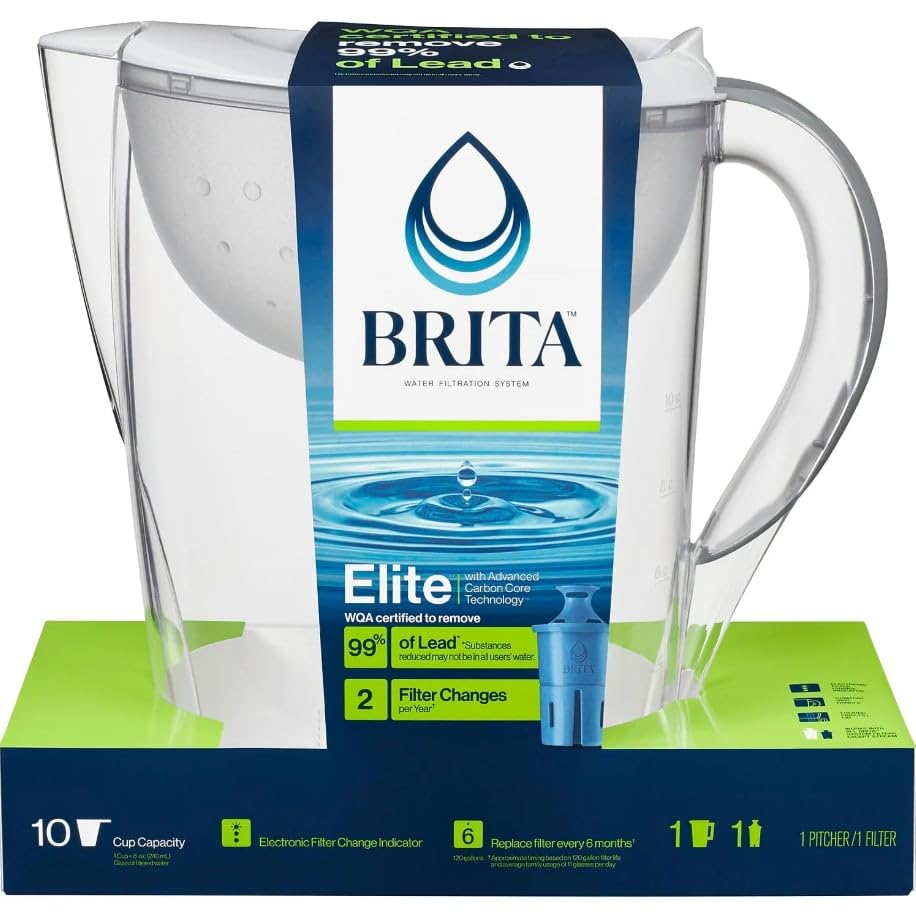
Brita Elite
Certified lead reduction in most Brita pitchers and a 120-gallon filter, at about $0.14 a gallon. No fluoride, TDS or certified PFAS claim.

PUR PLUS Pitcher
Certified lead and Total PFAS reduction for about $0.25 a gallon with a 3-pack of filters. You change it every 40 gallons, and owners say it slows as it fills.
Which Popular Filters Aren’t Certified for Lead?
- Standard Brita filter. Certified for chlorine taste and odor only. Only the Elite filter is certified for lead. Our Brita Elite review.
- Clearly Filtered. Its lead figures come from lab testing; only its chlorine claim is certified. AquaTru vs Clearly Filtered.
- APEC ROES-50. Certified by WQA for dissolved solids only; APEC’s own RO-90 is certified for lead. iSpring vs APEC ROES-50.
- Plain iSpring RCC7AK. Certified for TDS only; the RCC7AK-BN and -BLK are certified for lead. Our iSpring review.
Others We Considered
- AquaTru Classic. The same certified lead reduction as the Carafe, with a bigger tank. Our Classic review.
- Waterdrop ED01. A gravity dispenser certified by IAPMO R&T for lead, no power or plumbing. Our gravity filter guide.
- iSpring RCC7AK-BN. Under-sink RO certified by NSF International for lead and fluoride, with an alkaline stage. Our iSpring review.
- ZeroWater 10-Cup. Certified by IAPMO R&T for lead, but its filters are rated for 15 gallons. Our ZeroWater review.
How to Choose a Water Filter for Lead
Check the listing, not the box
Look up the exact model on NSF International, IAPMO R&T, or WQA and check that lead appears in its reduction claims. “Tested for lead” or “meets NSF standards” isn’t the same as certified. See our guide to NSF certification.
Pitcher or reverse osmosis
A certified pitcher handles lead for the least money. Reverse osmosis also covers fluoride, arsenic, and nitrate, and lasts longer between filter changes.
Filter at the tap
Lead usually comes from pipes and fixtures near the tap, so a point-of-use filter where you drink and cook is the right place. The whole-house filters on sale that we’ve checked aren’t certified for lead.
Change filters on time
A certification applies up to the rated capacity in gallons. Past that, the lead claim no longer holds.
Common questions
What is the best water filter for lead?
The AquaTru Carafe for most homes: certified by IAPMO R&T for lead under NSF/ANSI 58, plus fluoride and PFOA/PFOS, with no plumbing. For lead alone on a budget, the Brita Elite is certified for it by IAPMO R&T, WQA, and NSF International.
Do Brita filters remove lead?
The Brita Elite filter does, certified in most Brita pitchers. The standard Brita filter isn’t certified for lead. See what a Brita filters out.
Does reverse osmosis remove lead?
Yes, when the system is certified for it. The AquaTru Carafe, Waterdrop G3P800, APEC RO-90, and iSpring RCC7AK-BN are certified for lead under NSF/ANSI 58. Not every RO system is: the APEC ROES-50 is certified for dissolved solids only. See our reverse osmosis guide.
Do I need a whole-house filter for lead?
Usually not. Lead tends to enter water from service lines and fixtures near the tap, and the whole-house filters on sale that we’ve checked aren’t certified for lead. A certified filter where you drink and cook is the practical fix.
Is IAPMO R&T or WQA certification as good as NSF?
Yes. All three certify to the same NSF/ANSI standards. The certifier’s name matters less than whether lead is on the listing for your exact model.
How often should I change a lead filter?
At its certified capacity: 40 gallons for the PUR PLUS, 120 for the Brita Elite, 300 to 600 for the AquaTru Carafe. Past the rated capacity, the lead certification no longer applies.
Sources
Prices as of October 19, 2026. Product prices and availability are accurate as of the date/time indicated and are subject to change. As an Amazon Associate we earn from qualifying purchases.