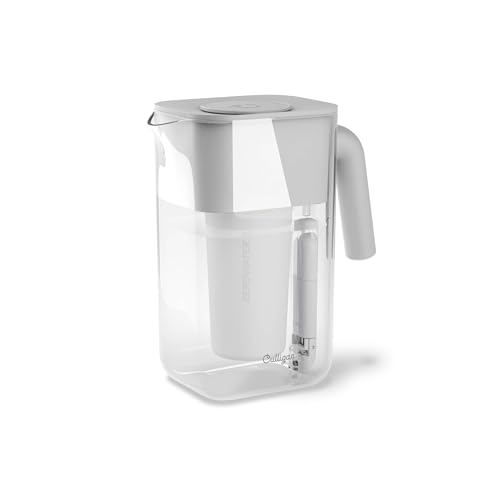
Certified by IAPMO R&T to NSF/ANSI 53 for fluoride and seven PFAS compounds, plus lead, chromium-6, mercury, copper, cadmium and nitrate.
The catch: Each filter is certified for 20 gallons, and fewer on hard water.
Health information, not medical advice. Guidance differs for infants, pregnancy and existing conditions. Test your own water and speak to a doctor or your local health authority. We may earn a commission when you buy through our links; it never affects our scores.
Our verdict
Culligan’s redesigned ZeroWater pitcher uses a new top-loading filter with a much broader set of certified claims than the original ZeroWater. Fluoride and total PFAS are the headline: both are certified by IAPMO R&T to NSF/ANSI 53 at 99.7%, and few pitchers hold a certified fluoride claim at all. It’s also certified under NSF/ANSI 401 for 13 other compounds, including pharmaceuticals, herbicides and BPA.
The trade-off is filter life. Each filter is certified for 20 gallons, and Culligan’s own guidance puts real life anywhere from 40-plus gallons on very soft water to 8 gallons or fewer above 400 ppm TDS. At Culligan’s pack prices that works out to roughly $0.68 to $0.93 a gallon at the certified capacity. Like any ion-exchange filter, it also strips minerals, so the water tastes flat.
You want certified fluoride or broad PFAS reduction without installing anything, and your water isn’t very hard.
Your water is high in dissolved solids, or running cost matters more than the breadth of certified claims.
How it scored
Contaminant reduction carries the most weight in the overall score. How we score filters
What it removes
Every figure below is a certified claim from Culligan’s performance data sheet and IAPMO R&T certificates, unless marked otherwise.
| Contaminant | Reduction | Certified to |
|---|---|---|
| Fluoride | 99.7% | NSF/ANSI 53 |
| Total PFAS7 compounds, incl. PFOA and PFOS | 99.7% | NSF/ANSI 53 |
| Lead | 98.9% / 98.8% | NSF/ANSI 53 |
| Chromium-6 | 99.4% / 99.5% | NSF/ANSI 53 |
| Copper | 99.6% | NSF/ANSI 53 |
| Cadmium | 96.8% | NSF/ANSI 53 |
| Mercury | 96.6% / 94.2% | NSF/ANSI 53 |
| Nitrate / nitrite | 99.1% / 90.2% | NSF/ANSI 53 |
| Chlorine | 99.4% | NSF/ANSI 42 |
| Zinc | 99.9% | NSF/ANSI 42 |
| Pharmaceuticals, herbicides and BPA13 compounds | 96.1–99.4% | NSF/ANSI 401 |
| Total dissolved solids | 99.9% Brand claim | Not certified |
| Arsenic, microplastics | – | No claim |
Where two figures appear, they are results at pH 6.5 and pH 8.5. The nitrate and nitrite claim appears on the NSF/ANSI 53 certificate revised in June 2026, at a 30 ppm challenge level. The filter also carries NSF/ANSI 372, which covers lead-free materials rather than contaminant reduction, and Canada’s CSA B483.1. IAPMO R&T files W-17154 (NSF/ANSI 42), W-17155 (NSF/ANSI 53), W-17156 (NSF/ANSI 401), W-17157 (NSF/ANSI/CAN 372) and W-17175 (CSA B483.1), issued to Culligan International (ZeroWater), were all active on 7 October 2026. W-17155 lists the pitchers and dispensers with the ZEROF filter at 20 gallons (40 for the 52-cup dispenser).
Pros and cons
Strengths
- Certified for fluoride and total PFAS, rare in a pitcher
- Certified claims under NSF/ANSI 42, 53 and 401
- Built-in meter with a set replacement point
- No install; pitchers from 7 to 12 cups and dispensers up to 40 cups
What to know
- 20-gallon certified capacity per filter
- Filters run out much faster on hard water
- Strips minerals, so the water tastes flat
- Older ZeroWater filters don’t fit; 90-day warranty
What owners say
Owners like seeing a 000 reading and the broader certified claims. The most common complaints are slow filtering and how quickly filters run out on hard water.
Often praised
- A 000 reading on the meter from typical tap water
- Certified claims other pitchers don’t have
- The redesigned lid, spout and handle
Common complaints
- Slow gravity filtering
- Filters running out quickly on high-TDS water
- Flat taste, and a sour note if a filter is overdue
Recurring themes across verified buyer reviews.
Specifications
- Filter
- Ion exchange, top-loading
- Placement
- Countertop or fridge
- Certifier
- IAPMO R&T
- Standards
- NSF/ANSI 42, 53, 401
- Certified capacity
- 20 gallons
- Replace at
- Meter reading of 6 or more
- Sizes
- 7, 10, 12 cups; 22, 32, 40-cup dispensers
- Warranty
- 90 days; filter 30 days
Alternatives worth considering
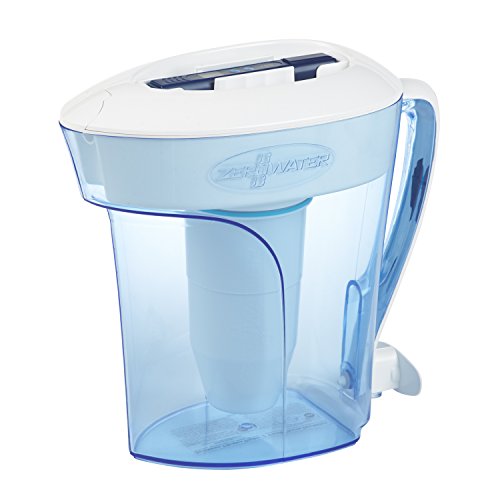
ZeroWater 10-Cup
Brita Elite
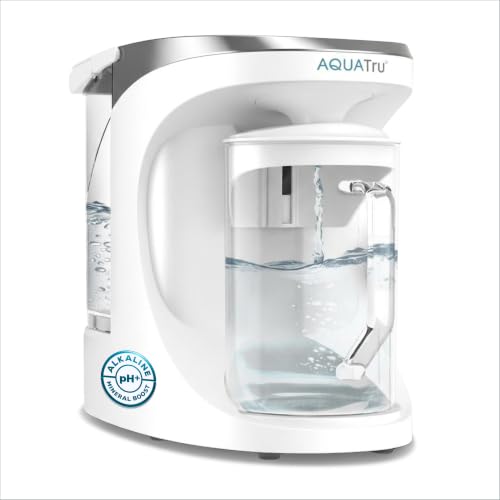
AquaTru Carafe
Common questions
Is Culligan ZeroWater NSF certified?
It’s certified to NSF/ANSI standards 42, 53 and 401 by IAPMO R&T, not by NSF International. Both are accredited to certify to the same standards, so search IAPMO’s listings rather than NSF’s.
Is this the same as the original ZeroWater pitcher?
No. It uses a new top-loading filter with a broader certified claim set, including fluoride, total PFAS, nitrate and pharmaceuticals. Filters from the original ZeroWater don’t fit.
Does it really remove PFAS?
Yes. It’s certified to NSF/ANSI 53 for 99.7% reduction of total PFAS across seven named compounds, including PFOA and PFOS. See our PFAS guide.
How long does a filter last?
It’s certified for 20 gallons. Culligan’s own guidance ranges from 40-plus gallons on very soft water to 8 or fewer above 400 ppm TDS. Replace it when the meter reads 6 or more.
Does it remove fluoride?
Yes, by 99.7%, certified to NSF/ANSI 53. Most pitchers carry no fluoride claim. See our fluoride guide.
The bottom line
Buy the Culligan ZeroWater if you want certified fluoride or broad PFAS reduction from a pitcher and your water isn’t very hard. If running cost matters more, the Brita Elite is far cheaper to run. For the broadest removal without plumbing, step up to the AquaTru Carafe. See how they all compare in our best water filter pitchers guide.
- Certifier listings: IAPMO R&T files W-17154 (NSF/ANSI 42), W-17155 (NSF/ANSI 53), W-17156 (NSF/ANSI 401), W-17157 (NSF/ANSI/CAN 372) and W-17175 (CSA B483.1), Culligan International (ZeroWater), all active. W-17155: fluoride, Total PFAS, lead, hexavalent chromium, nitrate/nitrite, cadmium, copper and mercury, 20 gallons.
- Also searched: NSF International (Culligan, ZeroWater): no listings. WQA (Culligan): listings cover Culligan's reverse osmosis, whole-home and faucet filters, not the ZeroWater pitcher.
- Maker documents: Culligan's ZeroWater Technology performance data sheet (June 2026), IAPMO R&T certificates and support pages.
- Independent lab tests: None used.
Sources
Prices as of November 1, 2026. Product prices and availability are accurate as of the date/time indicated and are subject to change. As an Amazon Associate we earn from qualifying purchases.