Health information, not medical advice. Guidance differs for infants, pregnancy and existing conditions. Test your own water and speak to a doctor or your local health authority. We may earn a commission when you buy through our links; it never affects our scores.
The short answer
PFAS in water are common: these long-lasting man-made chemicals turn up in many US water supplies. To remove PFAS from drinking water at home, use a filter certified for PFAS by NSF International, IAPMO R&T, or WQA, usually under NSF/ANSI 53 or 58. Certified reverse osmosis and certified carbon filters both work. Boiling doesn’t remove PFAS.
Check your water first: your utility’s annual water quality report, or a certified lab test for a private well. Then pick a filter certified for the PFAS you need reduced. Our top picks are in the best water filters for PFAS.
What Are PFAS (Forever Chemicals)?
PFAS (per- and polyfluoroalkyl substances) are a large family of synthetic chemicals used since the 1940s in non-stick cookware, waterproof fabrics, food packaging, and firefighting foam. They’re often called “forever chemicals” because their carbon-fluorine bonds break down extremely slowly, in the environment and in the body.
The two most studied are PFOA and PFOS. Others found in drinking water include PFHxS, PFNA, PFBS, and HFPO-DA (often called GenX). PFAS reach water from manufacturing sites, airports and military bases that used firefighting foam, landfills, and wastewater.
The health concerns
The EPA says exposure to certain PFAS may be linked to harmful health effects, including some cancers (prostate, kidney, and testicular), a weaker immune response, higher cholesterol, reduced fertility, high blood pressure in pregnancy, and developmental effects in children, such as low birth weight. The EPA set its PFOA and PFOS limits at 4 parts per trillion, the lowest level it considers reliably measurable, with a health goal of zero.
If you’re pregnant, feeding an infant formula, or concerned about your exposure, talk to your doctor and check your water rather than relying on general guidance.
Where the rules stand in 2026
In April 2024 the EPA set the first national drinking water limits for PFAS. On 20 May 2026 it proposed changes. As of October 2026, the proposals hadn’t been finalized.
| PFAS | 2024 rule | 2026 proposal |
|---|---|---|
| PFOA | 4 ppt | Keep 4 ppt |
| PFOS | 4 ppt | Keep 4 ppt |
| PFHxS | 10 ppt | Rescind |
| PFNA | 10 ppt | Rescind |
| HFPO-DA (GenX) | 10 ppt | Rescind |
| Mixtures (PFHxS, PFNA, HFPO-DA, PFBS) | Hazard index of 1 | Rescind |
| Compliance deadline | 26 April 2029 | 26 April 2031, for systems that apply |
Under the proposal, water systems at or above 12 ppt of PFOA or PFOS would need interim measures between 2029 and 2031. The EPA held a public hearing on 7 July 2026 and took comments until 20 July 2026. Many states set their own PFAS limits, some stricter than the federal rule.
How to check your water for PFAS
City water
Read your utility’s annual water quality report (Consumer Confidence Report). Many utilities also tested for 29 PFAS under the EPA’s UCMR 5 program, and the EPA publishes those results. Anywhere in the US, our water quality checker looks up your utility’s PFAS results by address or ZIP code.
Private well
Nobody tests a private well for you. Use a state-certified lab that tests for PFAS with EPA Method 533 or 537.1, and ask for PFOA and PFOS at least.
Test at home with a mail-in kit
You can test for PFAS without finding a lab yourself. A mail-in kit includes sample bottles and prepaid shipping: you fill them at your tap and send them to the maker’s lab, which reports the results in about a week. No instant test strip can measure PFAS at the parts-per-trillion levels that matter, so skip strip kits for this.

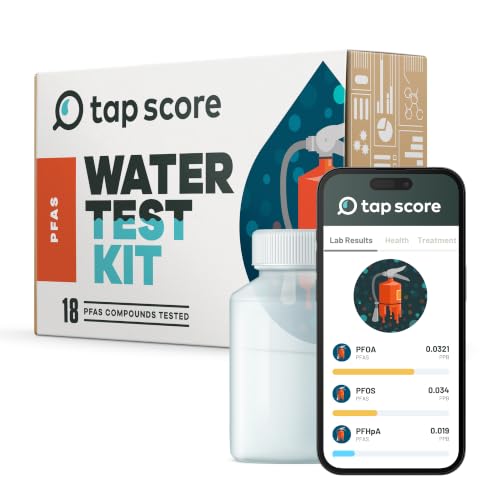
Lab accreditation and methods are as the makers state them. Either kit covers PFOA and PFOS, the two PFAS the EPA limits at 4 ppt. The empowerDX kit measures more compounds for less money; the Tap Score kit names its EPA method.
The certifications that matter
A PFAS claim on a box means little unless a certifier lists the exact model. Look the filter up on NSF International’s, IAPMO R&T’s, or WQA’s public listing and check the contaminant.
| Claim | What it covers | Standard |
|---|---|---|
| PFOA/PFOS | PFOA and PFOS combined | NSF/ANSI 53 or 58 (formerly Protocol P473) |
| Total PFAS | A longer list of PFAS compounds | NSF/ANSI 53 |
| Named PFAS | Specific compounds such as PFNA or PFHxS | NSF/ANSI 53 |
| Chlorine, taste, and odor | Not PFAS | NSF/ANSI 42 |
A certification covers the filter only up to its rated capacity. “Tested to NSF standards” or a lab result isn’t the same as certification; we give lab results half credit and maker claims none.
Which filters remove PFAS
| Technology | PFAS | Also reduces | Trade-off |
|---|---|---|---|
| Reverse osmosis | Effective when certified | Lead, fluoride, arsenic, dissolved solids | Wastewater; strips minerals |
| Carbon block | Effective when certified | Chlorine, lead, VOCs | Capacity limits; check the listing |
| Ion exchange | Effective in some certified pitchers | Lead, dissolved solids | Short filter life |
| Uncertified pitcher or fridge filter | Unknown | Chlorine taste | No PFAS claim to rely on |
| Boiling | No | – | Can concentrate PFAS |
Filters we recommend for PFAS
Every filter below is certified for PFAS. See all eight, with details, in the best water filters for PFAS.
| # | Filter | Score | Certified by | Lead | PFAS | Fluoride | Running cost | Price |
|---|---|---|---|---|---|---|---|---|
| 01 | AquaTru CarafeBest overallCountertop RO | 4.6 | IAPMO R&T | Certified | Certified | Certified | $0.33/gal | See priceon Amazon › |
| 02 | Aquasana Claryum Max FlowBest under-sink, no wastewaterUnder-sink carbon | 4.3 | WQA | Certified | Certified | No | $0.11/gal | $449.99on Amazon › |
| 03 | Waterdrop G3P800Best under-sink ROUnder-sink RO | 4.3 | IAPMO R&T | Certified | Certified | Certified | About $160/yr | $759.00on Amazon › |
| 04 | Culligan ZeroWaterBest pitcher, Total PFASPitcher | 4.2 | IAPMO R&T | Certified | Certified | Certified | $0.68 to $0.93/gal | See priceat Culligan › |
| 05 | PUR PLUS PitcherBest budget, Total PFASPitcher | 4.0 | IAPMO, WQA, NSF | Certified | Certified | No | About $0.25/gal | $28.12on Amazon › |
| 06 | Aquasana HealthShieldBest whole houseWhole house | 3.1 | WQA | No | Certified | No | About $875/yr | See priceat Aquasana › |
Certified: Certified by an independent body (named in each pick). Lab test: Tested by a named independent lab, not certified. Claim: The maker's claim, not certified. No: No claim. PFAS means PFOA/PFOS, or Total PFAS where the pick says so.
Common questions
Why are PFAS called forever chemicals?
Because once they’re released, they effectively never go away. PFAS are built on carbon-fluorine bonds, among the strongest in chemistry, so nature can’t break them down: they stay in soil and water for generations and build up in people and animals. Some, like PFOA and PFOS, can stay in the human body for years.
How do I remove PFAS from my drinking water?
Use a filter certified for PFAS under NSF/ANSI 53 or 58 by NSF International, IAPMO R&T, or WQA, and replace it on schedule. Certified reverse osmosis and certified carbon filters both work. See our PFAS filter picks.
Does boiling water remove PFAS?
No. Boiling doesn’t break down PFAS, and as water evaporates it can concentrate them.
Do Brita filters remove PFAS?
Not with a certified claim. Brita says its Elite filter reduces PFOA and PFOS, but none of NSF International, IAPMO R&T, or WQA lists that claim. See our Brita Elite review.
Does reverse osmosis remove PFAS?
Reverse osmosis is effective at reducing PFAS, but certification varies by model. The AquaTru Carafe and Waterdrop G3P800 are certified for PFOA/PFOS; some RO systems have no PFAS claim.
What’s the difference between PFOA/PFOS and Total PFAS?
A PFOA/PFOS claim covers those two compounds. A Total PFAS claim under NSF/ANSI 53 covers a longer list. If your water report shows other PFAS, look for Total PFAS or a listing that names them.
Are PFAS still regulated in 2026?
Yes. The 2024 limits of 4 ppt for PFOA and PFOS stand. In May 2026 the EPA proposed keeping them, moving the deadline to 2031 and dropping the limits for four other PFAS. As of October 2026 those changes weren’t final.
Can I test for PFAS at home?
Yes, with a mail-in lab kit such as the empowerDX PFAS Water Test or Tap Score PFAS Test. You collect the sample and a lab analyzes it. Instant test strips can’t measure PFAS.
I’m on a private well. Am I at risk?
Wells near airports, military bases, landfills, or factories are more likely to have PFAS. The only way to know is a lab test; see our well water guide.
Sources
- EPA: Per- and Polyfluoroalkyl Substances (PFAS) National Primary Drinking Water Regulation
- Federal Register, 20 May 2026: Rescission of regulatory determinations for four PFAS (PFHxS, PFNA, HFPO-DA, and the mixture with PFBS)
- IAPMO R&T product listing directory
- WQA certified product listings
- NSF International drinking water treatment listings
Prices as of October 19, 2026. Product prices and availability are accurate as of the date/time indicated and are subject to change. As an Amazon Associate we earn from qualifying purchases.