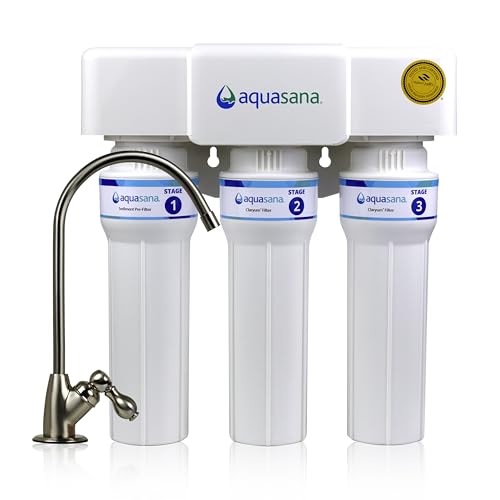
WQA certifies the Claryum Max Flow for lead, PFOA/PFOS, mercury, chloramine and microplastics. It keeps minerals, sends nothing down the drain and pours 0.72 gallons a minute from its own faucet.
The catch: It doesn’t reduce fluoride, arsenic, nitrate or dissolved solids. For those you need reverse osmosis.
Health information, not medical advice. Guidance differs for infants, pregnancy and existing conditions. Test your own water and speak to a doctor or your local health authority. We may earn a commission when you buy through our links; it never affects our scores.
Our verdict
The Claryum 3-Stage Max Flow (AQ-6300M) is Aquasana’s under-sink carbon filter, the current version of the AQ-5300+ we reviewed before. It’s three cartridges and a dedicated faucet, with no tank, no drain connection and no membrane, so it filters at the tap at 0.72 gallons a minute and wastes no water.
WQA certifies it to NSF/ANSI 53 for lead, PFOA/PFOS, mercury, asbestos, cysts, MTBE and VOCs, to NSF/ANSI 42 for chlorine and chloramine, and to NSF/ANSI 401 for microplastics and 15 pharmaceuticals and chemicals. Aquasana’s data sheet puts lead at 99.6% or more and PFOA/PFOS at 99.7%. Because it isn’t reverse osmosis, it leaves calcium and magnesium in the water. Our NSF certification guide explains how to check a certifier’s listing yourself.
It’s also cheap to run. The filter set is certified for 800 gallons and costs $91.99 at Aquasana, about $0.11 a gallon. Aquasana says to change it every 6 months or 800 gallons, whichever comes first. What it can’t do is reduce fluoride, arsenic, nitrate or dissolved solids. Those need a reverse osmosis system such as the Aquasana SmartFlow.
You’re on city water and want certified lead and PFOA/PFOS reduction at the tap, with fast flow, minerals kept and no wastewater.
You need fluoride, arsenic or nitrate reduced. Choose reverse osmosis such as the SmartFlow or the APEC RO-90.
How it scored
Contaminant reduction carries the most weight in the overall score. How we score filters
What it removes
Figures are from Aquasana’s AQ-6300M performance data sheet. The certified-to column shows the standard each claim falls under.
| Contaminant | Reduction | Certified to |
|---|---|---|
| Lead | >99.7% / 99.6% | NSF/ANSI 53 |
| PFOA and PFOS | 99.7% | NSF/ANSI 53 |
| Mercury | >96.2% / 95.4% | NSF/ANSI 53 |
| Asbestos, cysts | >99% / 99.995% | NSF/ANSI 53 |
| VOCs, MTBE | 99.3% / 85.5% | NSF/ANSI 53 |
| Chlorine, chloramine | 97.3% / 91% | NSF/ANSI 42 |
| Microplastics | 99.6% | NSF/ANSI 401 |
| Pharmaceuticals and chemicals15 compounds, incl. BPA and ibuprofen | Certified | NSF/ANSI 401 |
| Fluoride, arsenic, nitrate, TDS | – | No claim |
Lead and mercury figures are at pH 6.5 and 8.5. WQA’s NSF/ANSI 53 listing for Aquasana, seen on 7 October 2026, lists the AQ-6300M and the older AQ-5300+ with the same AQ-C3M-R filter at 800 gallons and 0.72 gpm. Aquasana’s data sheet covers NSF/ANSI 42 and 401 as well. The AQ-6300 (no M) is a slower 600-gallon version with a different filter.
What it costs to run
The AQ-C3M-R filter set costs $91.99 at Aquasana and is certified for 800 gallons, about $0.11 a gallon. Aquasana says to change it every 6 months, so most homes will spend about $184 a year, or less on Aquasana’s Water for Life plan, which takes 15% off. The same filter fits the older AQ-5300+.
Pros and cons
Strengths
- Certified by WQA for lead and PFOA/PFOS
- Keeps minerals and wastes no water
- Fast 0.72 gpm flow with no tank
- About $0.11 a gallon in filters
What to know
- No fluoride, arsenic, nitrate or TDS reduction
- Needs a faucet hole in the sink or counter
- Filters change every 6 months
- 1-year warranty
What owners say
Owners notice better taste straight away and like the fast flow and simple filter changes. The common complaints are filter cost and the faucet install.
Often praised
- Better taste and smell, with minerals kept
- Fast flow with no tank
- Quick, tool-free filter changes
Common complaints
- Replacement filters add up over a year
- Drilling for the faucet
- Occasional leaks at fittings if not tightened
Recurring themes across verified buyer reviews.
Specifications
- Model
- AQ-6300M (successor to AQ-5300+)
- Type
- Under-sink carbon filter, 3 stages
- Certifier
- WQA
- Certified to
- NSF/ANSI 42, 53, 401
- Certified capacity
- 800 gal
- Flow
- 0.72 gpm
- Filter
- AQ-C3M-R, 6 months or 800 gal
- Faucet
- Dedicated faucet included
- Warranty
- 1 year (Aquasana)
Alternatives worth considering
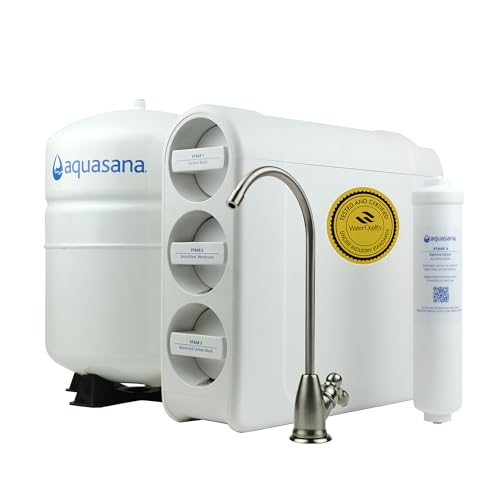
Aquasana SmartFlow RO
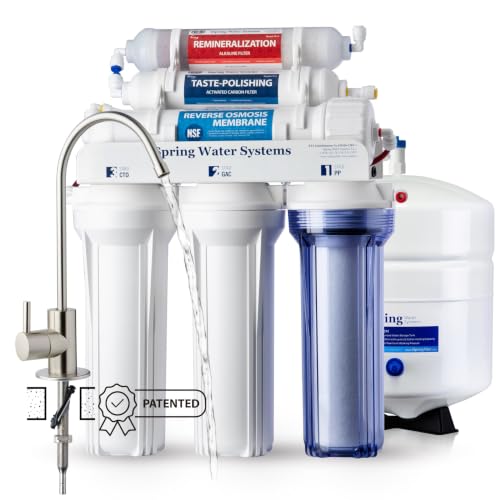
iSpring RCC7AK-BN
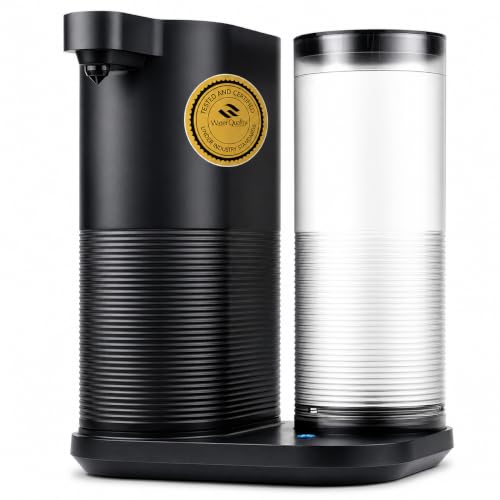
Aquasana Clean Water Machine
Common questions
Is the Aquasana Claryum Max Flow certified?
Yes, by WQA to NSF/ANSI 42, 53 and 401. That covers lead, PFOA/PFOS, mercury, chlorine, chloramine and microplastics, among others.
Is the AQ-6300M the same as the AQ-5300+?
It’s the newer version. WQA lists both with the same AQ-C3M-R filter, 800-gallon capacity and 0.72 gpm flow, and the same NSF/ANSI 53 claims.
Does it remove fluoride?
No. It’s a carbon filter and has no fluoride claim. For fluoride, choose reverse osmosis such as the Aquasana SmartFlow. See our fluoride guide.
Does it remove PFAS?
It’s certified for PFOA and PFOS under NSF/ANSI 53, at 99.7% on Aquasana’s data sheet. See our PFAS guide.
How often do I change the filters?
Every 6 months or 800 gallons, whichever comes first. The AQ-C3M-R set costs $91.99 at Aquasana.
The bottom line
Buy the Aquasana Claryum Max Flow if you’re on city water and want certified lead and PFOA/PFOS reduction at the tap, with fast flow, minerals kept and no wastewater. If fluoride, arsenic or nitrate is your concern, step up to reverse osmosis such as the Aquasana SmartFlow. Compare them all in our under-sink filter guide.
- Certifier listings: WQA, Aquasana Inc., NSF/ANSI 53: Claryum 3-Stage Max Flow AQ-6300M (and AQ-5300+), element AQ-C3M-R, 800 gal, 0.72 gpm: asbestos, cyst, lead, mercury, MTBE, PFOA, PFOS, turbidity, VOC. Aquasana is also listed by WQA under NSF/ANSI 42 and 401 for the same product types.
- Also searched: NSF International (Aquasana): UV systems only.
- Maker documents: Aquasana AQ-6300M performance data sheet and product page; AQ-C3M-R replacement page.
- Independent lab tests: None used.
Sources
Prices as of October 19, 2026. Product prices and availability are accurate as of the date/time indicated and are subject to change. As an Amazon Associate we earn from qualifying purchases.