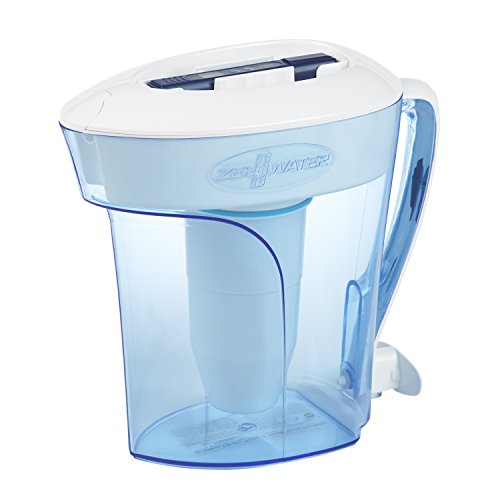
Certified by IAPMO R&T to NSF/ANSI 42 and 53 for lead, chromium-6, mercury and PFOA/PFOS, and it takes dissolved solids to near zero.
The catch: Each filter is rated for only 15 gallons.
Health information, not medical advice. Guidance differs for infants, pregnancy and existing conditions. Test your own water and speak to a doctor or your local health authority. We may earn a commission when you buy through our links; it never affects our scores.
Our verdict
If you want the lowest dissolved-solids reading you can get from a pitcher, the ZeroWater is built for it. Its ion-exchange resin drives total dissolved solids to near zero, and it carries certified reduction claims for lead, chromium-6, mercury and PFOA/PFOS. It even ships with a TDS meter, so you can watch the reading climb as the filter wears out.
That aggressive filtration cuts both ways. The resin exhausts quickly, so filters run out faster and cost more per gallon than any other pitcher we review. It also removes minerals, which leaves the water tasting flat, and a filter pushed past its life can taste sour. Change it on time and it’s excellent.
You want near-zero TDS plus certified lead and PFOA/PFOS reduction without plumbing, and you’ll change filters when the meter says so.
How it scored
Contaminant reduction carries the most weight in the overall score. How we score filters
What it removes
Every claim below is from ZeroWater’s performance data sheet, certified by IAPMO R&T, unless it’s marked as measured.
| Contaminant | Status | Standard |
|---|---|---|
| Lead | Certified | NSF/ANSI 53 |
| Chromium-6 | Certified | NSF/ANSI 53 |
| Mercury | Certified | NSF/ANSI 53 |
| PFOA / PFOS | Certified | NSF/ANSI 53 |
| Chlorine taste and odor | Certified | NSF/ANSI 42 |
| Total dissolved solids | Measured | Not a certified claim |
| Fluoride | No claim | See Culligan ZeroWater |
IAPMO R&T file W-14820 (NSF/ANSI 53), issued to Zero Technologies LLC, lists the 10-cup pitcher (ZP-010) and ZeroWater’s other pitchers and dispensers for lead, mercury, PFOA, PFOS and hexavalent chromium, at 15 gallons per filter. Zero Technologies also holds an NSF/ANSI 42 file, W-14819. Both were active on 7 October 2026.
Pros and cons
Strengths
- Near-zero TDS, plus certified lead and PFOA/PFOS reduction
- Includes a TDS meter, so no guessing on filter changes
- No install; cheap to buy
What to know
- Shortest filter life and highest running cost of the pitchers we review
- Strips minerals, so the water tastes flat
- Slow to filter a full reservoir
What owners say
Owners love seeing 000 on the meter. The most common complaint is how fast, and how expensively, the filters run out.
Often praised
- A visible near-zero TDS reading
- Clearly better taste than their tap water
- The meter takes the guesswork out of filter changes
Common complaints
- Filters run out fast on hard water
- Replacement filters add up
- A sour taste when a filter is overdue
Recurring themes across verified buyer and long-term owner reviews, October 2026.
Specifications
- Capacity
- 10 cups
- Filter
- 5-stage ion exchange
- Certifier
- IAPMO R&T
- Standards
- NSF/ANSI 42, 53
- Rated capacity
- 15 gallons
- TDS meter
- Included
Alternatives worth considering
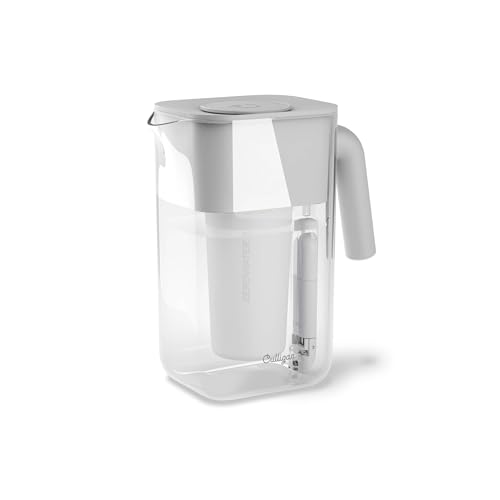
Culligan ZeroWater
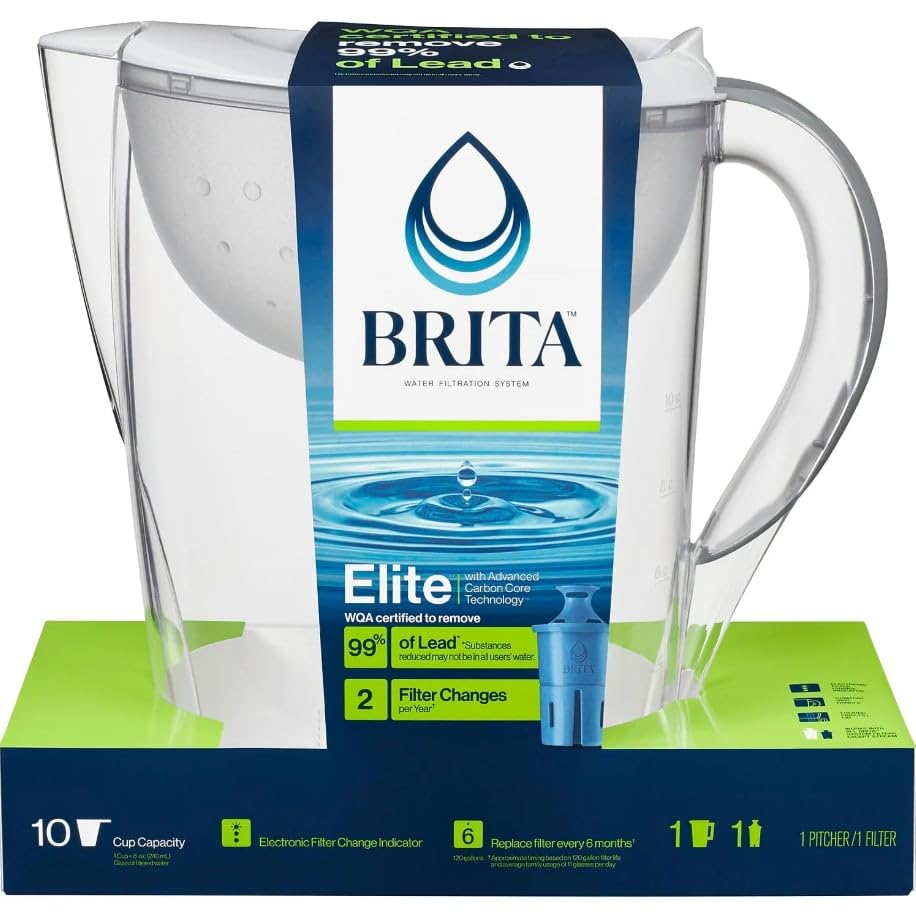
Brita Elite
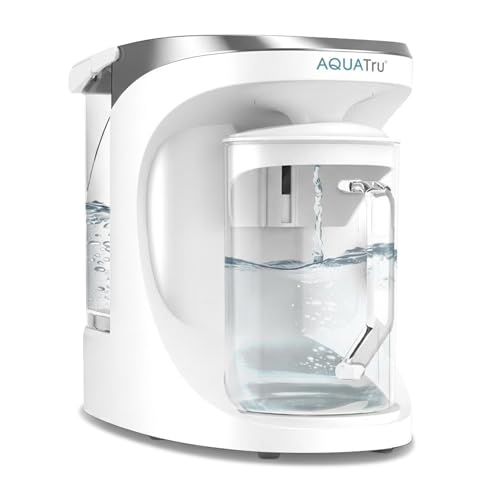
AquaTru Carafe
Common questions
Does ZeroWater remove PFAS and lead?
Yes. It’s certified by IAPMO R&T to NSF/ANSI 53 for lead and PFOA/PFOS. It has no claim for total PFAS; for that, see the Culligan ZeroWater. Our NSF certification guide explains how to check a certifier’s listing yourself.
Why do the filters run out so fast?
Ion-exchange resin captures dissolved solids, so it fills up faster than plain carbon, especially on hard water. Each filter is rated for 15 gallons; on very soft water it can last longer. Replace it when the meter reads 006.
Why does the water taste flat?
It removes minerals along with contaminants, the same reason reverse osmosis water tastes flat. A sour taste means the filter is spent.
Is ZeroWater the same as Culligan ZeroWater?
No. The Culligan ZeroWater is a newer generation with a top-loading filter and a broader certified claim set, including fluoride and total PFAS. The two filters aren’t interchangeable.
The bottom line
Buy the ZeroWater if you want near-zero TDS with certified lead and PFOA/PFOS reduction, and you’ll change filters on schedule. If you need fluoride or total PFAS, the Culligan ZeroWater covers both. If running cost or taste matters more, the Brita Elite is the easier pitcher to live with. See how they all compare in our best water filter pitchers guide.
- Certifier listings: IAPMO R&T file W-14820 (NSF/ANSI 53), Zero Technologies LLC: ZP-010 and other ZeroWater pitchers and dispensers, lead, mercury, PFOA, PFOS and hexavalent chromium, 15 gallons. W-14819 (NSF/ANSI 42), active.
- Also searched: NSF International (ZeroWater): no listings. WQA (ZeroWater): Zero Technologies listings cover its faucet-mount filters (ZFM-400), not the pitcher.
- Maker documents: ZeroWater's performance data sheet (April 2026), product page and filter guidance.
- Independent lab tests: None used.
Sources
Prices as of October 14, 2026. Product prices and availability are accurate as of the date/time indicated and are subject to change. As an Amazon Associate we earn from qualifying purchases.