Health information, not medical advice. Test your own water and speak to your local health authority about what it contains. We may earn a commission when you buy through our links; it never affects our scores.
The short answer
Brita filter mold usually grows on the lid, reservoir, or the outside of the cartridge, because the carbon filter removes the chlorine that normally limits growth. Pour out the water, throw away the cartridge, and hand-wash the pitcher, lid, and reservoir with mild detergent; Brita says its pitchers are NOT dishwasher safe. Fit a new filter, then keep the pitcher in the fridge. Loose black specks are different: Brita says they’re usually harmless carbon dust.
Is it mold, bacteria, or carbon?
| What you see | What it usually is | What to do |
|---|---|---|
| Loose black specks, often after a filter change | Carbon from the filter, which Brita calls normal and harmless (Brita) | Flush a new filter and discard the first three pitchers |
| Fuzzy black or green spots in seams and corners | Mold or mildew, which grows in damp, low-light areas (Tualatin Valley Water District) | Discard water and filter; hand-wash everything |
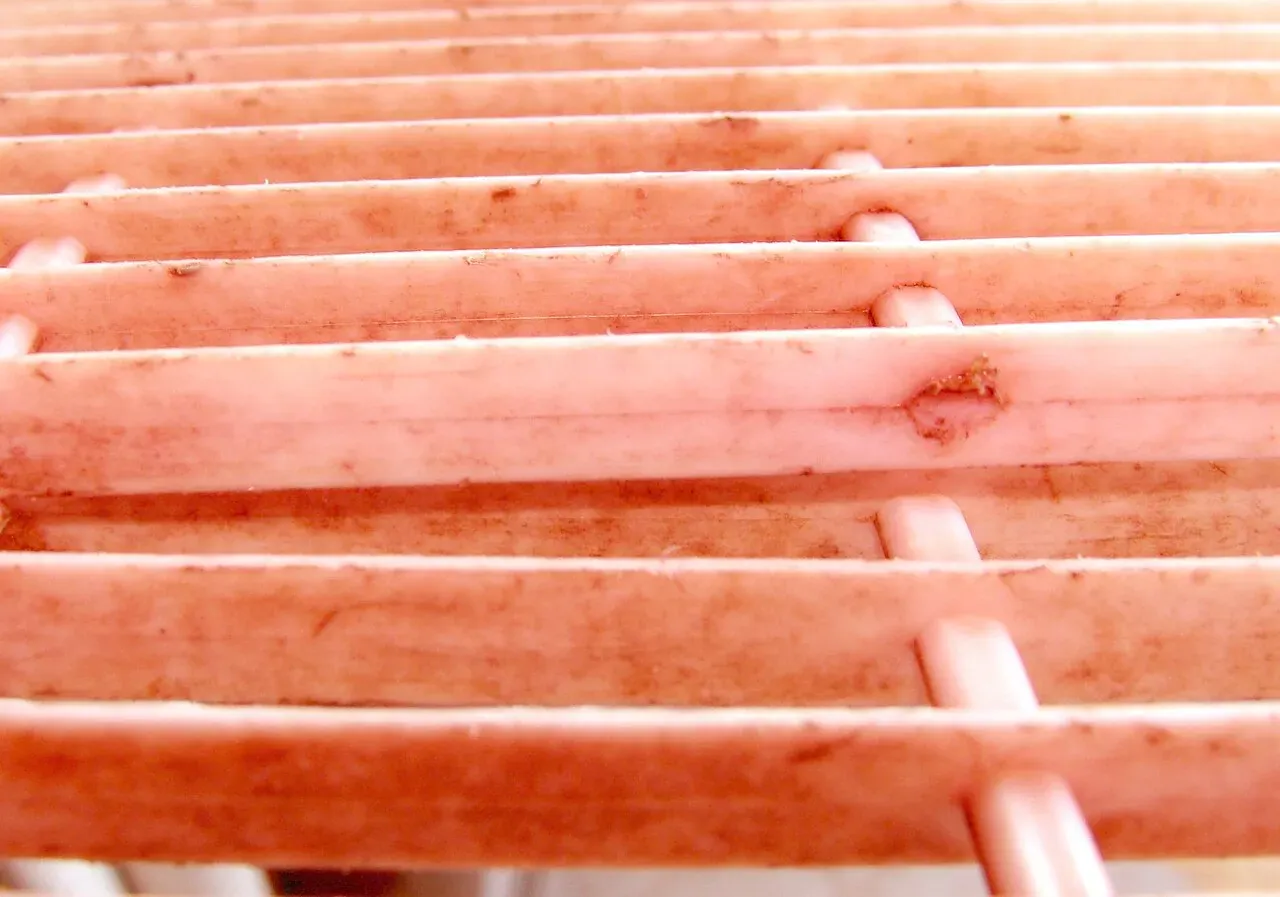
| Pink or orange film | Serratia marcescens, an airborne bacterium, not from your water (Gwinnett County) | Scrub and wash; dry fully |
| Green tint | Algae; Brita says bright sunlight can cause algae to grow | Wash, then store out of the light |
What are white spots or flakes in a Brita?
Hard, gritty white spots or flakes are usually minerals: calcium and magnesium carbonate from hard water, which builds up as scale. Water utilities say they aren’t a health risk (City of Wenatchee, South Bend). Most pitcher filters aren’t certified to reduce hardness, so on hard water you may see scale on the reservoir or around the base of the cartridge. If the white spots are fuzzy or slimy and wipe off as a film, treat them as growth instead: throw out the cartridge and clean the pitcher as described below. For scale itself, see our best water filter for hard water guide.
Why does a Brita get moldy faster than tap water?
City tap water carries a small amount of chlorine or chloramine to keep microbes in check. The carbon in a Brita filter is designed to remove it; the Elite filter reduces chlorine by 97.4% (Brita). UGA Extension notes carbon can destroy residual disinfectants, and that poorly maintained carbon filters can become breeding grounds for bacteria. Gwinnett County says pink Serratia can be made worse by removing chlorine with a carbon filter. Water left at room temperature for days gives growth a head start.
How do you clean mold out of a Brita pitcher?
- Empty it. Pour out the water and remove the filter. Don’t drink water from a visibly moldy pitcher.
- Hand-wash the pitcher, lid, and reservoir with a mild detergent and warm water, using a soft brush in the seams. Brita says never with abrasive cleaners, and not in the dishwasher.
- Take the lid apart if your model allows; mold often hides under the flap and in the reservoir rim.
- Rinse well and air-dry fully before reassembling.
- Never mix cleaners. Bleach mixed with an acid such as vinegar produces chlorine gas, according to the New Jersey Department of Health.
Can you clean a moldy Brita filter?
No. Brita gives no instructions for cleaning a cartridge, and mold on or in it means it’s time to replace it. Standard filters last 40 gallons (about 2 months) and Elite filters 120 gallons (about 6 months) (Brita). When you fit the new one, Brita says to flush it for 15 seconds under cold water and discard the first three pitchers (Brita). See how often to change a water filter.
How do you stop mold coming back?
- Keep it in the fridge. Brita recommends refrigerator storage and keeping the pitcher out of bright sunlight (Brita).
- Wash it regularly. Brita says periodically; we suggest every week or two, and at every filter change.
- Use cold water only. The Elite filter is rated for water between 32°F and 85°F (Brita).
- Don’t let water sit. If you’ll be away for several days, Brita suggests refrigerating the pitcher; empty it for longer trips.
- Change filters on schedule. An old filter collects organic matter that bacteria feed on (UGA Extension).
Is mold in a Brita filter dangerous?
The CDC says mold exposure may cause a variety of health effects, or none at all, with higher risk for people with allergies, asthma, weakened immune systems, or chronic lung disease. Its guidance covers breathing and touching mold, not drinking it. Gwinnett County says Serratia isn’t known to cause waterborne disease. If you drank from a moldy pitcher and feel unwell, or someone in your home is immunocompromised, speak to a doctor.
Is there a filter with less standing water?
Any filter that holds water can grow mold if it’s neglected. A faucet-mount filter has no reservoir, but UGA Extension still advises flushing it for at least five minutes after a few days unused. Brita’s faucet filter is certified by WQA for lead. If you’re replacing your pitcher anyway, these are certified for lead:
| # | Filter | Score | Certified by | Lead | PFAS | Fluoride | Running cost | Price |
|---|---|---|---|---|---|---|---|---|
| 01 | Brita EliteBrita for lead and chlorinePitcher | 4.1 | IAPMO, WQA, NSF | Certified | Claim | No | $0.14/gal | See priceon Amazon › |
| 02 | PUR PLUS PitcherPitcher with Total PFASPitcher | 4.0 | IAPMO, WQA, NSF | Certified | Certified | No | About $0.25/gal | $28.12on Amazon › |
| 03 | Culligan ZeroWaterPitcher with fluoride and Total PFASPitcher | 4.2 | IAPMO R&T | Certified | Certified | Certified | $0.68 to $0.93/gal | See priceat Culligan › |
| 04 | AquaTru CarafeCountertop RO, most claimsCountertop RO | 4.6 | IAPMO R&T | Certified | Certified | Certified | $0.33/gal | $335.75on Amazon › |
Certified: Certified by an independent body (named in each pick). Lab test: Tested by a named independent lab, not certified. Claim: The maker's claim, not certified. No: No claim. PFAS means PFOA/PFOS, or Total PFAS where the pick says so.
Common questions
What are the black specks in my Brita water?
Usually carbon from the filter. Brita says carbon dust is normal in the first fillings and harmless.
Can I put my Brita pitcher in the dishwasher?
No. Brita says its pitchers and dispensers are NOT dishwasher safe. Hand-wash with mild detergent.
What is the pink stuff in my Brita?
Usually Serratia marcescens, an airborne bacterium that grows on damp surfaces, not something from your water (Gwinnett County). Scrub it off and dry the pitcher.
Should I keep my Brita in the fridge?
Yes. Brita recommends refrigerator storage and says bright sunlight can cause algae to grow.
Can I clean a moldy Brita filter with vinegar?
No. Replace the cartridge. Brita gives no instructions for cleaning one.
Sources
Prices as of November 1, 2026. Product prices and availability are accurate as of the date/time indicated and are subject to change. As an Amazon Associate we earn from qualifying purchases.