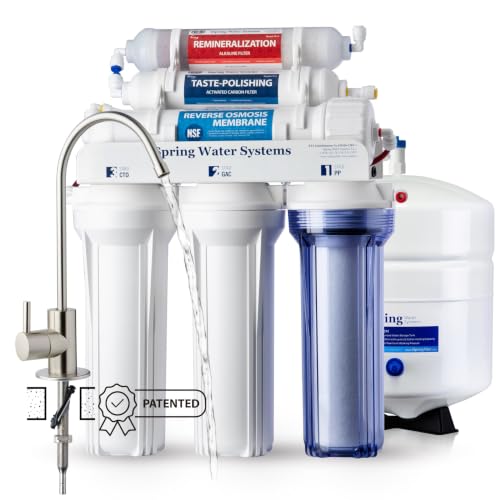
NSF International certifies the RCC7AK-BN and RCC7AK-BLK to NSF/ANSI 58 for lead, fluoride, dissolved solids and six other contaminants, with an alkaline stage that adds minerals back.
The catch: The plain RCC7AK, made in a different factory, is certified for dissolved solids only. Buy the -BN or -BLK version.
Health information, not medical advice. Guidance differs for infants, pregnancy and existing conditions. Test your own water and speak to a doctor or your local health authority. We may earn a commission when you buy through our links; it never affects our scores.
Our verdict
The RCC7AK is iSpring’s six-stage under-sink reverse osmosis system: a sediment filter, two carbon filters, the RO membrane, a carbon polishing filter and an alkaline stage that adds calcium and magnesium back for taste. It fills a 3.2-gallon tank and feeds its own faucet at the sink.
The model number matters more than usual here. NSF International lists the RCC7AK-BN and RCC7AK-BLK, made in iSpring’s Nanjing factory, for lead, fluoride, dissolved solids (TDS), asbestos, barium, cadmium, trivalent chromium, copper and selenium. The plain RCC7AK, made in Taiwan, is listed for TDS only. iSpring’s own pages show the longer list for both. When we checked Amazon, the certified RCC7AK-BN was about $189 and the plain RCC7AK about $225, so the better-certified version was also the cheaper one.
What it isn’t certified for: PFAS, arsenic, chlorine or nitrate. iSpring’s listing quotes a PFAS figure, but no certifier backs it. As with any tank-based reverse osmosis system, some water goes down the drain, and iSpring doesn’t state a ratio for this model.
You want certified lead and fluoride reduction at the kitchen sink for under $200, and you’re comfortable with an under-sink install.
You need certified PFAS or arsenic reduction, can’t drill for a faucet, or want no wastewater. Look at the AquaTru Carafe for no plumbing.
How it scored
Contaminant reduction carries the most weight in the overall score. How we score filters
What it removes
Every certified row below applies to the RCC7AK-BN and RCC7AK-BLK only. NSF International lists claims, not percentages, so we show none.
| Contaminant | RCC7AK-BN / -BLK | Plain RCC7AK |
|---|---|---|
| Lead | Certified NSF/ANSI 58 | Not certified |
| Fluoride | Certified NSF/ANSI 58 | Not certified |
| Total dissolved solids (TDS) | Certified NSF/ANSI 58 | Certified NSF/ANSI 58 |
| Cadmium, copper, barium, selenium, trivalent chromium | Certified NSF/ANSI 58 | Not certified |
| Asbestos | Certified NSF/ANSI 58 | Not certified |
| PFAS | iSpring’s claim Not certified | Not certified |
| Arsenic, chromium-6, nitrate, chlorine | – | No claim |
NSF International’s listing for iSpring Water Systems LLC, current on 7 October 2026, puts the RCC7AK-BN and RCC7AK-BLK (with filters FP15, FC15, FG15, MC7, FT15 and FA15) at a daily production rate of 25.41 gallons, and the plain RCC7AK at 21.04 gallons with the TDS claim only. The black and brushed-nickel variants also carry NSF/ANSI/CAN 372 for lead-free materials. We found no iSpring listing at IAPMO R&T.
What it costs to run
iSpring rates the five filters for 6 to 12 months and the membrane for 2 to 3 years. Bought separately at iSpring’s list prices, one full set of filters costs about $121 and the membrane $43, so plan on roughly $100 to $140 a year, depending on your water and whether you buy iSpring’s yearly bundle. NSF/ANSI 58 doesn’t give reverse osmosis filters a gallon rating, so we can’t give a certified cost per gallon. For comparison, the AquaTru Carafe works out to about $0.33 a gallon.
Pros and cons
Strengths
- RCC7AK-BN and -BLK certified by NSF International for lead and fluoride
- Usually cheaper than the plain RCC7AK
- Alkaline stage adds minerals back for taste
- Tank gives quick pours; filters are easy to find
What to know
- Plain RCC7AK is certified for TDS only
- No certified PFAS, arsenic or chlorine reduction
- Under-sink install with drain and faucet hole
- Sends water to the drain; 1-year warranty
What owners say
Owners like the taste and the drop they see on a TDS meter. The usual complaints are the install and the tank’s slow refill.
Often praised
- Better taste from the alkaline stage
- A large drop in TDS on their own meters
- Clear instructions and US-based support
Common complaints
- Install takes time; fittings can drip if not seated
- Tank refills slowly after heavy use
- Confusion when the alkaline stage raises the TDS reading
Recurring themes across verified buyer reviews.
Specifications
- Model to buy
- RCC7AK-BN or RCC7AK-BLK
- Type
- Under-sink reverse osmosis, 6 stages
- Certifier
- NSF International
- Certified to
- NSF/ANSI 58; NSF/ANSI/CAN 372
- Rated output
- 75 gal a day (maker); 25.41 under NSF test
- Tank
- 3.2 gallons
- Filters
- FP15, FG15, FC15, FT15, FA15; MC7 membrane
- Filter life
- 6 to 12 months; membrane 2 to 3 years (maker)
- Warranty
- 1 year, with registration
Alternatives worth considering
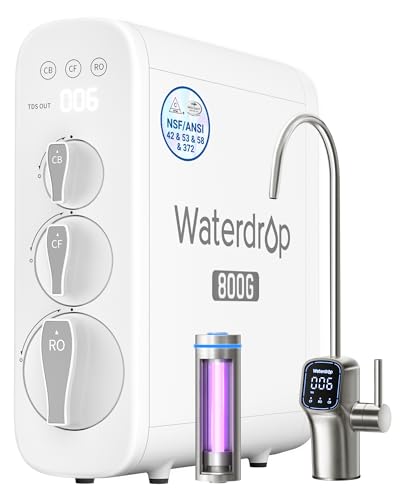
Waterdrop G3P800
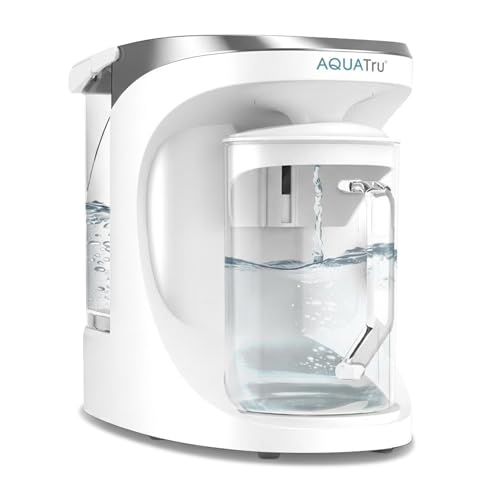
AquaTru Carafe

AquaTru Classic
Common questions
Is the iSpring RCC7AK NSF certified?
Yes, by NSF International to NSF/ANSI 58, but the claims depend on the model. The RCC7AK-BN and RCC7AK-BLK are certified for lead, fluoride, TDS and six other contaminants. The plain RCC7AK is certified for TDS only.
What’s the difference between the RCC7AK, RCC7AK-BN and RCC7AK-BLK?
The -BN (brushed nickel) and -BLK (black) versions are made in iSpring’s Nanjing factory and carry nine certified claims. The plain RCC7AK is made in Taiwan and carries one. The filters and design are otherwise the same, and the -BN was the cheapest of the three on Amazon when we checked.
Does it remove PFAS?
It isn’t certified for PFAS. iSpring quotes a PFAS figure, but no certifier lists it. For certified PFOA/PFOS reduction under the sink, see the Waterdrop G3P800, or read our PFAS guide.
Does it remove fluoride?
Yes. The RCC7AK-BN and -BLK are certified by NSF International for fluoride reduction under NSF/ANSI 58. See our fluoride guide.
Why did my TDS reading go up?
The alkaline stage adds calcium and magnesium after the membrane, so a TDS meter reads higher than straight RO water. That rise is the added minerals, not contaminants getting through.
How often do the filters need changing?
iSpring says every 6 to 12 months for the five filters and every 2 to 3 years for the membrane. Expect about $100 to $140 a year.
The bottom line
Buy the iSpring RCC7AK-BN or RCC7AK-BLK if you want certified lead and fluoride reduction at the kitchen sink for under $200, and you can handle an under-sink install. Skip the plain RCC7AK: it costs more and is certified for dissolved solids only. If you need certified PFOA/PFOS reduction, the Waterdrop G3P800 covers it without a tank, and the AquaTru Carafe needs no plumbing. Compare them all in our reverse osmosis guide.
- Certifier listings: NSF International, iSpring Water Systems LLC, NSF/ANSI 58: RCC7AK-BN and RCC7AK-BLK (Nanjing facility), 25.41 gpd, elements FP15, FC15, FG15, MC7, FT15, FA15, claims asbestos, barium, cadmium, trivalent chromium, copper, fluoride, lead, selenium, TDS. Plain RCC7AK (Taichung facility), 21.04 gpd, TDS only. Also NSF/ANSI/CAN 372.
- Also searched: IAPMO R&T (iSpring): no listing.
- Maker documents: iSpring RCC7AK and RCC7AK-BLK product pages, replacement filter prices.
- Independent lab tests: None used.
Sources
Prices as of October 14, 2026. Product prices and availability are accurate as of the date/time indicated and are subject to change. As an Amazon Associate we earn from qualifying purchases.