Clean drinking water shouldn’t be a luxury — but with PFAS contamination making national headlines, aging infrastructure leaching lead into household pipes, and new EPA regulations reshaping what “safe” actually means, more homeowners are taking water quality into their own hands.
The problem? There are hundreds of water filters on the market, and the differences between them matter enormously. A pitcher filter that costs $30 and an under-sink reverse osmosis system that costs $400 don’t do the same job. Choosing the wrong one means spending money on something that doesn’t actually address what’s in your water.
We’ve researched and tested dozens of filters across every category — pitchers, under-sink systems, countertop units, whole-house filters, and more — to help you find the best drinking water filter for your specific situation.
Here’s what we found.
Quick Picks: Best Drinking Water Filters at a Glance
| Pick | Best For | Filter Type | Price Range |
|---|---|---|---|
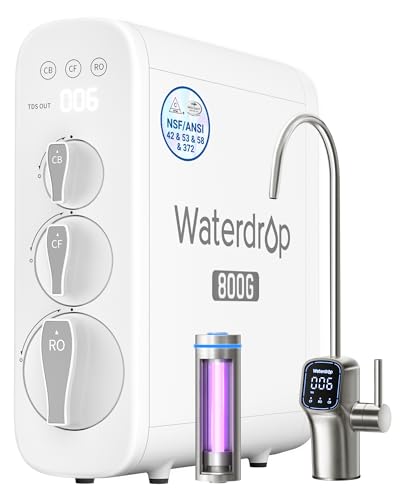
| Waterdrop G3P800 | Best overall | Under-sink RO | $350–$450 |
| APEC ROES-50 | Best value RO | Under-sink RO | $180–$220 |
| Brita Standard Pitcher | Best budget | Pitcher | $25–$35 |
| PUR Plus 11-Cup Pitcher | Best pitcher for contaminants | Pitcher | $35–$50 |
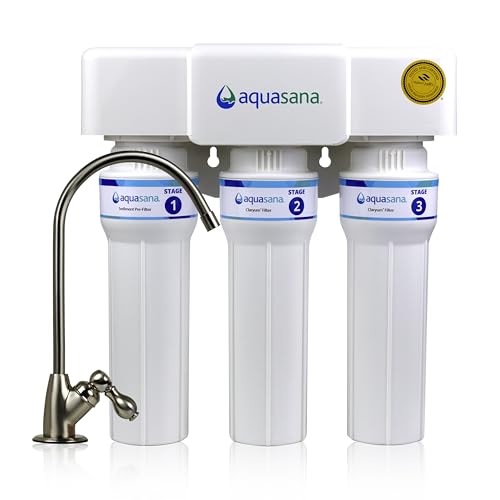
| Clearly Filtered 3-Stage | Best under-sink non-RO | Under-sink | $500–$600 |
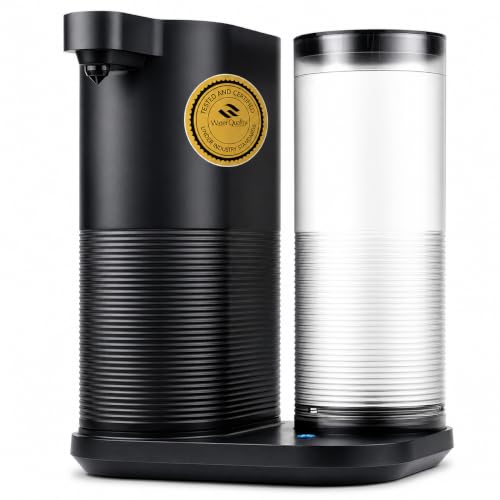
| AquaTru Carafe | Best countertop | Countertop RO | $350–$400 |
| SpringWell CF1 | Best whole-house | Whole-house | $800–$1,000 |
| Waterdrop Faucet Filter | Best faucet mount | Faucet-mount | $25–$40 |
How We Evaluated These Filters
Every filter on this list was evaluated across five criteria:
Contaminant removal: Does it actually remove the things most people worry about — lead, PFAS, chlorine, nitrates, microplastics? We prioritized filters with NSF/ANSI certification or independent lab testing results.
Certification: We look for NSF/ANSI Standard 42 (chlorine/taste), Standard 53 (health contaminants like lead), Standard 58 (reverse osmosis), and Standard 473 (PFAS). Filters with these certifications have been independently verified, not just manufacturer-claimed.
Annual operating cost: The sticker price is often the smallest part of what you’ll actually spend. We factor in replacement filter costs over a full year of use.
Ease of installation and use: A filter you don’t install or maintain properly doesn’t filter anything.
Value: Does the price match the performance? We’ve called out where you can save money without sacrificing safety.
The 8 Best Drinking Water Filters of 2026
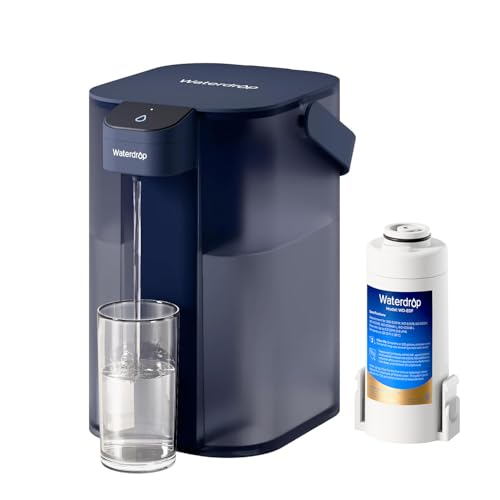
1. Waterdrop G3P800 — Best Overall Under-Sink Filter
Why it tops our list: The Waterdrop G3P800 is a tankless reverse osmosis system that delivers 800 gallons per day — fast enough for instant filtered water on demand, no storage tank required. It’s NSF/ANSI 58 certified, removes up to 99% of over 1,000 contaminants including lead, PFAS, arsenic, fluoride, and chlorine, and comes with a built-in TDS meter so you can confirm it’s working.
The installation is DIY-friendly: most people complete it in under an hour with the included hardware. The system is slim enough to fit in the cabinet under a standard kitchen sink, and the filter life indicators take the guesswork out of maintenance.
The trade-off: Like most RO systems, it produces some wastewater — though the G3P800’s 3:1 pure-to-drain ratio is among the most efficient available. It also removes some beneficial minerals (calcium, magnesium), so if that’s a concern, look for a remineralization filter add-on.
- Certifications: NSF/ANSI 58, NSF/ANSI 372
- Contaminants removed: Lead, PFAS, arsenic, fluoride, nitrates, chromium, chlorine, microplastics, TDS
- Annual filter cost: ~$120–$150
- Best for: Homeowners who want the most comprehensive drinking water filtration available
2. APEC ROES-50 — Best Value Reverse Osmosis System
Why it’s great: The APEC ROES-50 has been a bestseller for years, and in 2026 it remains one of the best dollars-per-contaminant-removed values on the market. This 5-stage under-sink RO system reliably reduces lead, fluoride, arsenic, chromium, nitrates, and PFAS to near-undetectable levels, with NSF/ANSI 58 certification to back it up.
It’s a traditional tanked system, so filtered water is stored in a 3.2-gallon tank under the sink — slower to fill than tankless models but significantly cheaper to buy and maintain. APEC is a US-based company with strong customer support, which matters when you’re dealing with plumbing.
The trade-off: The tank takes up cabinet space, and flow rate is slower than premium tankless systems. At 50 gallons per day capacity, it’s sufficient for most families but can feel slow if you’re filling large pots frequently.
- Certifications: NSF/ANSI 58
- Contaminants removed: 99%+ reduction of lead, fluoride, arsenic, chlorine, chromium, PFAS
- Annual filter cost: ~$50–$80
- Best for: Budget-conscious buyers who don’t want to compromise on contaminant removal
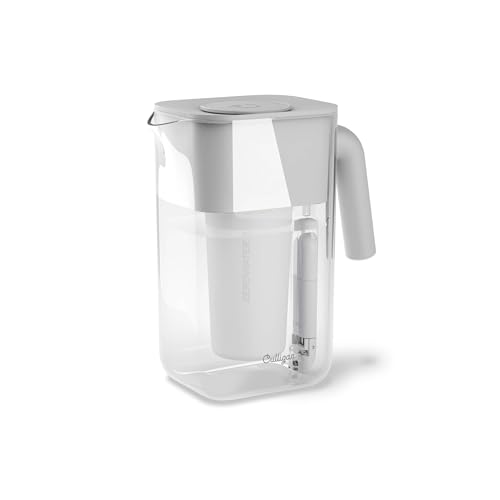
3. PUR Plus 11-Cup Pitcher — Best Pitcher for Contaminants
Why it’s great: If an under-sink system isn’t possible — you’re renting, you don’t want to deal with plumbing, or you just need something simple — the PUR Plus pitcher punches well above its price class for critical contaminant removal. In independent lab testing, it reduced lead and PFAS to near-undetectable levels, and it handles chlorine, mercury, and common heavy metals reliably. It’s NSF/ANSI certified to Standards 42, 53, and 473 (PFAS).
For 1–2 person households with city water and moderate contamination concerns, it’s a genuinely excellent solution. The 11-cup capacity is enough for most families’ daily drinking and cooking needs, and replacement filters cost around $7–$10 each.
The trade-off: Pitcher filters fill slowly (1–3 minutes per fill), which frustrates some users. They also don’t address everything — if you’re on a well or have tested positive for arsenic, nitrates, or bacteria, you’ll need a more powerful system.
- Certifications: NSF/ANSI 42, 53, 473
- Contaminants removed: Lead, PFAS, chlorine, mercury, certain pesticides
- Annual filter cost: ~$60–$80
- Best for: Renters, apartment dwellers, 1–2 person households
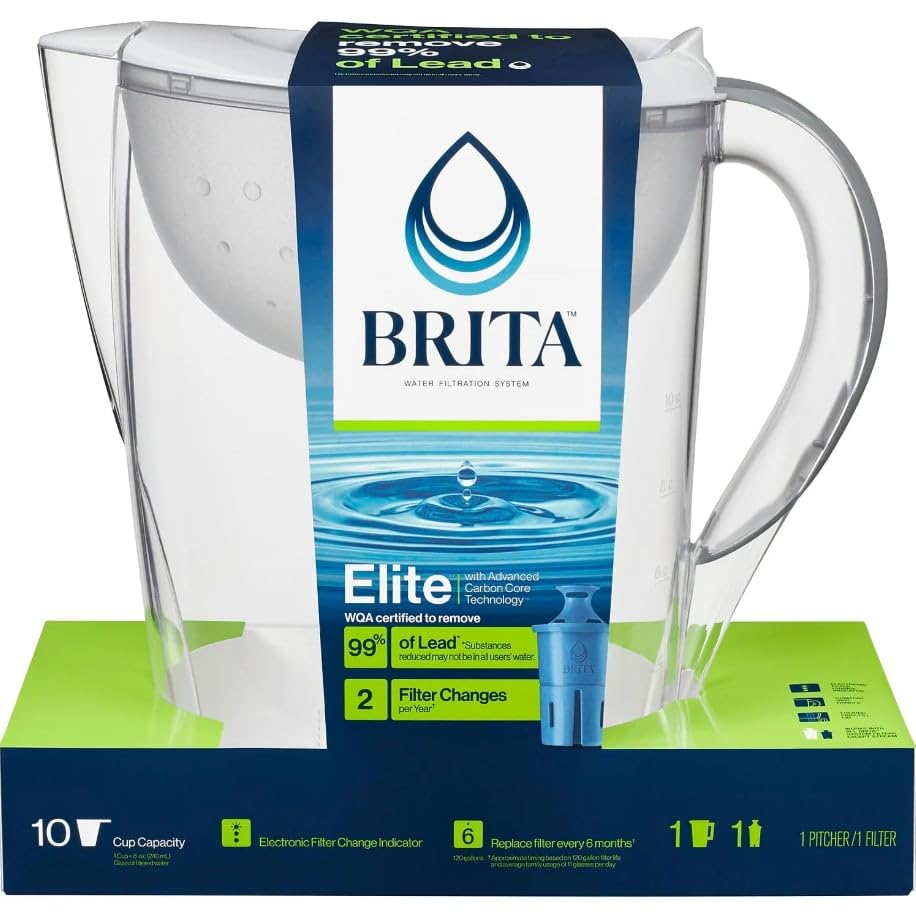
4. Brita Standard Pitcher — Best Budget Pick
Why it’s great: The Brita Standard Pitcher does one thing well and affordably: it removes chlorine taste and odor from city water, making tap water taste noticeably better. It’s NSF/ANSI 42 certified, which covers aesthetic contaminants (taste, odor, chlorine). At $25–$35 with replacement filters around $6 each, it’s the lowest cost of entry for any meaningful filtration.
If your tap water is already compliant with EPA standards and you just want it to taste better — no lead concerns, no private well — a Brita is a perfectly reasonable choice.
The trade-off: The Standard filter does not reduce lead, PFAS, fluoride, or most health-relevant contaminants. If those are concerns for you, step up to the PUR Plus or an under-sink system. Brita’s Longlast+ filter (sold separately) does add lead removal — it’s a meaningful upgrade worth the extra cost.
- Certifications: NSF/ANSI 42
- Contaminants removed: Chlorine taste/odor, some particulates
- Annual filter cost: ~$40–$55
- Best for: City water users who want better-tasting water on a tight budget
5. Clearly Filtered 3-Stage Under-Sink System — Best Non-RO Under-Sink Filter
Why it’s great: Not everyone wants reverse osmosis — some people prefer to keep minerals in their water, avoid wastewater production, or don’t want to deal with a storage tank. The Clearly Filtered 3-Stage Under-Sink system is the best non-RO alternative we’ve found. It’s independently tested to remove 99.99% of 232+ contaminants, including uranium, fluoride, PFAS, chloroform, and heavy metals, without a membrane or tank.
It’s a particularly strong choice for PFAS removal — Clearly Filtered has become one of the leading brands in this space, with performance data that competes with many RO systems on the contaminants people currently worry about most.
The trade-off: At $500–$600 upfront, it’s expensive for a non-RO system. It also lacks the smart features (TDS meters, filter life indicators) you find on premium RO units. But for households that want comprehensive filtration without RO’s trade-offs, it delivers.
- Certifications: Independently tested (not NSF certified, but third-party lab verified)
- Contaminants removed: PFAS, fluoride, uranium, chloroform, lead, heavy metals, VOCs
- Annual filter cost: ~$120–$150
- Best for: Those wanting comprehensive filtration without reverse osmosis
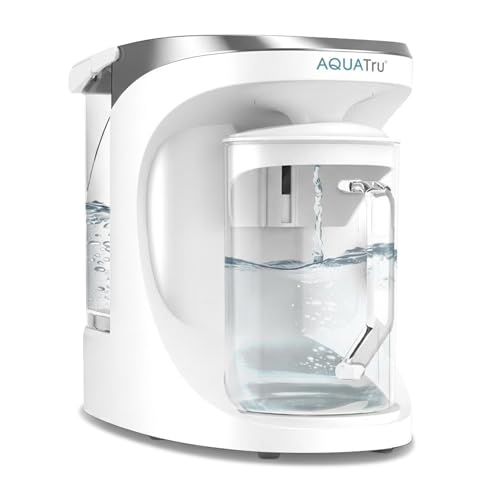
6. AquaTru Carafe — Best Countertop Filter
Why it’s great: The AquaTru Carafe is a countertop reverse osmosis system that requires no installation — just plug it in and fill the reservoir. In independent testing it scored the highest overall performance of any water filter evaluated by Water Filter Guru’s testing methodology. It removes PFAS, lead, arsenic, fluoride, nitrates, and hundreds of other contaminants to near-undetectable levels, with NSF/ANSI certifications for Standards 42, 53, 58, and 473.
For renters, apartment dwellers, or anyone who doesn’t want to touch their plumbing, this is the closest thing to under-sink RO performance in a countertop form factor. The 64-ounce capacity holds enough for most families’ daily drinking water.
The trade-off: It takes up counter space and requires electricity. Filling the input reservoir manually is a mild inconvenience for heavy users. Filter costs are also higher than simpler pitchers, running about $150 for a two-year supply.
- Certifications: NSF/ANSI 42, 53, 58, 473
- Contaminants removed: PFAS, lead, fluoride, arsenic, nitrates, chlorine, microplastics
- Annual filter cost: ~$75
- Best for: Renters and apartment dwellers who want RO-level filtration without installation
7. SpringWell CF1 — Best Whole-House Water Filter
Why it’s great: Point-of-use filters clean the water at one tap. Whole-house systems — called point-of-entry filters — clean all the water coming into your home, including showers, laundry, and every faucet. The SpringWell CF1 is our top pick in this category.
It uses high-capacity catalytic carbon media to reduce chlorine, chloramines, taste, odor, and organic compounds throughout the entire home. In real-world testing, it reduced chlorine byproducts from detectable levels to zero even after three years of use. It also comes with a lifetime tank warranty, which is uncommon in this category. For city water users with chlorine sensitivity, skin or hair concerns, or general whole-home quality goals, it’s an excellent investment.
The trade-off: It doesn’t remove lead, PFAS, fluoride, or nitrates on its own — for those contaminants, you’d pair it with a point-of-use RO or under-sink filter at the kitchen tap. It’s also an $800–$1,000 upfront investment plus professional installation if you’re not comfortable with plumbing.
- Certifications: NSF/ANSI tested components
- Contaminants removed: Chlorine, chloramines, chlorination byproducts (THMs), taste/odor compounds
- Annual filter cost: ~$100–$120 (media replacement every 5–7 years)
- Best for: Homeowners who want to improve water quality throughout the entire house
8. Waterdrop Faucet Filter — Best Faucet-Mount Filter
Why it’s great: Faucet-mount filters screw directly onto your existing faucet and filter water on demand — no pitcher to refill, no plumbing required. The Waterdrop faucet filter is NSF/ANSI 42 and 53 certified for chlorine, lead, and a range of other contaminants, is easy to install in minutes, and has a compact design that fits most standard faucets without looking out of place.
In lab testing, it reduced lead and PFAS to near-undetectable levels — performance competitive with the PUR Plus pitcher at a similar price point, with the added convenience of on-demand flow.
The trade-off: It won’t fit all faucets (particularly pull-out or spray faucets), and the filter needs replacing every 200 gallons — roughly every 3 months for average users. It’s not suited to high-volume use cases like a family of five.
- Certifications: NSF/ANSI 42, 53
- Contaminants removed: Lead, PFAS, chlorine, mercury, heavy metals
- Annual filter cost: ~$60–$80
- Best for: Renters and small households who want on-demand filtered water without installation
What Type of Water Filter Do You Actually Need?
The right filter depends on three things: what’s in your water, how you use it, and your living situation. Here’s a plain-language breakdown.
Pitcher Filters
Best for: Renters, small households, city water, light use
What they do: Sit in your fridge and filter water as it passes through a carbon-based cartridge. Most remove chlorine taste/odor reliably. Better models (PUR Plus, Clearly Filtered pitcher) also handle lead and PFAS.
What they don’t do: Filter large volumes quickly, address well water issues, or remove fluoride and arsenic without a specialized filter.
Faucet-Mount Filters
Best for: Renters, small apartments, moderate use
What they do: Attach to an existing faucet and filter water on demand. Good for removing lead and chlorine. Faster than pitchers for daily drinking and cooking.
What they don’t do: Fit all faucets (especially pull-out sprayers), address severe contamination, or filter the volume a family needs efficiently.
Countertop Filters
Best for: Renters who want RO-level filtration, moderate households
What they do: Sit on the counter and provide on-demand filtration without touching plumbing. Countertop RO units (like the AquaTru) provide comprehensive contaminant removal. Traditional countertop units use carbon filtration and are slower.
What they don’t do: Save counter space.
Under-Sink Filters
Best for: Homeowners, families, those with serious water quality concerns
What they do: Install beneath the kitchen sink, provide filtered water through a dedicated tap, and handle high daily volumes. RO systems in this category remove 95–99%+ of most contaminants. Non-RO options (like Clearly Filtered) remove a wide range without a membrane.
What they don’t do: Filter water at other taps (shower, laundry), require no installation effort (you’ll need basic plumbing skills or a plumber), or retain minerals if they use RO membranes.
Whole-House Filters
Best for: Homeowners, well water users, those with chlorine sensitivity
What they do: Filter all water entering the home — every tap, shower, and appliance. Best for whole-home chlorine reduction, sediment, and general water quality improvement.
What they don’t do: Typically match the contaminant removal breadth of under-sink RO systems, and they cost significantly more upfront.
The Contaminants You Should Actually Worry About
PFAS (“Forever Chemicals”)
PFAS — per- and polyfluoroalkyl substances — are industrial chemicals that don’t break down in the environment or the human body. New EPA regulations in 2024–2026 have set enforceable limits on six PFAS compounds in public drinking water for the first time, and testing has found detectable levels in water systems serving tens of millions of Americans.
Best filter types for PFAS: Reverse osmosis (most effective), NSF 473-certified carbon block filters (e.g., Clearly Filtered, PUR Plus, AquaTru). Standard pitcher filters with basic carbon do not reliably remove PFAS — check for NSF 473 certification specifically.
Lead
Lead enters drinking water primarily from aging plumbing — older pipes, solder, and fixtures — not from the source water itself. There is no safe level of lead exposure, particularly for children and pregnant women.
Best filter types for lead: NSF/ANSI 53-certified filters. Most quality under-sink systems, the PUR Plus pitcher, and faucet-mount filters with NSF 53 certification are effective. Verify your filter’s specific lead reduction data, not just a general “reduces heavy metals” claim.
Chlorine and Chloramines
Municipal water utilities use chlorine (or the longer-lasting chloramine) to disinfect water. Both are effective disinfectants and safe at regulated levels, but they can affect taste and odor, and react with organic matter in pipes to form disinfection byproducts (DBPs) that have health implications at high exposure.
Best filter types: Activated carbon (almost all filters), catalytic carbon (particularly effective against chloramines). This is the one area where even basic pitcher filters perform well.
Fluoride
Fluoride is added to most municipal water supplies for dental health benefits. It’s safe at regulated levels, but some people prefer to remove it — particularly for infants and young children, or those in areas with naturally elevated fluoride.
Best filter types: Reverse osmosis is the most reliable method, removing 90–96% of fluoride. Some specialty carbon block filters (Clearly Filtered) also achieve high fluoride reduction. Standard carbon filters do not remove fluoride.
Microplastics
Research on microplastics in drinking water is ongoing, but detectable levels have been found in tap and bottled water globally. No regulatory limits currently exist, but interest is high.
Best filter types: Sub-micron filters, RO systems, and NSF 53-certified filters with small pore sizes. Most quality under-sink and countertop RO systems remove microplastics effectively.
How to Know What’s in Your Water
Before buying a filter, it’s worth finding out what you actually need to remove. There are two easy ways to do this:
1. Check your Consumer Confidence Report (CCR): Every municipal water utility is required to publish an annual water quality report. You can find yours at the EPA’s website or by searching “[your city] water quality report 2025.” This tells you what contaminants were detected and at what levels.
2. Use the EWG Tap Water Database: The Environmental Working Group maintains a searchable database at ewg.org/tapwater that lets you look up your local water utility and see detected contaminants alongside health-based benchmarks (which are often stricter than the EPA’s legal limits).
3. Test your water directly: If you’re on a private well, or if you want a precise picture of your specific tap, at-home test kits (like those from Tap Score or SimpleLab) send a sample to a certified lab and return a detailed analysis. These typically cost $50–$200 depending on what you’re testing for.
Water Filter Certifications: What They Mean
When a manufacturer says a filter “reduces chlorine” or “removes lead,” that’s a claim — not necessarily a verified fact. NSF International and the Water Quality Association (WQA) provide third-party certification that independently verifies these claims. Here’s what to look for:
NSF/ANSI 42: Tests for aesthetic contaminants — chlorine, taste, odor, and particulates. The most basic certification; present on virtually all quality pitchers and carbon filters.
NSF/ANSI 53: Tests for health-relevant contaminants including lead, VOCs, cysts, and MTBE. If you’re concerned about lead, this is the certification to look for.
NSF/ANSI 58: Certifies reverse osmosis systems for reduction of a broad range of dissolved solids, including fluoride, arsenic, nitrates, and chlorine.
NSF/ANSI 473: The PFAS certification — verifies reduction of PFOA and PFOS specifically. Relatively new, and not yet held by all filters that claim PFAS removal.
WQA Gold Seal: A competing certification body that tests to NSF/ANSI standards. Treated as equivalent.
A filter without any third-party certification should be viewed skeptically — it means you’re relying entirely on the manufacturer’s word.
How Much Should You Spend?
Water filter costs span a huge range. Here’s a realistic framework:
Under $50: Pitcher filters, basic faucet mounts. Good for chlorine removal and taste improvement. Adequate for city water users without specific health concerns.
$50–$200: Quality pitchers (PUR Plus, ZeroWater), better faucet mounts, entry-level under-sink carbon filters. Covers lead and PFAS removal at a modest price.
$200–$500: Entry-level under-sink RO systems (APEC ROES-50), countertop RO units (AquaTru). The sweet spot for comprehensive contaminant removal if you have moderate concerns or a family to protect.
$500–$1,000: Premium under-sink systems (Waterdrop G3P800, Clearly Filtered 3-Stage), entry whole-house filters. Justified for households with well water, confirmed contamination issues, or those who want the best available performance.
$1,000+: Whole-house filtration, advanced RO with remineralization, UV treatment. For serious whole-home water quality overhauls.
A note on annual cost: A $30 pitcher with $80/year in replacement filters will cost more over three years than a $150 under-sink filter with $50/year in cartridges. Factor in the total cost of ownership, not just the sticker price.
Frequently Asked Questions
What is the best water filter overall?
For most homeowners, a quality under-sink reverse osmosis system like the Waterdrop G3P800 or APEC ROES-50 offers the most comprehensive protection at the best long-term value. For renters who can’t modify plumbing, the AquaTru Carafe countertop RO or PUR Plus pitcher are excellent alternatives.
Do water filters remove PFAS?
Some do — but not all. Reverse osmosis systems and NSF/ANSI 473-certified carbon block filters reliably remove PFAS. Standard pitcher filters with basic carbon cartridges typically do not. Always check for NSF 473 certification specifically if PFAS is a concern.
Is filtered water better than bottled water?
In most cases, yes. Quality filtered tap water is comparable to or better than bottled water in contaminant reduction, at a fraction of the cost and without the plastic waste. A household that switches from bottled water to a quality filter saves hundreds of dollars annually.
How often should I change my water filter?
It depends entirely on the filter type and usage. Pitcher filters typically need replacement every 40–150 gallons (roughly every 1–3 months for average use). Under-sink RO membranes last 2–5 years; pre-filters every 6–12 months. Always follow manufacturer guidance and don’t exceed recommended intervals — a clogged or exhausted filter can harbor bacteria.
Do I need a water filter if my city water meets EPA standards?
The EPA’s legal limits are set for safety at the regulatory level, but independent health benchmarks from organizations like EWG and independent researchers are often stricter. Additionally, EPA standards haven’t caught up with emerging contaminants like PFAS. Many homeowners choose to filter as a precaution even when their water “passes” legal tests — it’s a personal risk tolerance decision.
What’s the best water filter for well water?
Well water varies enormously by location and can contain contaminants not found in municipal water — iron, manganese, bacteria, arsenic, nitrates, and hardness minerals, among others. Testing first is essential. Common well water solutions include whole-house sediment pre-filters, RO systems for drinking water, UV treatment for bacteria, and iron filters for discoloration. See our dedicated guide: Best Water Filters for Well Water.
The Bottom Line
The best drinking water filter is the one that actually addresses what’s in your water — and that you’ll actually use and maintain.
For most city water users without specific health concerns, a PUR Plus pitcher or a Waterdrop faucet filter provides meaningful protection at low cost. If you have a family, confirmed PFAS or lead concerns, or simply want the most thorough protection available, an under-sink reverse osmosis system like the Waterdrop G3P800 or APEC ROES-50 is worth every dollar.
When in doubt: test your water first, look for NSF-certified filters, and factor in the total cost of ownership — not just the sticker price.
Related Guides
- Best Under-Sink Water Filters
- Best Water Filter Pitchers
- Best Reverse Osmosis Systems
- Best Water Filters That Remove PFAS
- Best Water Filters for Lead Removal
- How to Choose a Water Filter: Complete Buyer’s Guide
- NSF Certification: What It Means for Water Filters
- How Often Should You Change Your Water Filter?
- Brita vs PUR vs ZeroWater: Which Is Best?
Last updated April 2026. Prices and product availability are subject to change. This article contains affiliate links — if you purchase through them, we may earn a commission at no additional cost to you.