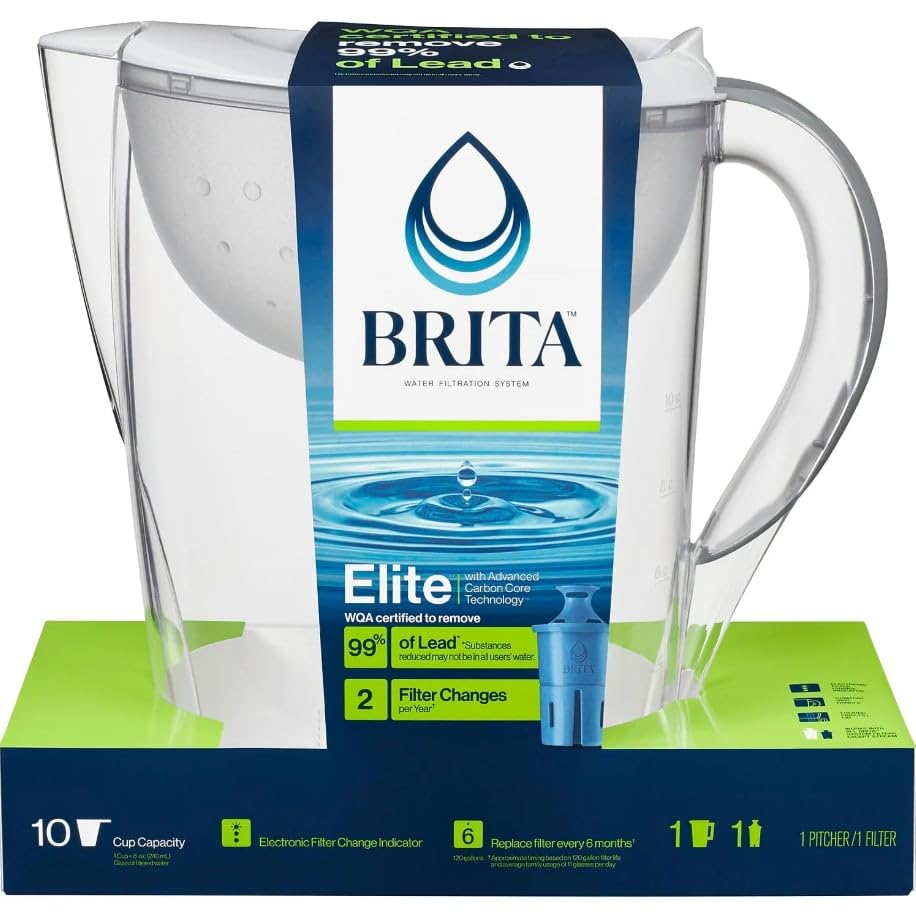
Brita vs PUR vs ZeroWater: The Brita Elite has the highest score of the three. Its filter is certified for lead in most Brita pitchers by IAPMO R&T, WQA, and NSF International, and it lasts 120 gallons, so it costs the least to run.
The catch: Its PFOA and PFOS claim isn’t certified. For PFAS, the PUR PLUS is the only one of the three certified for Total PFAS.
Health information, not medical advice. Guidance differs for infants, pregnancy and existing conditions. Test your own water and speak to a doctor or your local health authority. We may earn a commission when you buy through our links; it never affects our scores.
How do Brita, PUR and ZeroWater compare?
Three of the best-known pitcher brands, side by side. They’re closer than their marketing suggests: the real differences are which contaminants each is certified for, and how long its filter lasts. How we score
| # | Pitcher | Score | Certified by | Lead | PFAS | Fluoride | Filter life | Cost per gallon | Price |
|---|---|---|---|---|---|---|---|---|---|
| 01 | Brita EliteBest of the three | 4.1 | IAPMO, WQA, NSF | Certified | Claim | No | 120 gal | $0.14 | $47.99on Amazon › |
| 02 | PUR PLUS PitcherCertified for Total PFAS | 4.0 | IAPMO, WQA, NSF | Certified | Certified | No | 40 gal | $28.12on Amazon › | |
| 03 | ZeroWater 10-CupBest for near-zero TDS | 3.9 | IAPMO R&T | Certified | Certified | No | 15 gal | $37.99on Amazon › |
Certified: Certified by an independent body (named in each pick). Lab test: Tested by a named independent lab, not certified. Claim: The maker's claim, not certified. No: No claim. PFAS means PFOA/PFOS, or Total PFAS where the pick says so.
The three in detail
Brita Elite
Certified lead reduction in most Brita pitchers and a 120-gallon filter, at about $0.14 a gallon. No fluoride, TDS or certified PFAS claim.

PUR PLUS Pitcher
Certified lead and Total PFAS reduction for about $0.25 a gallon with a 3-pack of filters. You change it every 40 gallons, and owners say it slows as it fills.
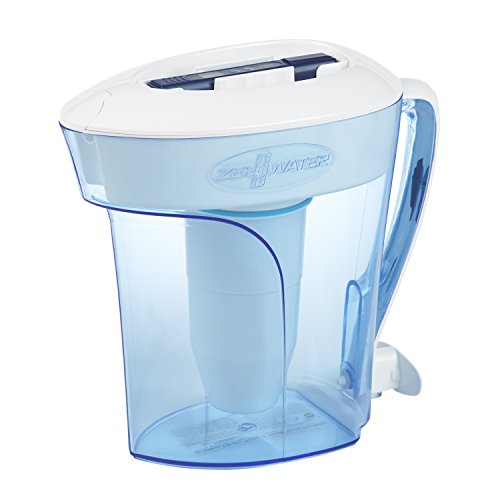
ZeroWater 10-Cup
Takes dissolved solids to near zero, and the included meter shows when the filter is spent. Filters run out fast, so it's one of the more expensive pitchers to run.
Which should you buy?
Pick the Brita Elite if
You want certified lead reduction with the fewest filter changes and the lowest running cost, and PFAS isn’t your concern.
Pick the PUR PLUS if
You want certified lead and Total PFAS reduction, and you don’t mind changing the filter about every two months.
Pick the ZeroWater if
You want dissolved solids taken to near zero and don’t mind the highest filter cost of the three.
Pick none of them if
You need fluoride reduced. None of these three is certified for it; the Culligan ZeroWater is.
Common questions
Which is certified for the most contaminants?
In most Brita pitchers, the Brita Elite. WQA lists 32 certified claims for it there, including lead, mercury, cadmium, chlorine, microplastics and pharmaceuticals such as ibuprofen. The PUR PLUS has 26, all certified by IAPMO R&T, and it’s the only one of the three certified for Total PFAS. The ZeroWater is certified by IAPMO R&T for lead, chromium-6, mercury and PFOA/PFOS, and takes dissolved solids to near zero. In a few Brita pitchers, such as the Everyday OB46, the Elite’s certified list is much shorter.
Do Brita and PUR pitchers remove lead?
Yes, with the right filter and pitcher. For PUR, the PUR PLUS filter (PPF951K), certified by IAPMO R&T. For Brita, the Elite filter, certified for lead by IAPMO R&T, WQA and NSF International in most Brita pitchers (not the Everyday OB46). The standard Brita and basic PUR filters have no lead claim. See our lead guide.
Which is cheapest to run?
The Brita Elite, at about $0.14 a gallon (120-gallon filter, $32.99 2-pack at brita.com). The PUR PLUS is about $0.25 a gallon with a 3-pack from Target. The ZeroWater costs the most per gallon, because each filter is rated for only 15 gallons.
Do any of them remove PFAS?
The PUR PLUS is certified by IAPMO R&T for Total PFAS, and the ZeroWater for PFOA and PFOS. Brita says its Elite filter reduces PFOA and PFOS, but none of IAPMO R&T, WQA or NSF International lists that claim, so it isn’t certified. See our PFAS guide.
Do any of them remove fluoride?
No. None of the three is certified for fluoride. The Culligan ZeroWater pitcher is, by IAPMO R&T, or you can step up to reverse osmosis. See our fluoride guide.
Sources
- IAPMO R&T product listing directory (Kaz USA W-29903 to W-29905; Brita LP W-13905; Zero Technologies W-14820)
- PUR PLUS pitcher filter performance data sheet (IAPMO R&T)
- NSF International listing, Brita Elite filter (OB06)
- Brita Elite performance data sheet
- ZeroWater performance data sheet (IAPMO R&T)
Prices as of October 14, 2026. Product prices and availability are accurate as of the date/time indicated and are subject to change. As an Amazon Associate we earn from qualifying purchases.