
The PUR PLUS filter is certified by IAPMO R&T to NSF/ANSI 42, 53 and 401, including lead, microplastics and Total PFAS.
The catch: Each filter lasts only 40 gallons, and owners say it slows as it fills.
Health information, not medical advice. Guidance differs for infants, pregnancy and existing conditions. Test your own water and speak to a doctor or your local health authority. We may earn a commission when you buy through our links; it never affects our scores.
Our verdict
The PUR PLUS is a cheap pitcher with a long certified list. In September 2026, PUR announced that IAPMO R&T certifies its PUR PLUS filter (PPF951K) to NSF/ANSI 42, 53 and 401. That covers lead (99.2% to 99.9%), Total PFAS (99.75%), microplastics (99.8%), mercury, cadmium, chlorine and a set of pesticides, pharmaceuticals and industrial chemicals. Our NSF certification guide explains how to check a certifier’s listing yourself.
The catch is the filter. Each one is rated for only 40 gallons, about two months, so you change it often. Owners’ most common complaint is that it slows as it fills. And only the PUR PLUS filter carries these claims: the basic PUR filter isn’t certified for lead, PFAS or microplastics, and the two look alike. It has no claim for fluoride, arsenic or dissolved solids.
You want certified lead and PFAS reduction for little money, and you don’t mind changing the filter every couple of months.
You need fluoride or arsenic reduced, or a slowing filter would drive you mad.
How it scored
Contaminant reduction carries the most weight in the overall score. How we score filters
What it removes
These are the PUR PLUS filter’s certified results from PUR’s current performance data sheet, certified by IAPMO R&T. They apply only to the PUR PLUS filter (PPF951K), not the basic PUR filter.
| Contaminant | Reduction | Certified by |
|---|---|---|
| LeadNSF/ANSI 53 | 99.2% / 99.9% | IAPMO R&T |
| Total PFASNSF/ANSI 53 | 99.75% | IAPMO R&T |
| MicroplasticsNSF/ANSI 401 | 99.8% | IAPMO R&T |
| MercuryNSF/ANSI 53 | >96.4% | IAPMO R&T |
| CadmiumNSF/ANSI 53 | >99.3% / 98.9% | IAPMO R&T |
| ChlorineNSF/ANSI 42 | 97.5% | IAPMO R&T |
| Pharmaceuticals, BPANSF/ANSI 401 | 94.3% to >99% | IAPMO R&T |
| Fluoride, arsenic, dissolved solids | – | No claim |
Where two figures appear, they are results at pH 8.5 and pH 6.5. “Total PFAS” here means the seven compounds in the NSF/ANSI 53 test (PFOA, PFOS, PFHxS, PFNA, PFHpA, PFBS and PFDA), not every PFAS chemical. NSF International also lists the PUR PLUS filter for chlorine, mercury, cadmium, copper, microplastics and several NSF/ANSI 401 compounds, but not for lead or PFAS. The claims apply in PUR’s listed pitchers and dispensers. IAPMO R&T files W-29903 (NSF/ANSI 42), W-29904 (NSF/ANSI 53) and W-29905 (NSF/ANSI 401), issued to Kaz USA, Inc., list the PPF951K filter at 40 gallons; all three were active on 7 October 2026.
What it costs to run
Each PUR PLUS filter is rated for 40 gallons, about two months, so most households use six a year. At Target’s prices, a 3-pack is $29.99, or $0.25 a gallon (about $60 a year), and a single filter is $14.99, or about $0.37 a gallon.
Pros and cons
Strengths
- Certified for lead, Total PFAS and microplastics
- Long certified list, including pharmaceuticals and pesticides
- Cheap pitcher with no installation
- Low running cost when you buy filters in packs
What to know
- 40-gallon filter means changes every two months
- Owners say filters slow as they fill
- Only the PUR PLUS filter is certified; the basic one isn’t
- No fluoride, arsenic or TDS reduction
What owners say
Owners like the taste and the reassurance of the certifications. The complaint that comes up most is a filter that clogs and slows down.
Often praised
- Cleaner taste straight away
- Peace of mind from the lead certification
- Low price and simple setup
Common complaints
- Flow slows as the filter fills
- Frequent filter changes
- Filter fit and change-light quibbles
Recurring themes across verified buyer reviews.
Specifications
- Filter
- PUR PLUS (PPF951K)
- Pitcher sizes
- 7 and 11 cups
- Filter life
- 40 gal, about 2 months
- Certifier
- IAPMO R&T
- Standards
- NSF/ANSI 42, 53, 401
- Certified for
- Lead, Total PFAS, microplastics, chlorine
- No claim
- Fluoride, arsenic, TDS
- Replacement filters
- 3-pack $29.99 at Target
Alternatives worth considering
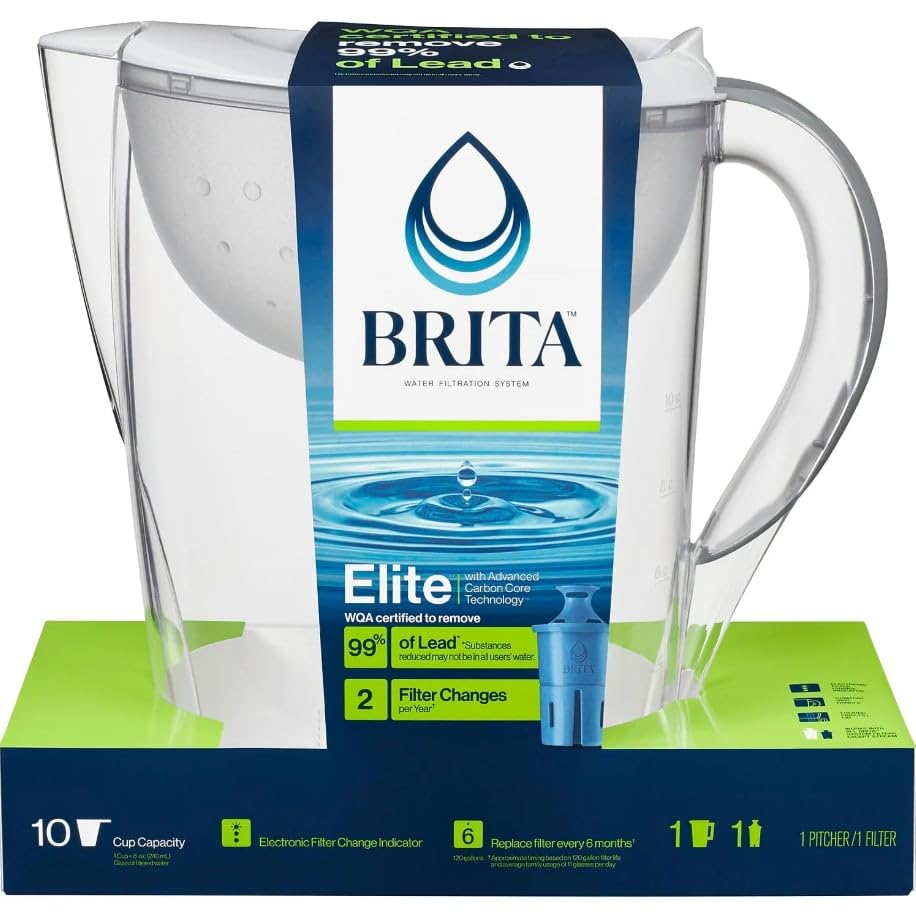
Brita Elite
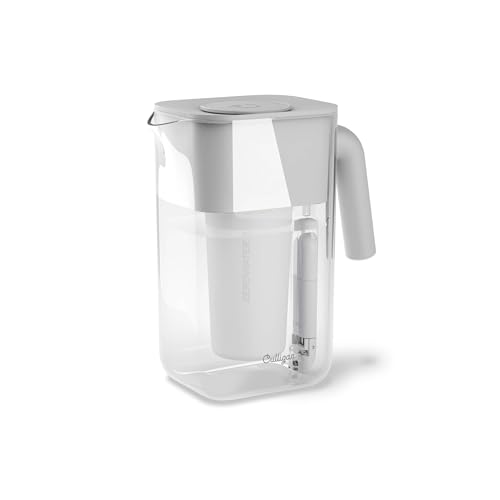
Culligan ZeroWater
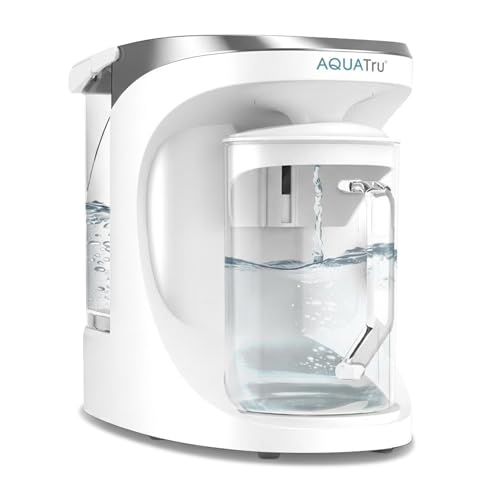
AquaTru Carafe
Common questions
Does the PUR PLUS remove lead?
Yes, with the PUR PLUS filter (PPF951K). It’s certified by IAPMO R&T to NSF/ANSI 53 for lead, at 99.2% to 99.9%. The basic PUR filter has no lead claim, so check the box. See our lead guide.
Does the PUR PLUS remove PFAS?
Yes. It’s certified by IAPMO R&T to NSF/ANSI 53 for Total PFAS at 99.75%. That covers the seven compounds in the standard’s test, not every PFAS chemical. See our PFAS guide.
PUR PLUS or Brita Elite?
It depends on what you need. The PUR PLUS is certified by IAPMO R&T for Total PFAS, which the Brita Elite isn’t. In most Brita pitchers the Brita Elite has the longer certified list, including lead, microplastics and 15 other emerging compounds certified by WQA, and its filter lasts three times longer (120 gallons against 40). Compare them in our Brita vs PUR vs ZeroWater guide.
Why does my PUR filter slow down?
The filter media loads up as it works, especially on hard or sediment-heavy water, and flow slows. Rinsing a new filter before use and changing it on schedule, every 40 gallons, helps.
The bottom line
If you want certified lead and PFAS reduction on a budget, the PUR PLUS is a strong pick, as long as you get the PUR PLUS filter and accept changing it every couple of months. If you need fluoride reduced, see the Culligan ZeroWater or reverse osmosis like the AquaTru Carafe.
- Certifier listings: IAPMO R&T files W-29903 (NSF/ANSI 42), W-29904 (NSF/ANSI 53) and W-29905 (NSF/ANSI 401), Kaz USA, Inc., all active. PPF951K: lead, Total PFAS, mercury, cadmium, copper, VOCs, microplastics and 8 other compounds, chlorine, 40 gallons. The basic PPF900Z filter has no lead or PFAS claim.
- Also searched: NSF International (Kaz USA): PPF951K listed for chlorine, mercury, cadmium, copper and microplastics, not lead or PFAS. WQA (Kaz USA): PUR pitchers listed under NSF/ANSI 42, 53 (including lead) and 401; no Total PFAS.
- Maker documents: PUR PLUS performance data sheet, PUR's September 2026 announcement and filter prices.
- Independent lab tests: None used.
Sources
- IAPMO R&T product listing directory (search “Kaz USA”: W-29903, W-29904, W-29905)
- PUR PLUS pitcher filter performance data sheet (IAPMO R&T)
- PUR announcement: PUR PLUS certified for lead, microplastics and Total PFAS (Sept 2026)
- NSF International listing, NSF/ANSI 53 (Kaz USA)
- PUR PLUS replacement filter
- PUR PLUS filter prices at Target
Prices as of October 14, 2026. Product prices and availability are accurate as of the date/time indicated and are subject to change. As an Amazon Associate we earn from qualifying purchases.