If your tap water smells like a swimming pool, tastes flat or chemical, leaves your skin dry after a shower, or makes your coffee and tea taste off, chlorine is almost certainly the culprit. Municipal water utilities have used chlorine to disinfect drinking water since 1908, and it remains the most widely used disinfectant in the US. At the concentrations allowed by the EPA, it’s safe to drink, but that doesn’t mean most people want to taste it.
The good news is that chlorine is one of the easiest contaminants to remove from drinking water. A wide range of filters handle it well, from inexpensive pitchers to whole-house systems, and virtually every NSF/ANSI 42 certified filter is independently verified for chlorine taste and odor reduction. For most people dealing with a chlorine taste problem, the solution is straightforward and affordable.
There is, however, an important complication worth knowing before you buy: a growing number of US utilities now use chloramine rather than chlorine as their primary disinfectant, and many standard filters that work perfectly for chlorine don’t work well for chloramine at all. This article covers both, and how to tell which one you’re dealing with.
Quick Picks: Best Water Filters for Chlorine
Here’s a summary of our top picks across filter types and budgets. Full reviews follow below.
| Pick | Type | Best For | Price Range |
|---|---|---|---|
| Brita Elite Pitcher | Pitcher | Budget chlorine + taste | $10 to $15 per filter |
| PUR Plus Faucet Mount | Faucet-mount | On-demand chlorine removal | $25 to $40 |
| Aquasana AQ-5300+ | Under-sink carbon | Chlorine + chloramine + more | $130 to $200 |
| SpringWell CF1 | Whole-house | Whole-home chlorine and chloramine | $800 to $1,000 |
| Aquasana EQ-1000 | Whole-house | City water, whole-home | $800 to $1,100 |
| AquaTru Carafe | Countertop RO | Chlorine + comprehensive filtration | $350 to $400 |
| Weddell Duo Shower Filter | Shower | Chlorine in shower water | $60 to $80 |
Chlorine vs. Chloramine: The One Thing You Need to Check First
Before choosing a filter, find out whether your utility uses chlorine or chloramine. This single piece of information determines which types of filters will actually work for you.
Chlorine has been used as a disinfectant in US water systems for over a century. It’s effective, inexpensive, and relatively easy to filter. Chlorine is volatile: it off-gasses naturally at room temperature, which is why water left in an uncapped jug overnight loses most of its chlorine smell. Standard activated carbon filters remove it reliably through adsorption, and virtually all pitcher filters, faucet mounts, and carbon block systems handle chlorine well.
Chloramine is a more stable alternative disinfectant made by combining chlorine with ammonia. Over 20% of US water utilities now use it, including many major cities. Utilities prefer it because it stays in the water longer throughout large distribution systems and produces fewer regulated disinfection byproducts. For homeowners, though, chloramine creates a significant filtration challenge. Unlike chlorine, it doesn’t off-gas and doesn’t evaporate. Letting water sit out, boiling water, or using a standard activated carbon pitcher does little to remove chloramine. You need either catalytic carbon (a specially engineered carbon with higher surface reactivity that can break the chlorine-ammonia bond) or a reverse osmosis system to address it effectively.
The practical risk is buying a pitcher or basic faucet filter for what you think is a chlorine taste problem, only to find it doesn’t help because your utility actually uses chloramine. A few minutes of research can save you a wasted purchase.
To find out which your utility uses, check your annual Consumer Confidence Report (CCR), call your water provider directly, or search online for your city’s name and “disinfectant” or “chloramine.” The CCR is required to disclose the disinfectant used, and most utilities list it clearly.
How Chlorine Affects Taste, Skin, and Hair
Chlorine in drinking water affects people in a few distinct ways, and understanding which one is bothering you helps narrow down the right solution.
For taste and drinking water, even small amounts of residual chlorine can make water, coffee, and tea noticeably chemical or flat-tasting. A basic pitcher filter or faucet mount handles this well for most city water users.
For skin and hair, chlorine in shower and bath water strips natural oils, contributing to dryness, irritation, and frizz with regular exposure. Board-certified dermatologists note that chlorine removes the skin’s natural protective oils, which can worsen conditions like eczema and dry skin over time. A shower filter addresses this specifically. A whole-house system addresses it everywhere.
For disinfection byproducts (DBPs), when chlorine reacts with naturally occurring organic matter in water, it forms compounds called trihalomethanes (THMs) and haloacetic acids (HAAs). These DBPs are regulated by the EPA but can contribute to the stale or plasticky taste some people notice. Multi-stage carbon block filters, catalytic carbon systems, and RO systems all reduce DBPs alongside chlorine itself.
The 7 Best Water Filters for Chlorine
Every filter below has NSF certification or independent lab verification for chlorine or chloramine reduction. The right choice depends on your disinfectant type, living situation, and whether you want point-of-use or whole-home treatment.
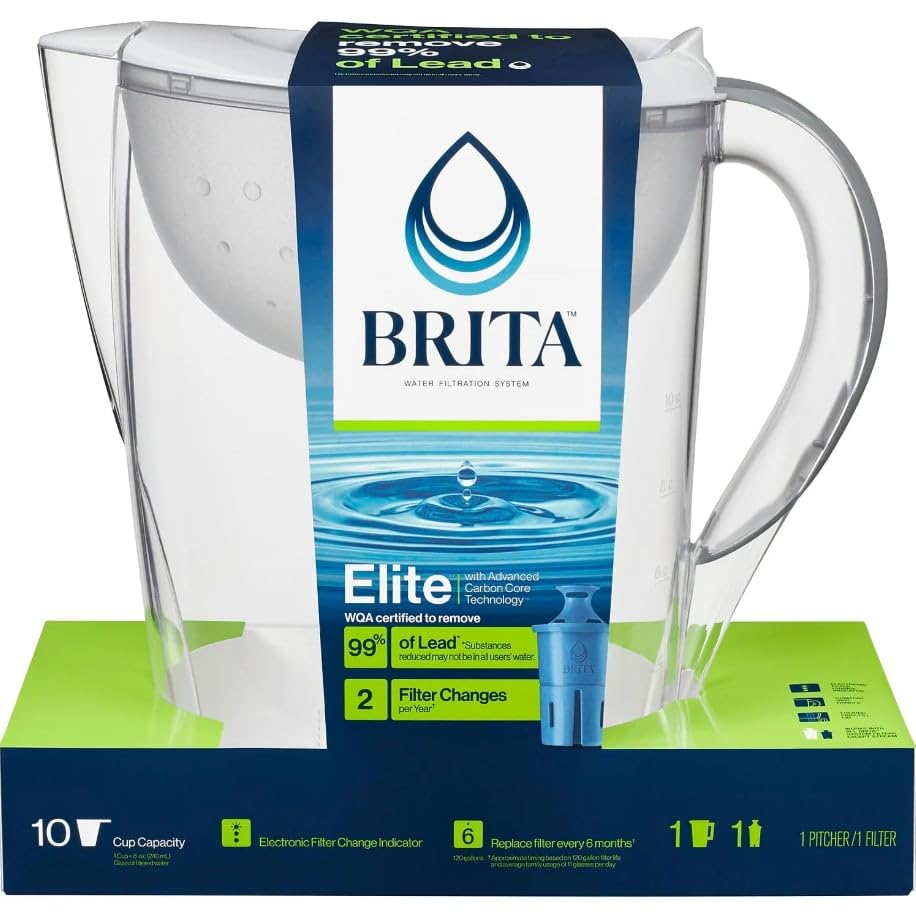
1. Brita Elite Pitcher — Best Budget Option for Chlorine
Filter type: Pitcher (pleated carbon + ion exchange)
For households on city water with a chlorine taste problem and no other major water quality concerns, the Brita Elite filter is the simplest and most affordable solution available. It’s NSF/ANSI 42 certified for chlorine taste and odor reduction, achieves 99% chlorine removal, and lasts six months per filter (three times longer than the standard Brita cartridge). It also carries NSF 53 certification for lead and NSF 401 for pharmaceuticals, making it a genuinely capable filter for the price.
The important limitation: the Brita Elite is designed for chlorine, not chloramine. If your utility uses chloramine, this filter will not address it meaningfully. At $10 to $15 per filter with only two needed per year, it’s the lowest-cost certified chlorine solution available for any filter type.
- Certifications: NSF/ANSI 42 (chlorine), 53 (lead), 401
- Chlorine reduction: 99%
- Chloramine reduction: Not designed for chloramine removal
- Annual filter cost: ~$25 to $30
- Best for: City water users with chlorine taste and odor concerns on a tight budget
2. PUR Plus Faucet Mount — Best On-Demand Chlorine Filter
Filter type: Faucet-mount
The PUR Plus faucet-mount filter is the most convenient solution for households that want filtered water on demand without refilling a pitcher. It installs in minutes with no tools, toggles between filtered and unfiltered flow, and is NSF/ANSI 42 and 53 certified for chlorine and lead reduction, with independent lab testing showing strong chlorine, PFAS, and heavy metal removal. For renters and small households who want better-tasting water immediately from the tap, it’s hard to beat the combination of price and ease.
Filter life is approximately 100 gallons or three months, and replacement filters cost $15 to $20 each. One compatibility note worth checking: the PUR Plus does not fit pull-out or spray-style faucets, which are common in newer kitchens.
- Certifications: NSF/ANSI 42, 53 (WQA certified)
- Chlorine reduction: 99%
- Also removes: Lead, PFAS, mercury, 70+ contaminants
- Annual filter cost: ~$60 to $80
- Best for: Renters and small households who want on-demand filtered water with no plumbing work
3. Aquasana AQ-5300+ — Best Under-Sink Filter for Chlorine and Chloramine
Filter type: 3-stage under-sink carbon block (catalytic carbon)
The Aquasana AQ-5300+ earns its spot here because it’s one of the few under-sink filters that explicitly addresses both chlorine and chloramine, thanks to its catalytic carbon technology. Where most pitcher and faucet filters use standard activated carbon, the AQ-5300+ uses a combination of catalytic carbon, ion exchange, and sub-micron filtration that breaks down chloramine effectively alongside chlorine, chlorination byproducts, lead, PFAS, and VOCs.
This makes it the right choice for households that don’t know which disinfectant their utility uses, or who know it’s chloramine and want a non-RO under-sink solution. NSF/ANSI 42 and 473 certified, it installs under the kitchen sink with a dedicated faucet and handles the daily drinking and cooking water needs of most families. The Max Flow version improved on earlier models’ slower flow rate.
- Certifications: NSF/ANSI 42, 53, 473
- Chlorine reduction: 99%+
- Chloramine reduction: Yes (catalytic carbon)
- Also removes: Lead, PFAS, VOCs, pharmaceuticals, chlorination byproducts
- Annual filter cost: ~$60 to $80
- Best for: Homeowners who want under-sink chlorine and chloramine removal with mineral retention
4. SpringWell CF1 — Best Whole-House Filter for Chlorine and Chloramine
Filter type: Whole-house catalytic carbon tank
The SpringWell CF1 is the best whole-home chlorine and chloramine filter for city water users. It uses high-capacity catalytic carbon media to reduce chlorine, chloramine, chlorination byproducts (THMs), taste, and odor at every tap in the house, including showers, washing machines, and kitchen sinks. In long-term testing it maintained strong chlorine byproduct reduction even after three years of use, which is rare for tank-based systems.
At 9+ GPM flow rate, it handles peak demand in larger households without pressure drops. It comes with a lifetime tank warranty and installs at the main water line. For households bothered by chlorine in their shower water, laundry, or cooking, it addresses the source rather than treating one tap at a time.
- Certifications: NSF/ANSI tested components
- Chlorine reduction: 99%+ (chlorination byproducts to zero in testing)
- Chloramine reduction: Yes (catalytic carbon)
- Does not address: Lead, PFAS, fluoride, nitrates (add under-sink RO for drinking water)
- Annual media cost: ~$100 to $120 (media replacement every 5 to 7 years)
- Best for: Homeowners who want chlorine and chloramine removed at every tap throughout the home
5. Aquasana EQ-1000 — Best Whole-House Filter + Scale Prevention
Filter type: Whole-house carbon filter with salt-free conditioning
The Aquasana EQ-1000 is worth recommending separately from the SpringWell CF1 for households that also deal with hard water alongside chlorine. It combines multi-stage carbon filtration for chlorine, chloramines, and VOCs with a salt-free Template Assisted Crystallization stage that prevents scale buildup in pipes and appliances. For city water users with both hard water and chlorine concerns, it handles both in one system without salt or electricity.
NSF/ANSI 42 certified components cover the chlorine and taste claims. A one-million-gallon capacity makes the annual operating cost of roughly $120 competitive over a ten-year lifespan.
- Certifications: NSF/ANSI 42 tested
- Chlorine reduction: Certified
- Chloramine reduction: Yes (carbon media)
- Also addresses: Scale prevention (TAC), VOCs, sediment
- Annual cost: ~$120
- Best for: City water homeowners dealing with both chlorine and hard water scale
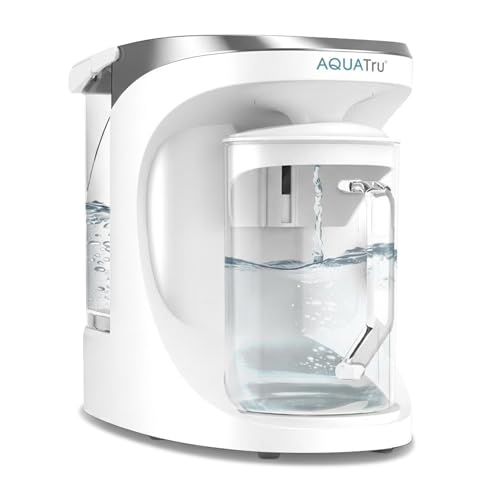
6. AquaTru Carafe — Best Countertop Option
Filter type: Countertop reverse osmosis
For renters or anyone who can’t modify their plumbing and wants the most thorough chlorine and contaminant removal available, the AquaTru Carafe is the strongest countertop option. Its multi-stage filtration includes a carbon pre-filter stage that handles chlorine and chloramine, followed by an RO membrane that removes virtually everything else: lead, PFAS, arsenic, fluoride, nitrates, and 80+ additional contaminants. It’s NSF/ANSI 42, 53, 58, and 473 certified for all 83+ contaminants it claims to reduce.
In independent lab testing it achieved 100% chlorine elimination alongside complete removal of lead, fluoride, and uranium. No installation or plumbing work is required: it sits on the counter and plugs into a standard outlet. Annual filter costs of approximately $75 are modest given the breadth of what it addresses.
- Certifications: NSF/ANSI 42, 53, 58, 473
- Chlorine reduction: 100% in lab testing
- Chloramine reduction: Yes (carbon pre-filter stage)
- Also removes: Lead, PFAS, fluoride, arsenic, uranium, nitrates
- Annual filter cost: ~$75
- Best for: Renters who want the most comprehensive chlorine and contaminant removal without installation
7. Weddell Duo Shower Filter — Best for Shower Water Chlorine
Filter type: Inline shower filter
If your main chlorine concern is skin dryness, scalp irritation, or hair damage from shower water rather than drinking water, a dedicated shower filter is the most targeted and affordable solution. The Weddell Duo is the only shower filter in the US market with actual NSF certification (to NSF 177, the standard for shower filter chlorine reduction), rather than the more common “tested to NSF standards” marketing claim that falls short of full certification. It removes 99% of chlorine, also filters PFAS and particulates, and uses a clear dual-stage housing that shows both the sediment and carbon filter stages.
Most shower filters on the market, including popular options from AquaBliss and Canopy, use KDF-55, calcium sulfite, and activated carbon media and receive strong user reviews for reducing chlorine smell and improving skin and hair feel. The Weddell Duo distinguishes itself by being the only one with the independent NSF certification to back those claims.
- Certifications: NSF 177 (chlorine), verified PFAS reduction
- Chlorine reduction: 99%
- Also removes: PFAS, particulates
- Annual filter cost: ~$50 to $70
- Best for: Anyone with dry skin, scalp irritation, or hair concerns related to chlorine in shower water
Does Boiling Water Remove Chlorine?
This question comes up frequently, and the answer is nuanced. Boiling water does remove chlorine: chlorine is volatile and evaporates relatively quickly when heated. Letting water sit in an open container overnight also removes most chlorine through natural off-gassing.
However, neither approach works for chloramine. Chloramine is far more chemically stable and does not evaporate on heating or sitting. If your utility uses chloramine and you rely on boiling or letting water sit, you will still have chloramine in your water. A filter is required.
Additionally, boiling addresses neither taste-related compounds like chlorination byproducts, nor health-relevant contaminants like lead, PFAS, or arsenic. For anything beyond basic chlorine off-gassing, a certified filter is the more reliable and practical solution.
How to Check If Your City Uses Chloramine
Checking which disinfectant your utility uses takes about two minutes and can save you from buying the wrong filter. Here are the three fastest ways.
Your Consumer Confidence Report, published annually by your water utility and available on their website or by request, is required by the EPA to disclose the disinfectant used. Search for your utility’s name followed by “water quality report” or “CCR.” Look for terms like “chloramine,” “monochloramine,” or “secondary disinfectant.”
A quick call to your water utility’s customer service line will get you a direct answer. Most utilities have this information readily available.
A home test kit that tests for both chlorine and chloramine ($15 to $30 at hardware stores or online) gives you a direct measurement from your tap. Testing for total chlorine versus free chlorine can indicate chloramine presence: if total chlorine is higher than free chlorine, chloramine is likely present.
Frequently Asked Questions
These are the most common questions readers ask about chlorine filtration.
Does a Brita filter remove chlorine? Yes, the Brita Elite filter is NSF 42 certified for chlorine taste and odor reduction and achieves 99% removal. The standard Brita filter also reduces chlorine but is not certified for lead or other health-relevant contaminants. Neither Brita filter is designed for chloramine removal.
What is the difference between chlorine and chloramine in water? Both are disinfectants added to municipal water. Chlorine is free chlorine, which is volatile and relatively easy to filter or let evaporate. Chloramine is a more stable compound made by combining chlorine with ammonia. It’s used by about 20% of US utilities for its longer lasting disinfection effect. Chloramine requires catalytic carbon or RO to remove effectively, where standard carbon handles chlorine adequately.
Can I just let my water sit to remove chlorine? For chlorine specifically, yes: leaving water uncapped at room temperature for several hours allows most chlorine to off-gas. This doesn’t work for chloramine, however, and it doesn’t address any other contaminants like lead, PFAS, or sediment. A filter is more reliable and addresses a broader range of issues.
Do shower filters actually work for chlorine? Yes, most shower filters meaningfully reduce chlorine in shower water. KDF-55 and calcium sulfite media are the most common technologies used and perform well for chlorine. The Weddell Duo is the only US shower filter with actual NSF 177 certification verifying its chlorine removal claims. Many users with sensitive skin or eczema report noticeable improvement after installing a shower filter.
Will a whole-house filter solve my chlorine taste problem? Yes, a whole-house carbon or catalytic carbon filter at the main water line will reduce chlorine throughout the entire home, including the kitchen tap. If your goal is specifically drinking water taste improvement at a lower cost, a pitcher or under-sink filter is more economical. A whole-house system is worth the investment if you also want chlorine-free shower water or if your household has multiple people bothered by chlorine.
The Bottom Line
Chlorine removal is one of the most accessible water quality improvements available, and the right filter for most households is neither complicated nor expensive. For drinking water taste and odor on a budget, the Brita Elite or PUR Plus faucet mount handles chlorine reliably for under $40 upfront. For households with chloramine, the Aquasana AQ-5300+ or SpringWell CF1 are the most important upgrades. For skin and hair concerns, the Weddell Duo shower filter solves the problem at the source.
The one step worth taking before purchasing: check your Consumer Confidence Report to confirm whether your utility uses chlorine or chloramine. Five minutes of research ensures you buy a filter that will actually work for your water.

About Marcus Chen