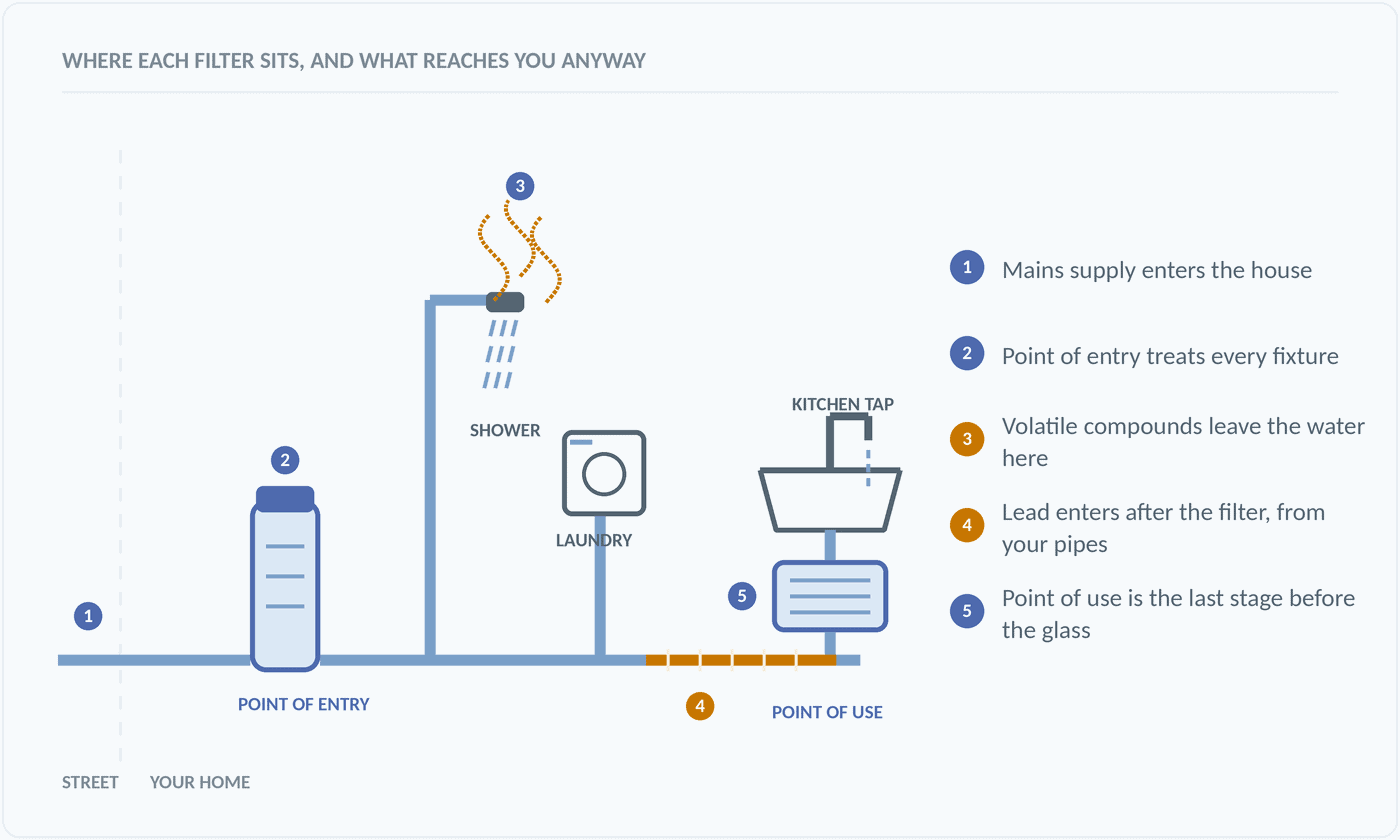
Whole-House vs Point-of-Use Water Filters: Which One You Actually Need
They are not competing products. Whole-house treats what you wash in, point-of-use treats what you drink, and the certification picture explains why.
 Marcus Chen
They are not competing products. Whole-house treats what you wash in, point-of-use treats what you drink, and the certification picture explains why.
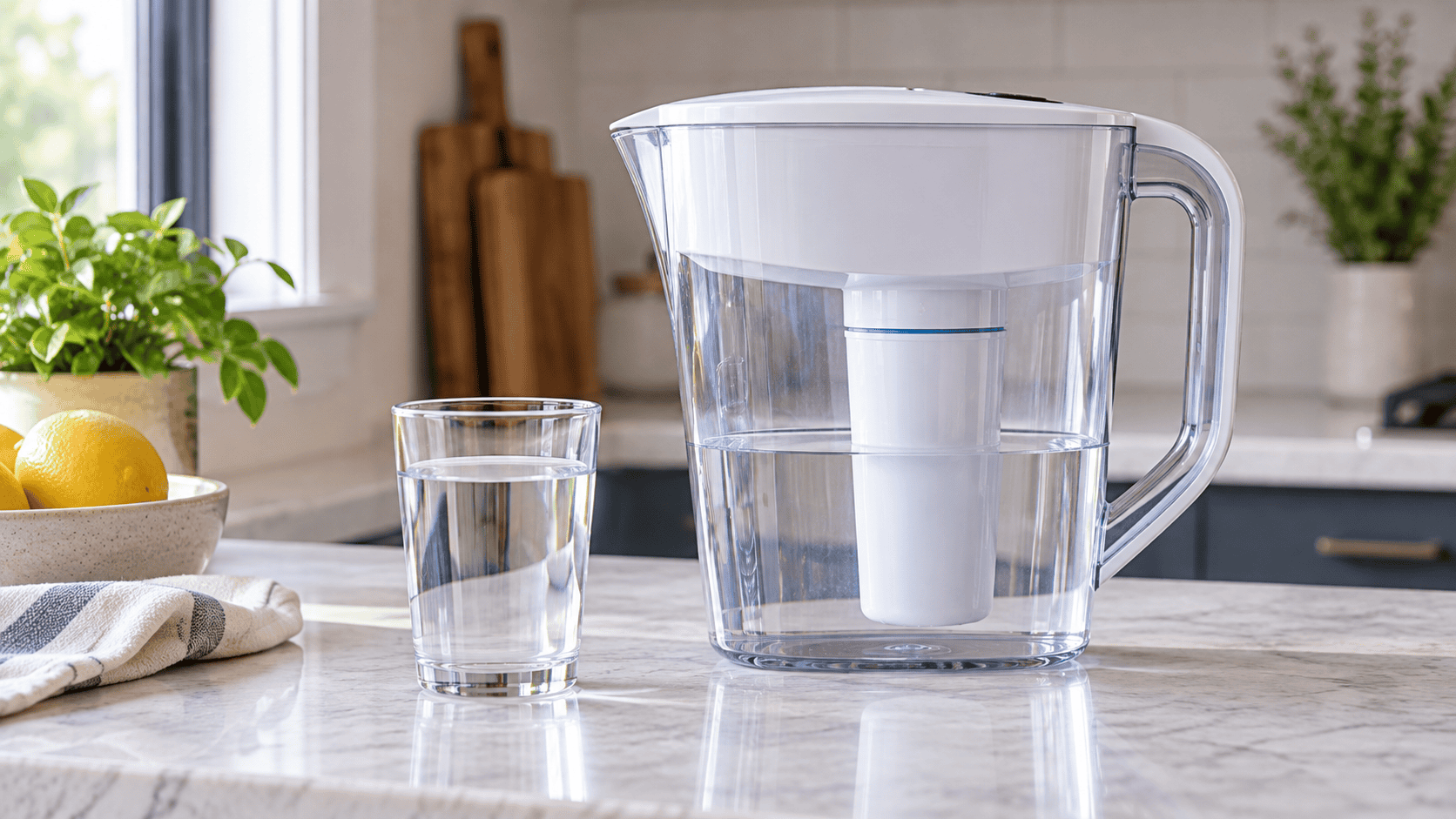
The most heavily certified pitcher filter on the market, covering total PFAS, fluoride and pharmaceuticals. The catch is a 20-gallon certified capacity.

Remineralizing distilled or RO water is a taste and equipment decision, not a health rescue. Here is what each method adds, how to check it is working, and where minerals are genuinely required.
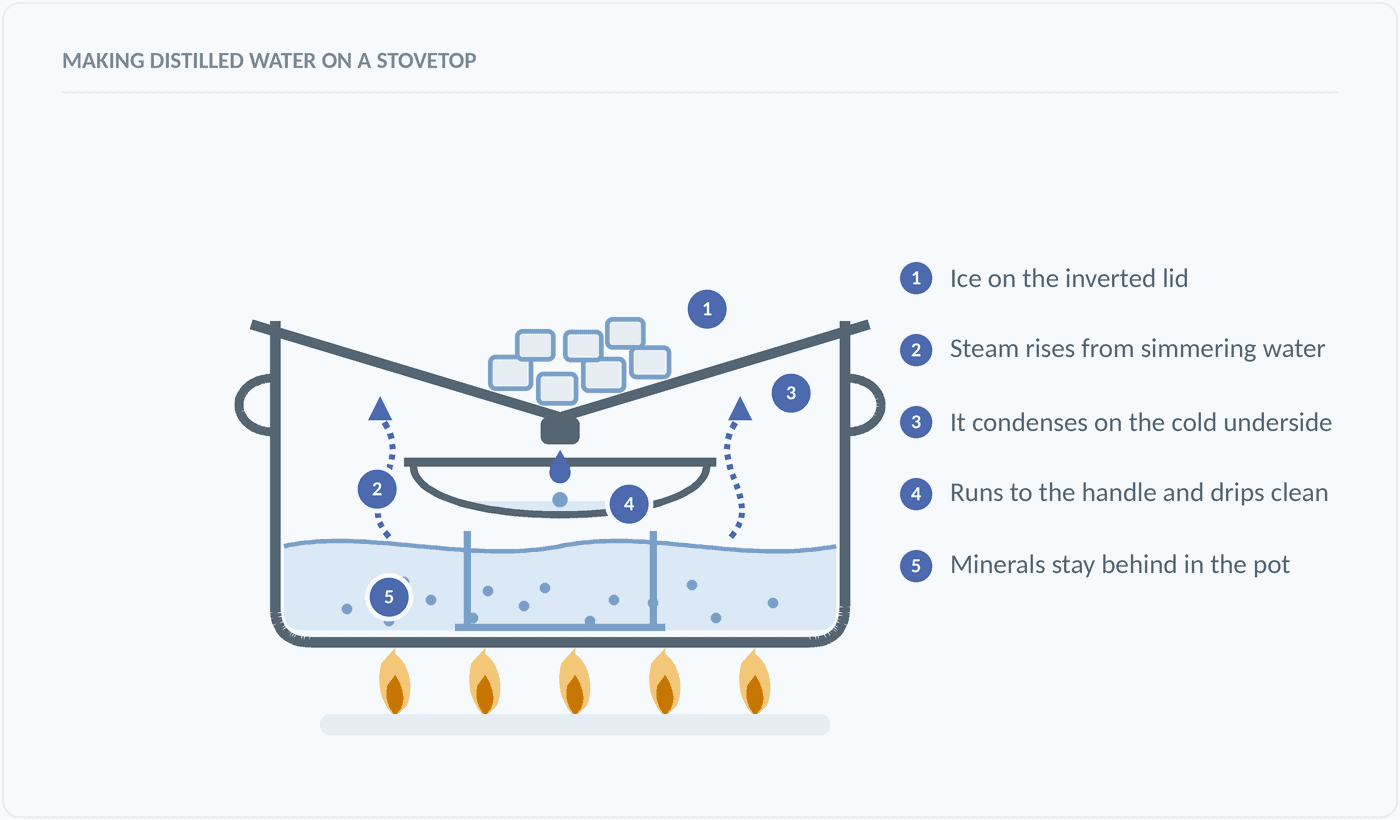
There is no single substitute for distilled water, because distilled water does two unrelated jobs at once. Work out whether you need mineral free water or germ free water, and the right stand-in becomes obvious.

Manganese is an essential nutrient in food and a neurotoxicant in excess, and the guidelines disagree by a factor of six. What it is, how common it is, who is actually at risk, and how to find out your number.

Manganese is the contaminant most often mistaken for iron and most often treated as though it were. Here is how the removal methods differ, why pH decides which one works, and what to do about drinking water immediately.
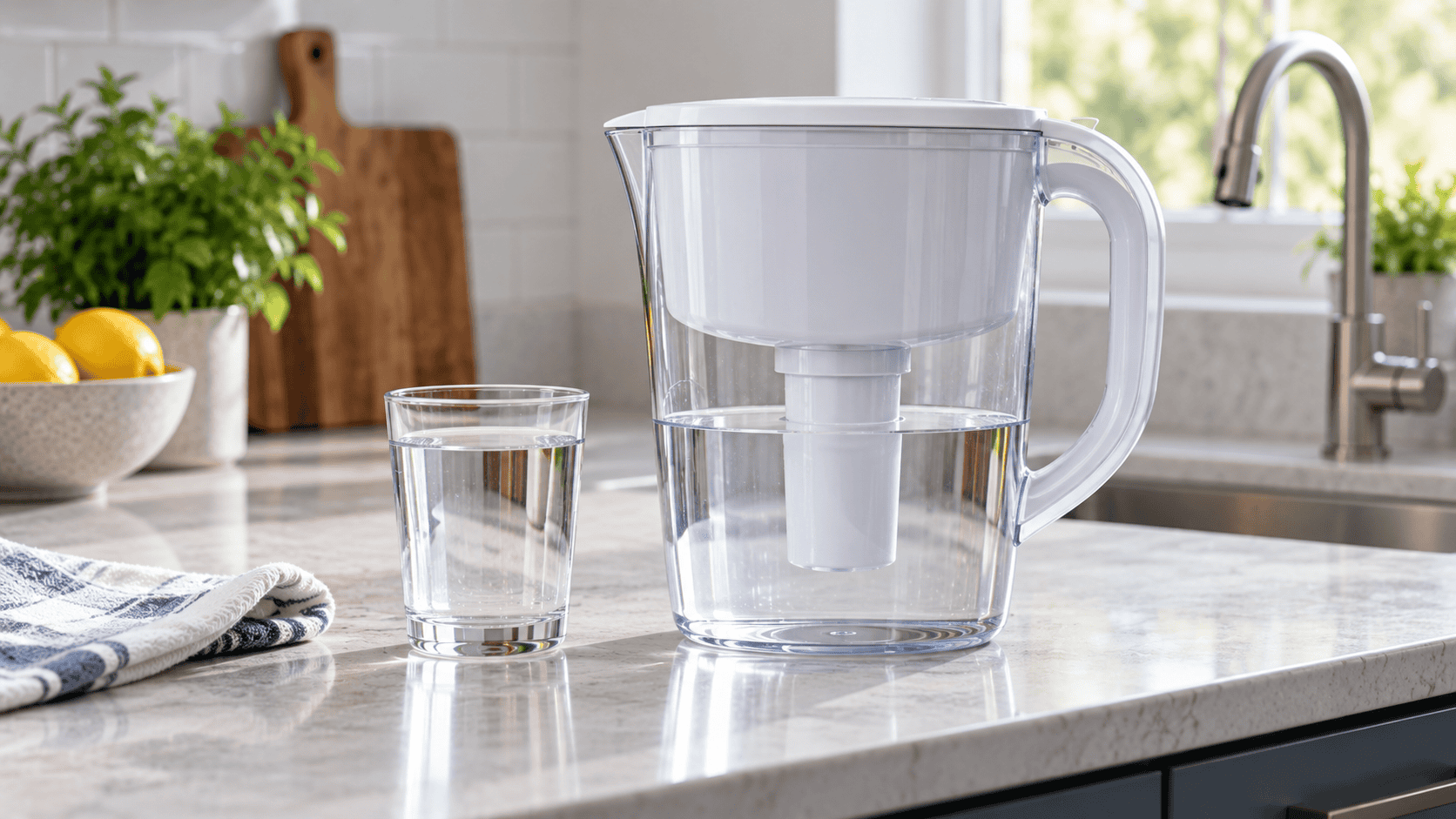
Pink film in a Brita is not mold, and the reason it keeps coming back is that the filter removed the chlorine holding it in check. How to tell the three culprits apart and clean the pitcher so it stays clean.
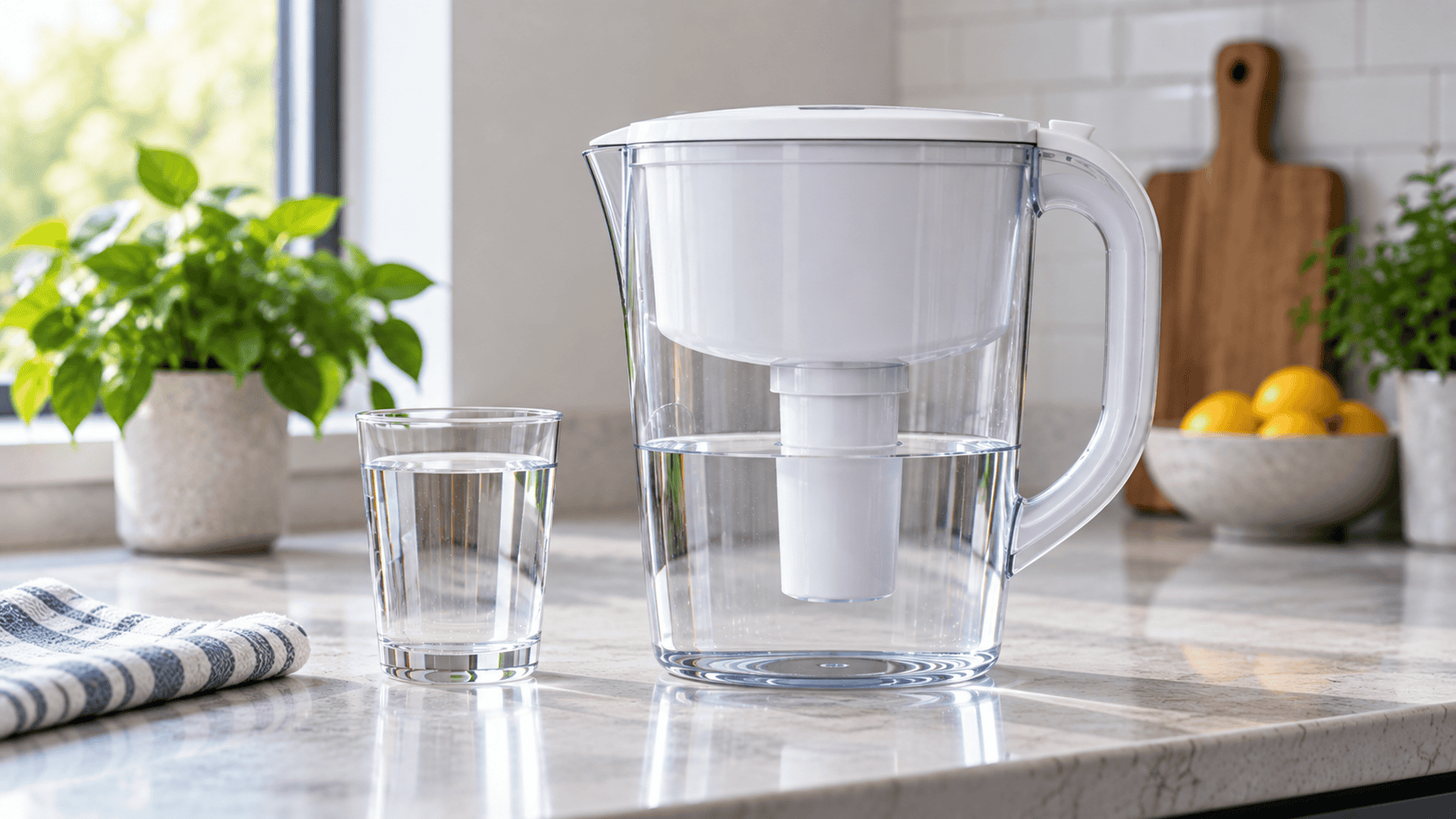
The white standard filter and the blue Elite filter carry different certifications, and only one covers lead. Here is what each Brita format is certified to reduce, verified against Brita’s own performance data sheets.

Hard water stains are calcium carbonate, and they dissolve in mild acid rather than coming off with effort. Here is what to use on each surface, what will permanently damage stone, and how to tell a deposit from an etch.

The rotten egg smell in well water is hydrogen sulfide gas. Here is how to tell whether it is coming from your water heater, your plumbing, or the well itself, and what each one costs to fix.