The best whole house water filter we’ve found for certified reduction: WQA certifies it for PFOA, PFOS and three other PFAS, plus VOCs, at every tap in the house. It needs no drain and wastes no water.
The catch: The tank lasts about 2 years and costs about $1,749 to replace, and it isn’t certified for lead.
Health information, not medical advice. Guidance differs for infants, pregnancy and existing conditions. Test your own water and speak to a doctor or your local health authority. We may earn a commission when you buy through our links; it never affects our scores.
How the whole-house systems compare
The five whole-house systems we recommend, ranked by our overall score. Certification is rare at this size: only the HealthShield is certified for any reduction claim. The others rest on the maker’s own figures, which is why they score lower. How we score
| # | System | Score | Lead | PFAS | Fluoride | Filter life | Price |
|---|---|---|---|---|---|---|---|
| 01 | Aquasana HealthShieldBest overall, certified for PFAS | 3.1 | No | Certified | No | 165,000 gal, ~2 yr | See priceat Aquasana › |
| 02 | SpringWell CF1Best for chloramine city water | 3.1 | Claim | Claim | No | 1M gal or 10 years | See priceat SpringWell › |
| 03 | SpringWell WSBest for iron and sulfur wells | 3.1 | No | No | No | Media 10+ years | See priceat SpringWell › |
| 04 | SpringWell FutureSoftScale control, salt-free | 3.1 | No | No | No | Media 5+ years | See priceat SpringWell › |
| 05 | Aquasana RhinoLowest running cost | 3.0 | No | No | No | 1M gal or 10 years | $1,084.99on Amazon › |
Certified: Certified by an independent body (named in each pick). Lab test: Tested by a named independent lab, not certified. Claim: The maker's claim, not certified. No: No claim. PFAS means PFOA/PFOS, or Total PFAS where the pick says so.
Our five picks in detail
What each system does, what’s certified and what isn’t, and who it suits.
Aquasana HealthShield
Certified PFAS and VOC reduction at every tap, which most whole-house filters we've checked lack. The tank lasts 165,000 gallons (about 2 years) and costs about $1,749 to replace, and it isn't certified for lead.
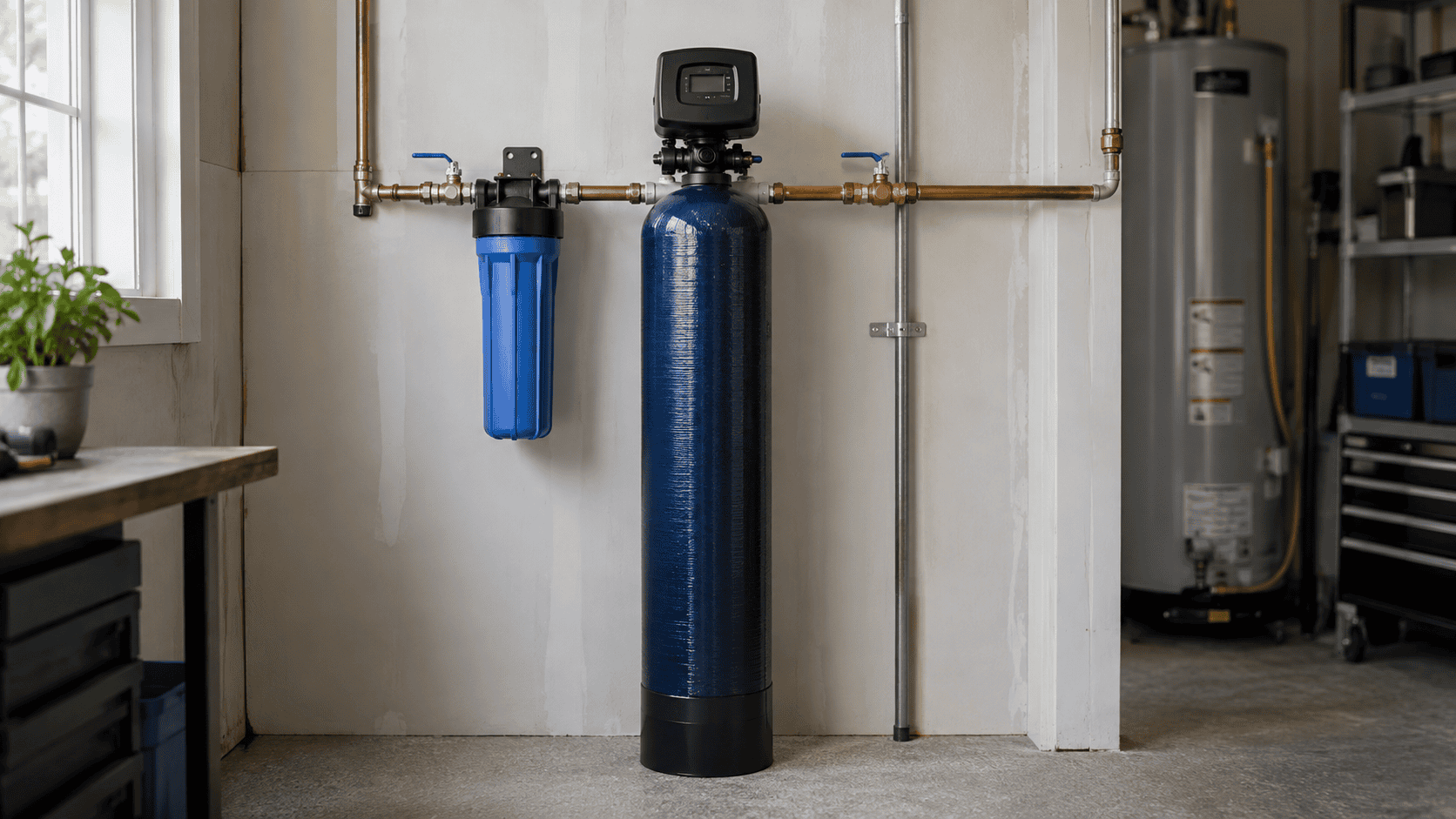
SpringWell CF1
Whole-house KDF and catalytic carbon for chlorine and chloramine taste at every tap, with media rated for 1 million gallons. No certifier we checked lists it.

SpringWell WS
Air-injection oxidation with nightly backwash, no chemicals to add. It needs power and a drain, and it isn't meant to make unsafe well water safe.
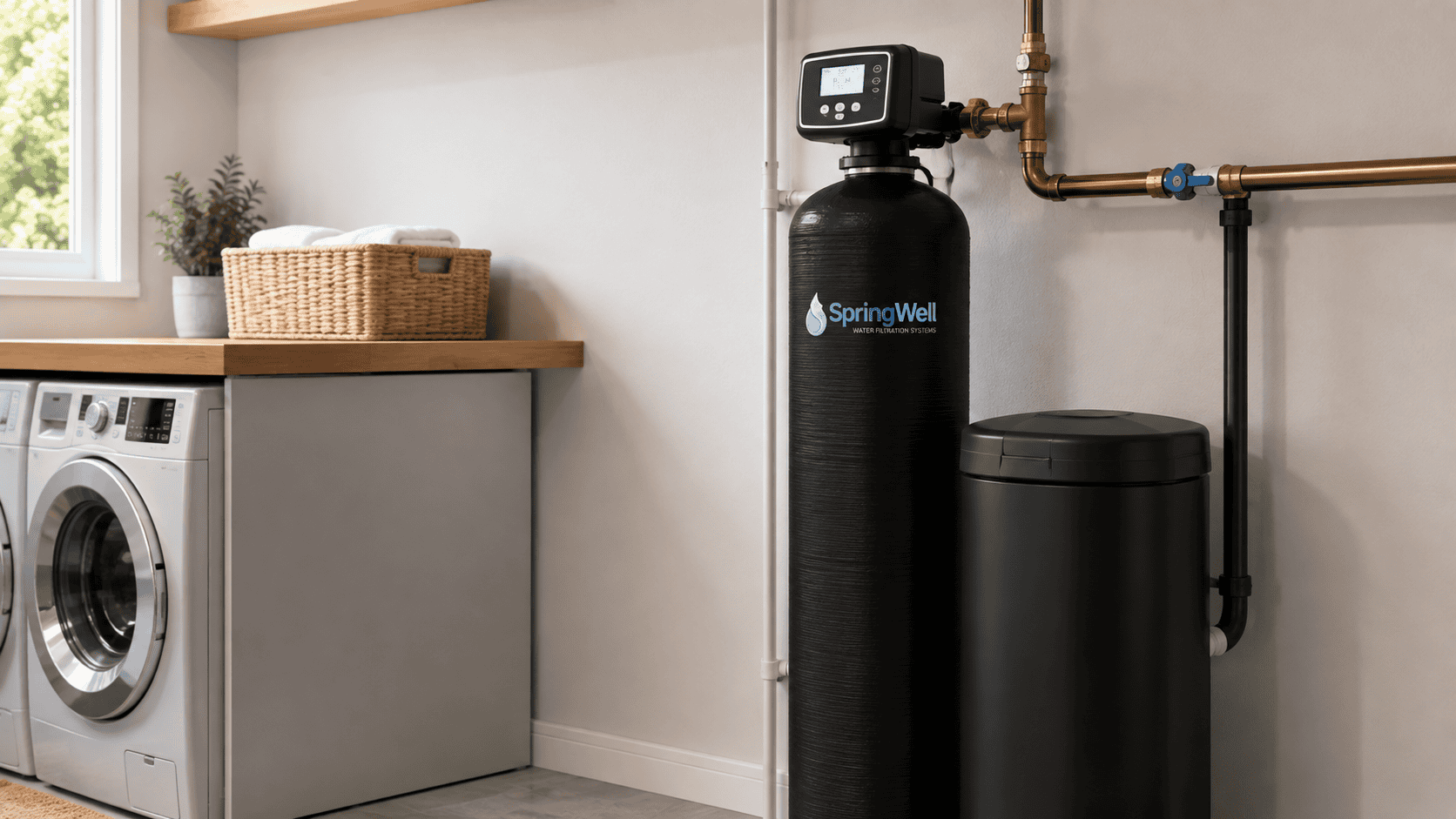
SpringWell FutureSoft
Template-assisted crystallization with no salt, power or drain, rated for hardness up to 81 grains per gallon. It conditions rather than softens.
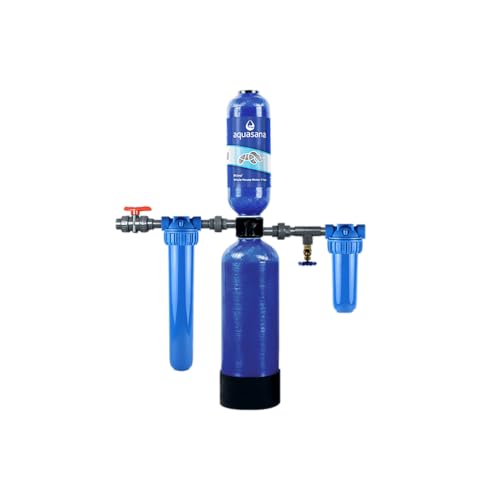
Aquasana Rhino
Chlorine taste and smell out of every tap for 1 million gallons, with media costing under $0.001 a gallon and no power or drain. No certifier lists its reduction claims, and the pre-filter needs changing every 2 months.
What about hard water?
None of these filters removes hardness. For scale and spots throughout the house, you need a salt-based water softener certified to NSF/ANSI 44, and these are the two we recommend. See our best water filter for hard water guide for every option.

Aquasana SimplySoft

Kenmore 350
Others we considered
- Aquasana OptimH2O Whole House (EQ-OPTM). IAPMO R&T certifies it for lead, cysts and PFOA/PFOS, but Aquasana no longer lists the system for sale. Replacement filters are still available for owners.
- Aquasana Rhino Chloramines and Rhino Max Flow. Variants of the Rhino; WQA lists the Rhino family for structure only (CSA B483.1), with no reduction claims.
- Aquasana Rhino Well Water. Aquasana says it was “independently tested” for bacteria, viruses and cysts, without naming a lab or certifier. Its optional UV unit is certified by NSF International to NSF/ANSI 55, Class B.
- Just need drinking water? A certified under-sink filter treats the kitchen tap for far less. See our under-sink filter guide.
How to choose a whole-house water filter
Start with your water
On city water, check your utility’s annual report for chlorine or chloramine and PFAS. On a well, get a lab test first: iron, sulfur, hardness and bacteria each need a different system (hardness needs a water softener), and none of these makes unsafe well water safe on its own.
Certification is rare here
Most whole-house systems carry no reduction certification from NSF International, IAPMO R&T or WQA. If you need certified lead or PFAS reduction, choose the HealthShield for PFAS, or pair any whole-house system with a certified drinking-water filter at the kitchen tap.
Count the running cost
The Rhino’s media lasts 1 million gallons or 10 years, under $0.001 a gallon. The HealthShield’s tank lasts 165,000 gallons, about $875 a year. Both need a pre-filter change every 2 months unless you buy the 6-month option.
Plan the install
All five go on the main water line, and most owners hire a plumber. The HealthShield needs an outlet nearby; the SpringWell WS needs power and a drain for its nightly backwash.
Common questions
What’s the best whole house water filter?
Our top pick is the Aquasana HealthShield, the only whole-house system on sale we’ve found that’s certified for PFAS reduction (by WQA). On a tighter budget for chlorine taste, the Aquasana Rhino costs far less to run, though it isn’t certified.
Do whole-house filters remove lead and PFAS?
Very few are certified to. The HealthShield is certified by WQA for PFOA, PFOS and three other PFAS, but not lead. For certified lead reduction, add a filter at the kitchen tap such as the Aquasana Claryum Max Flow. See our PFAS guide and lead guide.
Whole-house or under-sink filter?
A whole-house system treats every tap, including showers and laundry, which helps with chlorine smell and scale. An under-sink filter treats only the water you drink and cook with, but many more are certified for lead, PFAS and fluoride, and they cost far less. Plenty of homes use both.
Which whole-house filter is best for well water?
It depends on your test results. The SpringWell WS is built for iron, sulfur and manganese, and Aquasana sells a UV add-on for bacteria. Neither is certified for those claims, so test first. See our well water guide.
Do I need a plumber?
Usually. These systems go on the main water line, often with a bypass valve. Aquasana recommends a licensed plumber for the HealthShield, and some areas require one.
Sources
- WQA certified product listings: Aquasana Inc (WH-HS under NSF/ANSI 53 and 401; Rhino WH-1000 series under CSA B483.1)
- IAPMO R&T product listing directory: Aquasana WP-10707 (OptimH2O Whole House EQ-OPTM)
- NSF International listings, Aquasana (UV systems, NSF/ANSI 55)
- Aquasana HealthShield WH-HS performance data sheet
- SpringWell whole-house filter product pages
Prices as of October 14, 2026. Product prices and availability are accurate as of the date/time indicated and are subject to change. As an Amazon Associate we earn from qualifying purchases.