Brand Reviews

SpringWell FutureSoft Review

SpringWell's FutureSoft is the best salt-free system we've tested, protecting your pipes from scale with no salt, sodium, electricity, or wasted water. But it's a conditioner, not a true softener: it won't remove hardness minerals or give you that soft-water feel. Here's who it's right for.

MC Marcus Chen ·Updated August 2026 ·9 min read
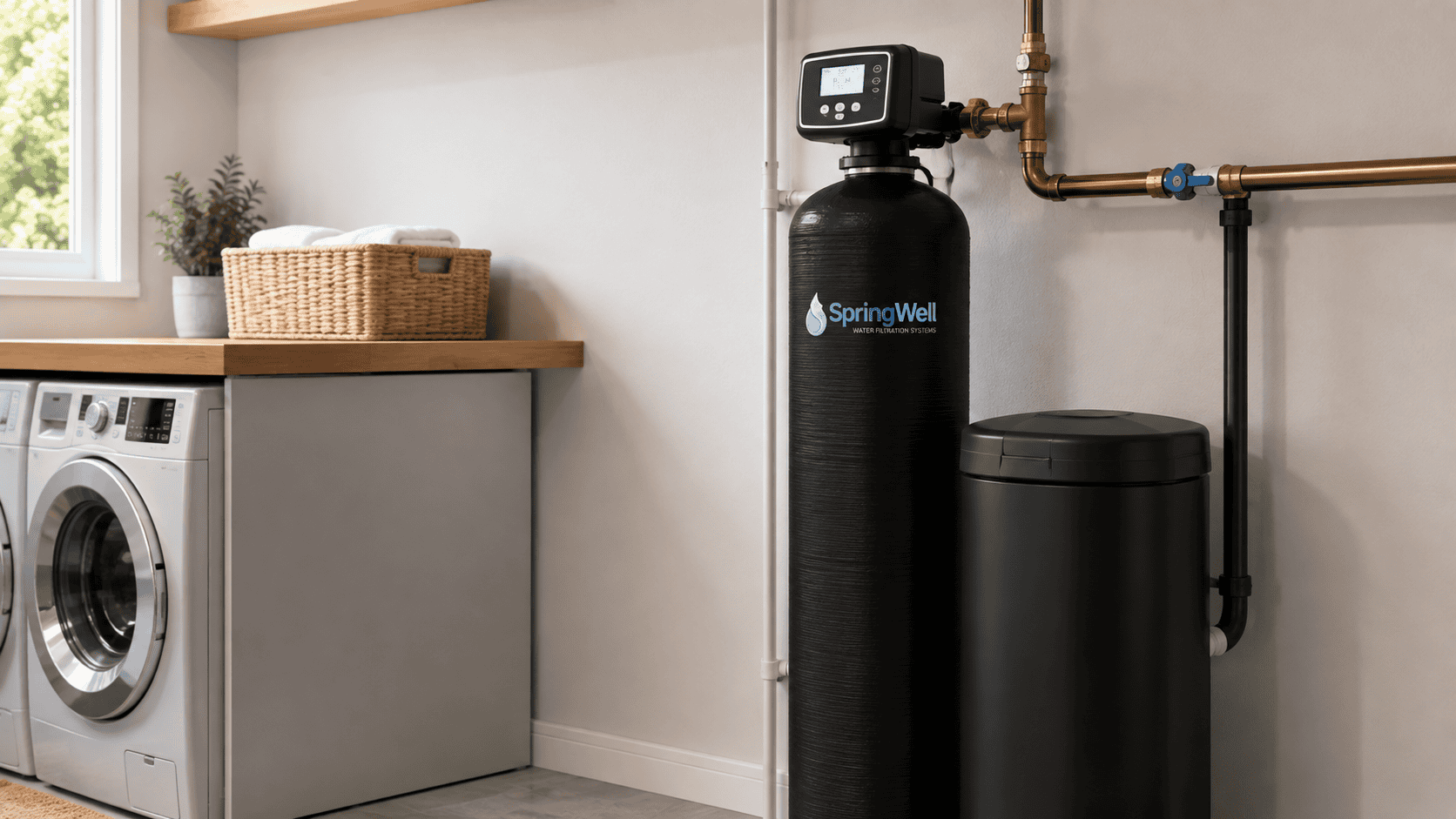
SpringWell whole house water softener installed in a bright utility room beside a washer and dryer.
The SpringWell water softener is a whole-house system designed to reduce hard-water minerals and help prevent scale throughout the home.
4.0
Best salt-free pick
★★★★
out of 5
~$1,700 FS1 · direct from SpringWell · often discounted
Check current price at SpringWell › Read our hard water guide

The best salt-free system we have looked at, and a genuinely low-maintenance way to protect your pipes and appliances from scale with no salt, no electricity, and no wasted water. Just know what it is: a scale conditioner, not a true softener. It does not remove hardness minerals, so it will not give you that soft-water feel.

We may earn a commission if you buy through our links, at no extra cost to you. It never affects our scores. SpringWell sells this system directly rather than through Amazon.

Our verdict

The best salt-free system, as long as you know it conditions rather than softens

The SpringWell FutureSoft is a salt-free water conditioner, and the most important thing to understand about it is right there in that phrase. It is not a traditional softener. A salt-based softener uses ion exchange to physically pull calcium and magnesium out of your water and replace them with sodium, which is what gives you the classic soft-water feel: silky showers, easy lather, no spots on glassware. FutureSoft does not do that. It uses Template Assisted Crystallization (TAC), where the hardness minerals are converted into microscopic, stable crystals that stay suspended in the water and flow harmlessly through your plumbing instead of bonding to pipes, heating elements, and fixtures. The minerals are still in your water, so a hardness test will read the same after the system as before it. What changes is that those minerals can no longer form the hard, chalky scale that furs up kettles, shortens water-heater life, and crusts on showerheads.

Judged as scale protection, FutureSoft is very good and about as painless as whole-house water treatment gets. It needs no salt to buy and haul, no electricity, and no drain connection, and unlike a salt softener it never runs a backwash cycle, so it wastes no water and does not add sodium to what you drink. That makes it a natural fit for anyone on a septic system, anyone watching their sodium, and anyone in California or a similar area where salt-discharging softeners are restricted or banned. The media is long-lived, so upkeep is close to nothing. The honest caveats are the flip side of the technology: you will not get soft-water feel or fewer spots, it does nothing for chlorine or contaminants, and it needs reasonably cooperative water to work, low iron, a neutral or higher pH, and hardness that is not extreme. Match it to the right problem and it earns its place; expect true softened water and you will feel shortchanged.

Best for: homes on moderately hard city water that want low-maintenance scale protection without salt, sodium, wastewater, or electricity, especially on a septic system or where salt softeners are restricted. Not for anyone who specifically wants the slippery feel and spot-free glassware of truly softened water, or who has very hard or high-iron well water.

Score breakdown

How it scored, category by category

Because this is a scale conditioner rather than a drinking-water filter, our top category measures how well it does its actual job, preventing scale, rather than contaminant removal. That is what carries the most weight. Its narrower scope than a true softener, and the fact that it does not touch contaminants, are what hold it below the top of the scale.

Scale prevention (its core job)3.9
Value for money3.9
Filter life & cost per gallon4.5
Ease of setup3.8
Flow rate4.6
Performance

What it does, and what it doesn’t

The cleanest way to judge a salt-free conditioner is against what people actually hope a “softener” will do. Here is where FutureSoft delivers, where it falls short of a true softener, and where it simply is not the right tool.

What you wantFutureSoftNotes
Prevent scale in pipes & appliancesYesIts core job
No salt, sodium, or wastewaterYesSalt-free by design
Works on septic / in CaliforniaYesNo brine discharge
Remove hardness minerals (true softening)NoConditions, not softens
Soft-water feel & spot-free glassesNoMinerals stay in water
Remove chlorine, lead, PFASNoPair with a carbon filter
Handle very hard or high-iron waterLimitedNeeds low iron, pH 7+

SpringWell cites independent testing showing up to 99.6% scale prevention for its TAC media, and the underlying Filtersorb media is certified to NSF/ANSI 61 for drinking-water material safety. Note the distinction: that is a certification that the media is safe to contact drinking water, plus independent efficacy studies of the crystallization process, not an NSF/ANSI 44 softener certification, which salt-free systems by their nature cannot earn because they do not lower the hardness reading. FutureSoft does not reduce chlorine or contaminants; for that, pair it with a whole-house carbon filter like the SpringWell CF1, or see our hard water guide to weigh salt-free against a traditional softener.

The trade-offs

Pros and cons

What we liked

  • Effective scale protection without salt, sodium, electricity, or wasted water
  • Almost no upkeep: no bags of salt, no backwash, media lasts years
  • Septic-safe and legal where salt softeners are restricted, including California
  • High flow with negligible pressure drop; lifetime warranty, 6-month money-back

Worth considering

  • Does not truly soften: no soft-water feel, no end to spotting on glassware
  • Effectiveness drops on very hard water and it needs pH 7+ and near-zero iron
  • Removes no chlorine or contaminants; you still need a separate filter
  • High upfront price and a point-of-entry install that many hire a plumber for
What owners say

What actual owners report

Our score reflects how the technology performs at its job. Owner sentiment, summarized from verified buyer and independent long-term reviews, is where the day-to-day experience and the most common misunderstanding show up.

Owners who buy it to stop scale and skip salt are happy: less crust on fixtures, no lugging salt bags, nothing to maintain. The disappointed reviews almost always come from people who expected the slippery feel and spot-free dishes of a real softener and did not get them.

Owners consistently praise
  • Noticeably less scale on showerheads, kettles, and glass over time
  • Zero maintenance: no salt to buy or haul, nothing to refill
  • Set-and-forget operation with no drop in water pressure
Common complaints
  • Water still feels the same and glasses still spot (it does not soften)
  • High upfront cost; install is more involved than expected
  • Underwhelming on very hard or high-iron water

Qualitative summary of recurring themes across verified buyer and independent long-term reviews, current as of August 2026. SpringWell sells direct rather than through a major marketplace, so there is no single retailer star-rating to cite; we summarize the patterns we see, positive and negative, and never cherry-pick.

Specifications

The details

TypeSalt-free conditioner (TAC)
MediaFiltersorb, NSF/ANSI 61
ModelsFS1 / FS4 / FS+
Sized for1–3 / 4–6 / 7+ bathrooms
Flow rate (FS1)~9 GPM, negligible drop
Scale preventionUp to 99.6% (mfr. testing)
NeedsNo salt · no power · no drain
Water limitspH 7+, near-zero iron
MaintenancePre-filter swap ~6–9 mo
WarrantyLifetime; 6-mo money-back
Media lifeLong-life (years)
Typical price~$1,700 FS1 (FS4/FS+ more)
FAQ

Common questions

Does the SpringWell FutureSoft actually soften water?

Not in the traditional sense. It is a salt-free conditioner, not an ion-exchange softener, so it does not remove calcium and magnesium from your water. Instead it converts those minerals into stable crystals that will not stick to surfaces, which prevents scale. Your water’s hardness reading stays the same, and you will not get the slippery soft-water feel or spot-free glassware that a salt softener gives. What you get is protection for your pipes, water heater, and fixtures. If soft-water feel is what you are after, you want a salt-based softener, not this.

Salt-free conditioner or a salt-based softener, which should I get?

It comes down to what bothers you. Choose FutureSoft if your goal is to stop scale with the least possible hassle and you want to avoid salt, added sodium, wasted water, and electricity, or you are on a septic system or in a place that restricts salt softeners. Choose a traditional salt softener if you specifically want that soft, slippery water, easier lather, and an end to spotting, and you do not mind buying salt and running a backwash. Our hard water guide walks through the trade-offs in more detail.

Does it remove chlorine, lead, or PFAS?

No. FutureSoft only addresses scale; it is not a contaminant filter and does nothing for chlorine taste and odor, lead, or PFAS. If you want both scale protection and cleaner-tasting, filtered water at every tap, pair it with a whole-house carbon filter such as the SpringWell CF1 (SpringWell sells the two as a combo), and see our PFAS guide and lead guide for certified options for those specific contaminants.

What water does it need to work, and can I install it myself?

TAC media works best on municipal or well water with a pH of 7 or higher, very low iron, manganese, and sulfur, and hardness that is not extreme; well water usually needs pre-filtration first. Installation is at the main water line (point of entry), with no drain line or electrical hookup required, which makes it simpler than a salt softener. A confident DIYer can fit it in a couple of hours, but because it involves cutting into your main line, many owners have a plumber do it.

The bottom line

Should you buy it?

If you want to protect your home from limescale with the least possible maintenance, and salt, sodium, wastewater, or electricity are things you would rather avoid, the SpringWell FutureSoft is the salt-free system we would point you to first. It does its one job well, it asks almost nothing of you once it is in, and it is a sensible choice on a septic system or anywhere salt softeners are restricted. Buy it for what it is. It is a scale conditioner, not a true softener, so it will not give you soft-water feel or spot-free glassware, and it does nothing for chlorine or contaminants, which still need their own filter. If your heart is set on genuinely soft water, a salt-based softener is the right tool; if extreme hardness or well-water iron is your situation, treat that first. For everyone whose real goal is low-hassle scale prevention, though, FutureSoft is an easy recommendation. See how it compares in our hard water guide, or pair it with the SpringWell CF1 for filtered water at every tap.

Check current price at SpringWell ›
MC
About the author

Marcus Chen

Marcus Chen is a water quality engineer with over 12 years of experience in residential and municipal water treatment systems.

The DrinkingWaterFilter newsletter

Know what's in your water,
and what actually removes it.

Join our email list for new filter reviews, plain-English contaminant guides, and honest pick updates. No fear-mongering, no spam.

A couple of emails a month. We respect your inbox, and you can unsubscribe anytime.