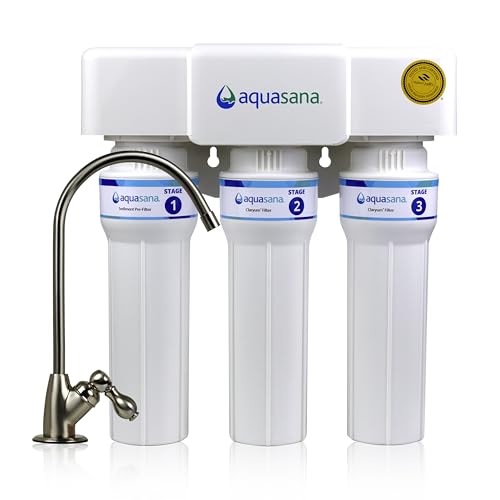
Certified by WQA for lead, PFOA/PFOS, mercury, chloramine and microplastics. It keeps minerals, wastes no water, pours 0.72 gallons a minute from its own faucet and costs about $0.11 a gallon to run.
The catch: It doesn’t reduce fluoride, arsenic or nitrate. For those, choose a reverse osmosis pick such as the Waterdrop G3P800 or APEC RO-90.
Health information, not medical advice. Guidance differs for infants, pregnancy and existing conditions. Test your own water and speak to a doctor or your local health authority. We may earn a commission when you buy through our links; it never affects our scores.
How the under-sink filters compare
The eight under-sink filters we recommend, ranked by our overall score. Five are reverse osmosis systems that also reduce fluoride; three are filters that keep minerals and waste no water. Seven are certified for lead by NSF International, IAPMO R&T or WQA. How we score
| # | System | Score | Lead | PFAS | Fluoride | Filter life | Cost per gallon | Price |
|---|---|---|---|---|---|---|---|---|
| 01 | Aquasana Claryum Max FlowBest overall | 4.3 | Certified | Certified | No | 800 gal or 6 months | $0.11 | $234.99on Amazon › |
| 02 | Waterdrop G3P800Best reverse osmosis | 4.3 | Certified | Certified | Certified | CB filter 1,100 gal | $849.00on Amazon › | |
| 03 | APEC RO-90Best RO value | 4.2 | Certified | No | Certified | Pre-filters 12 mo (maker) | Not rated | $219.16on Amazon › |
| 04 | Aquasana SmartFlow ROBest remineralized RO | 4.1 | Certified | Certified | Certified | 250 gal (carbon blocks) | $0.49+ | $239.99on Amazon › |
| 05 | Culligan Aquasential ROBest professionally installed | 3.9 | Certified | Certified | Certified | 1 to 2 yr per cartridge | Dealer-priced | Get a quoteat Culligan › |
| 06 | iSpring RCC7AK-BNBest budget RO | 3.9 | Certified | Claim | Certified | Pre-filters 6 to 12 mo (maker) | Not rated | $234.99on Amazon › |
| 07 | Clearly Filtered Under SinkBest for your own faucet | 3.6 | Lab test | Lab test | Lab test | 2,000 gal | $0.23 | $550.00on Amazon › |
| 08 | Hydroviv Under SinkMatched to your water | 3.6 | Certified | Claim | No | 360 to 600 gal certified (maker: 720) | $0.22 to $0.37 | See priceat Hydroviv › |
Certified: Certified by an independent body (named in each pick). Lab test: Tested by a named independent lab, not certified. Claim: The maker's claim, not certified. No: No claim. PFAS means PFOA/PFOS, or Total PFAS where the pick says so.
Our eight picks in detail
What each system is certified for, who certifies it, and who it suits.
Aquasana Claryum Max Flow
Certified lead and PFOA/PFOS reduction without reverse osmosis: it keeps minerals, wastes no water and pours 0.72 gallons a minute. Filters are about $0.11 a gallon. It doesn't reduce fluoride.
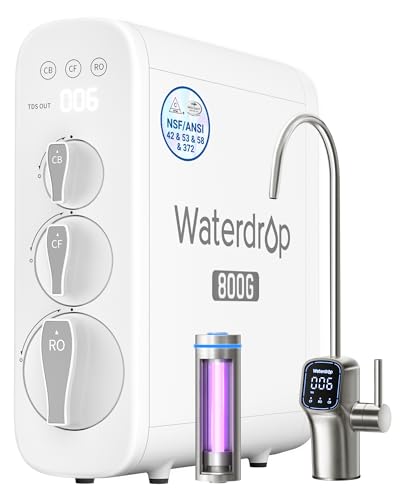
Waterdrop G3P800
Tankless reverse osmosis with certified lead, fluoride and PFOA/PFOS reduction from its own faucet. It needs a power outlet under the sink, and filters cost about $160 a year.

APEC RO-90
One of the broadest certified claim lists in under-sink RO, including lead, fluoride and arsenic V, and filters cost about $60 to $75 a year. No PFAS claim and no mineral stage.
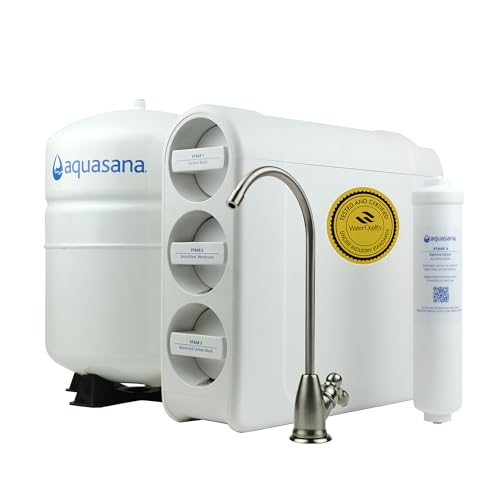
Aquasana SmartFlow RO
One of the most broadly certified under-sink RO systems we've checked, with minerals added back. The cost is the carbon blocks: $91.99 every 6 months or 250 gallons, plus the remineralizer and a yearly membrane.
Culligan Aquasential RO
One of the broadest certified claim lists we've seen, installed and serviced by a local dealer. There's no public price, and the claims depend on the configuration, so ask for the tank model with the Total Defense cartridge.
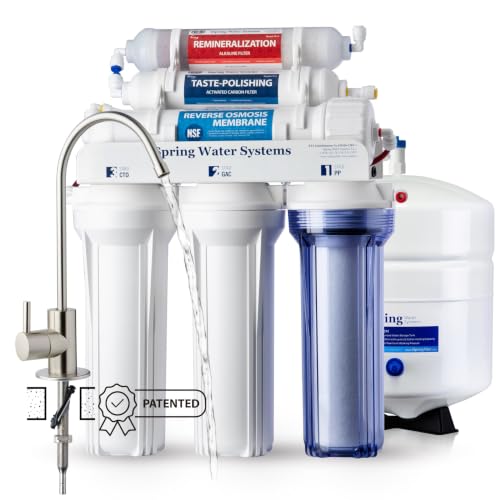
iSpring RCC7AK-BN
The cheapest fully certified under-sink reverse osmosis we found, with an alkaline stage that adds minerals back. Check the model: only the -BN and -BLK versions are certified for lead and fluoride. Filters run about $100 to $140 a year.
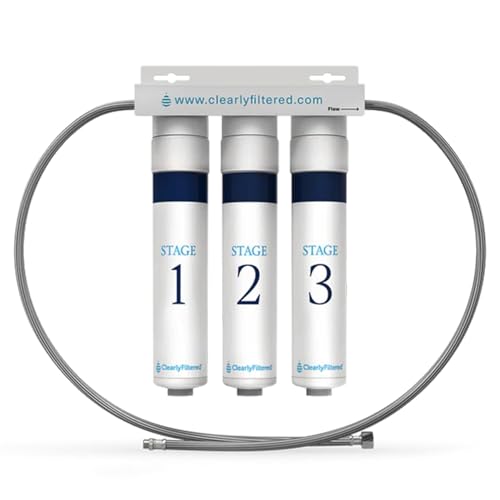
Clearly Filtered Under Sink
Fits on the cold line and filters through your own faucet, with no drilling or wastewater. Only its chlorine claim is certified; the rest are lab results. Filters cost about $455 for 2,000 gallons.
Hydroviv Under Sink
Installs on your cold line in about 15 minutes with no drilling, and Hydroviv picks the cartridge for your water. Every cartridge is certified for chlorine and nearly all for lead, but PFAS certification depends on the cartridge you receive.
Others we considered
- Home Master TMAFC-ERP. Remineralized water and about 1:1 waste, but we found no system certification at NSF International, IAPMO R&T or WQA. Our Home Master review.
- APEC ROES-50 and ROES-PH75. WQA certifies them for dissolved solids (TDS) only, so lead and fluoride aren’t on their certification. Our ROES-50 review.
- Plain iSpring RCC7AK. NSF International lists it for TDS only. The RCC7AK-BN and -BLK carry the lead and fluoride claims.
- Culligan Aquasential Tankless RO. WQA certifies the Tankless versions for TDS only; the tank models carry the full list.
- Aquasana OptimH2O. Discontinued; the SmartFlow replaces it. Owners’ guide and filters.
- No plumbing at all? Countertop reverse osmosis such as the AquaTru plugs into an outlet. See our countertop filter guide.
How to choose an under-sink water filter
Filter or reverse osmosis?
Carbon filters like the Aquasana Claryum keep minerals, waste no water and flow fast. Reverse osmosis also reduces fluoride, arsenic and dissolved solids, but sends some water down the drain and needs a drain connection.
Your faucet or a new one?
The Clearly Filtered and Hydroviv filter through your existing faucet with no drilling. The rest come with their own faucet, which needs a spare hole in the sink or countertop. The G3P800 also needs an outlet under the sink.
Count the running cost
Filters cost about $0.11 a gallon for the Aquasana Claryum and $0.23 for the Clearly Filtered. Among the RO systems, the APEC RO-90 runs about $60 to $75 a year, the G3P800 about $160 and the SmartFlow about $250.
Check the exact model
Certification is model-specific. Only the iSpring RCC7AK-BN and -BLK are certified for lead and fluoride. Culligan’s PFAS claim needs the Total Defense cartridge, and Hydroviv’s PFAS claims depend on the cartridge it sends.
Common questions
What’s the best under-sink water filter?
Our top pick is the Aquasana Claryum Max Flow, certified by WQA for lead and PFOA/PFOS, with no wastewater and filters at about $0.11 a gallon. If you also need fluoride reduced, the Waterdrop G3P800 is tankless reverse osmosis certified by IAPMO R&T for lead, fluoride and PFOA/PFOS.
Do under-sink filters remove fluoride?
Certified fluoride reduction comes from reverse osmosis. The G3P800, APEC RO-90, Aquasana SmartFlow, Culligan Aquasential and iSpring RCC7AK-BN are all certified for it. The Aquasana Claryum and Hydroviv don’t reduce it, and the Clearly Filtered’s fluoride result is from lab testing. See our fluoride guide.
Which under-sink filters are certified for PFAS?
The Aquasana Claryum and SmartFlow (WQA) and the Waterdrop G3P800 (IAPMO R&T) are certified for PFOA and PFOS. The Culligan Aquasential is certified by WQA for Total PFAS with its Total Defense cartridge, and some Hydroviv cartridges are certified by IAPMO R&T. The APEC RO-90 and iSpring aren’t certified for PFAS. See our PFAS guide.
Can I use my existing faucet?
Yes, with the Clearly Filtered or Hydroviv, which connect to the cold-water line. Every other pick here uses its own filtered-water faucet.
Do under-sink filters waste water?
Carbon filters don’t. Reverse osmosis sends some water to the drain as it filters, and the amount varies by system, so check the maker’s waste ratio. See our reverse osmosis guide.
Sources
- WQA certified product listings: Aquasana (AQ-6300M, AQ-SFRO2), APEC Water Systems (RO-90), Culligan International (Aquasential), Clearly Filtered (Under Sink Filter)
- IAPMO R&T product listing directory: Qingdao Ecopure (Waterdrop) WC-13976, WC-14805, WC-14301; Hydroviv W-16780, W-16781, W-29902
- NSF International listing, iSpring Water Systems (RCC7AK-BN, RCC7AK-BLK, RCC7AK)
- Aquasana AQ-SFRO2 performance data sheet
- Clearly Filtered under-sink performance data
Prices as of October 14, 2026. Product prices and availability are accurate as of the date/time indicated and are subject to change. As an Amazon Associate we earn from qualifying purchases.