Brand Reviews

Aquasana OptimH2O Reverse Osmosis Review: The Most-Certified Under-Sink RO

The Aquasana OptimH2O is the under-sink reverse osmosis system with the deepest certification list we've found: NSF/ANSI certified for 90+ contaminants, including certified fluoride and PFAS, then remineralized so it tastes clean. The honest trade-off is running cost, its Claryum filters change twice a year.

MC Marcus Chen ·Updated August 2026 ·8 min read
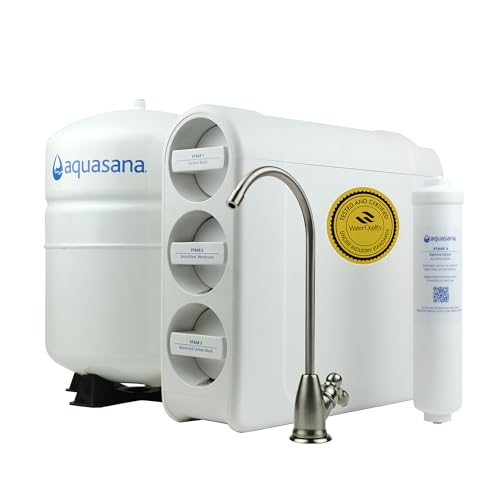
Generic under-sink reverse osmosis system with storage tank and dedicated faucet for an Aquasana OptimH2O review.
The Aquasana OptimH2O is an under-sink reverse osmosis system that combines multi-stage filtration with remineralization to deliver filtered drinking water from a dedicated faucet.
4.1
Most-certified under-sink RO
★★★★
out of 5
~$450 under-sink · often discounted direct from Aquasana
Check price on Amazon › See the best under-sink filters

The under-sink RO system with the deepest certification list we have found: independently certified to NSF/ANSI standards for a broad set of contaminants, fluoride and PFOA/PFOS included, then remineralized so the water tastes good. The catch is running cost. Its Claryum filters need changing twice a year, which makes it pricier to live with than the RO competition.

We may earn a commission if you buy through our links, at no extra cost to you. It never affects our scores.

Our verdict

If certification is what you want, this is the under-sink RO to beat

The Aquasana OptimH2O Reverse Osmosis + Claryum is built around one clear strength: certification. Where most under-sink RO systems lean on the physics of reverse osmosis and manufacturer testing, the OptimH2O is independently tested and certified to NSF/ANSI Standards 42, 53, 58, and 401, and Aquasana lists more than 90 contaminants it is certified to reduce. That includes the ones buyers most often ask us about and that many “certified” systems quietly leave off their certification: fluoride (around 95%), lead (99%), arsenic, chromium, and PFOA/PFOS forever chemicals. It pairs a reverse-osmosis membrane with Aquasana’s Claryum carbon filtration and then, crucially, a remineralizer stage that puts calcium, magnesium, and potassium back and lifts the pH, so you do not get the flat, acidic taste that turns people off plain RO. On the two things that matter most, what it removes and how it tastes, it is genuinely excellent.

The honest counterweight is cost of ownership, not performance. The Claryum carbon stage is rated for six months or 365 gallons and lists at about $90, so you are buying it twice a year, and with the remineralizer on a yearly cycle and the membrane every couple of years, real-world running cost lands near $180 a year, well above efficient rivals. It is also a conventional tank-based system without a permeate pump, so it sends the usual several gallons of reverse-osmosis reject water down the drain per gallon produced, and the install is a standard under-sink RO job with a faucet and drain connection that Aquasana suggests many owners have done professionally. None of that undercuts the filtration. It just means the OptimH2O is the pick when certified breadth is your priority and you will pay a little more each year to have it, rather than the pick for lowest running cost.

Best for: buyers who want the reassurance of a genuine, broad NSF/ANSI certification, especially certified fluoride and PFAS reduction, in a remineralized under-sink RO, and who are willing to change filters twice a year to get it. If you want the lowest running cost or the least water waste, look at the Home Master TMAFC-ERP instead.

Score breakdown

How it scored, category by category

Each category is weighted into the overall score. The OptimH2O tops our field on certified contaminant reduction. What pulls it back to the middle of the RO pack is its running cost, the twice-a-year Claryum changes, and standard reverse-osmosis water waste.

Contaminant reduction4.7
Value for money3.9
Filter life & cost per gallon3.6
Ease of setup3.7
Flow rate3.9
Performance

What it removes

This is the OptimH2O’s whole case, and it is unusually strong: nearly everything below is independently certified, not just claimed. The remineralizer then adds beneficial minerals back after the membrane strips them out.

ContaminantReductionCertified?
Fluoride~95%NSF 58
Lead99%NSF 53
PFAS (PFOA / PFOS)ReducedNSF certified
Arsenic, chromium, mercury~96%+NSF 53 / 58
Chlorine & chloramine~96%NSF 42
Microplastics, cysts, VOCs99%NSF 401 / 53
Calcium, magnesium, potassiumAdded backRemineralizer

Aquasana states the OptimH2O is tested and certified to NSF/ANSI Standards 42, 53, 58, and 401, covering more than 90 contaminants. This is a genuine, system-level certification, the thing that distinguishes it from RO systems that publish only manufacturer or component testing (such as the Home Master TMAFC-ERP). See our fluoride guide, PFAS guide, and lead guide for how it compares with other certified options.

The trade-offs

Pros and cons

What we liked

  • Genuine NSF/ANSI certification across 90+ contaminants, the broadest we cover
  • Certified fluoride (~95%) and PFOA/PFOS, which many RO systems do not certify
  • Remineralizer restores minerals and pH, so the water tastes clean, not flat
  • Trusted brand with a 90-day money-back guarantee to try it risk-free

Worth considering

  • High running cost: Claryum filters change every 6 months, roughly $180/year
  • No permeate pump, so it wastes the usual several gallons to drain per gallon
  • Tank-based install with faucet and drain; pro installation often recommended
  • A minority of owners report fitting leaks; warranty is shorter than some rivals
What owners say

What actual owners report

Our score reflects certified performance. Owner sentiment, summarized from verified buyer and independent long-term reviews, is positive on the water and the peace of mind, with cost and the occasional leak the main friction points.

Owners like knowing exactly what the system is certified to remove, and most say the remineralized water tastes noticeably better than plain RO. The recurring gripes are the price of the twice-yearly filters and, for a minority, getting the fittings sealed on install.

Owners consistently praise
  • Confidence in the broad, published NSF certifications
  • Clean, non-flat taste thanks to the remineralizer
  • Reliable filtration once it is set up and sealed correctly
Common complaints
  • Replacement Claryum filters are expensive and needed every 6 months
  • A number of owners hire a plumber; some report early fitting leaks
  • Standard RO water waste and a tank that takes cabinet space

Qualitative summary of recurring themes across verified buyer and independent long-term reviews, current as of August 2026. We report the patterns we see, positive and negative, and never cherry-pick.

Specifications

The details

TypeReverse osmosis + Claryum, under-sink
CertificationsNSF/ANSI 42, 53, 58, 401
Contaminants90+ certified
RemineralizationYes (Ca, Mg, K)
Fluoride reduction~95%
Flow rate~0.8 GPM
Claryum filter life6 months / 365 gal
Membrane / remineralizer~2 years / ~1 year
Annual filter cost~$180 / year
Water wasteStandard RO (no permeate pump)
Guarantee90-day money-back
Typical price~$450 (often discounted)
FAQ

Common questions

Is the Aquasana OptimH2O actually NSF certified?

Yes, and this is its biggest selling point. Aquasana states the OptimH2O Reverse Osmosis is tested and certified to NSF/ANSI Standards 42, 53, 58, and 401, covering more than 90 contaminants. That is a genuine, system-level certification, unlike RO systems that only publish manufacturer or component-level testing. It means the fluoride, lead, arsenic, and PFOA/PFOS reductions are independently verified rather than just claimed.

Does it remove fluoride and PFAS?

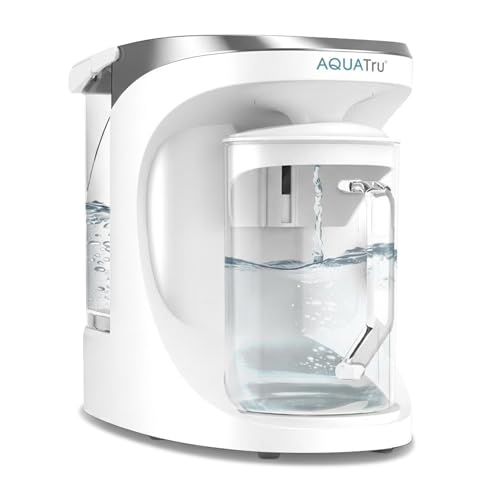
Yes to both, and both are certified. Aquasana lists fluoride reduction at about 95% and the system is NSF certified for PFOA/PFOS reduction. That combination is genuinely uncommon; plenty of reverse-osmosis systems reduce these in practice but do not carry certification for them. If certified fluoride and forever-chemical removal is your reason for buying, the OptimH2O is one of the strongest under-sink choices, alongside the countertop AquaTru Carafe.

Why is it more expensive to run than other RO systems?

The Claryum carbon stage is rated for six months or 365 gallons and costs around $90, so you replace it twice a year. Add the yearly remineralizer and the membrane every couple of years and real-world running cost is near $180 a year, higher than efficient rivals like the Home Master TMAFC-ERP, whose filters last a full year. You are paying for the certified Claryum media and the shorter service interval. It is the main reason the OptimH2O sits mid-pack rather than at the top despite its filtration.

Is it hard to install?

It is a standard tank-based under-sink RO install: mount the unit and tank in the cabinet, fit a dedicated faucet, and connect a drain. A confident DIYer can manage it in one to two hours, but Aquasana suggests many owners use a plumber, and a minority report needing to re-seal fittings to stop a drip, so take your time on the connections. Because there is no permeate pump, expect the usual reverse-osmosis water waste to the drain.

The bottom line

Should you buy it?

Buy the Aquasana OptimH2O if independent certification is what gives you confidence, and you want the broadest certified contaminant list we have found in an under-sink RO, with certified fluoride and PFAS reduction and remineralized water that actually tastes good. On filtration and taste it is excellent, and the 90-day money-back guarantee makes it low-risk to try.

Go in clear-eyed about the trade-off: it costs around $180 a year to run because the Claryum filters change every six months, and it wastes the usual RO reject water since there is no permeate pump. If lowest running cost and water efficiency matter more to you than a certification seal, the Home Master TMAFC-ERP is the better-value RO, and the countertop AquaTru Carafe gives you comparable certified reduction with no plumbing at all. But for certified breadth in an under-sink system, the OptimH2O earns its place. Compare it with the rest of our best under-sink filters.

Check price on Amazon ›
MC
About the author

Marcus Chen

Marcus Chen is a water quality engineer with over 12 years of experience in residential and municipal water treatment systems.

The DrinkingWaterFilter newsletter

Know what's in your water,
and what actually removes it.

Join our email list for new filter reviews, plain-English contaminant guides, and honest pick updates. No fear-mongering, no spam.

A couple of emails a month. We respect your inbox, and you can unsubscribe anytime.