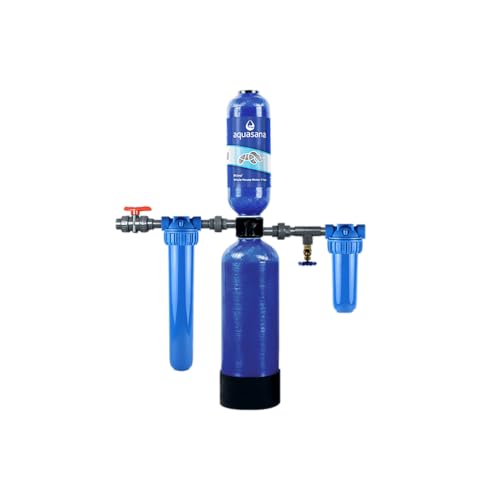
A whole-house carbon and KDF system that Aquasana rates for 1 million gallons or 10 years at 7 gallons a minute. It needs no power or drain, and its media costs less than a tenth of a cent a gallon.
The catch: No certifier lists it for chlorine or anything else. Aquasana’s 97% chlorine figure is from its own testing, and the pre-filter needs changing every 2 months.
Health information, not medical advice. Guidance differs for infants, pregnancy and existing conditions. Test your own water and speak to a doctor or your local health authority. We may earn a commission when you buy through our links; it never affects our scores.
Our verdict
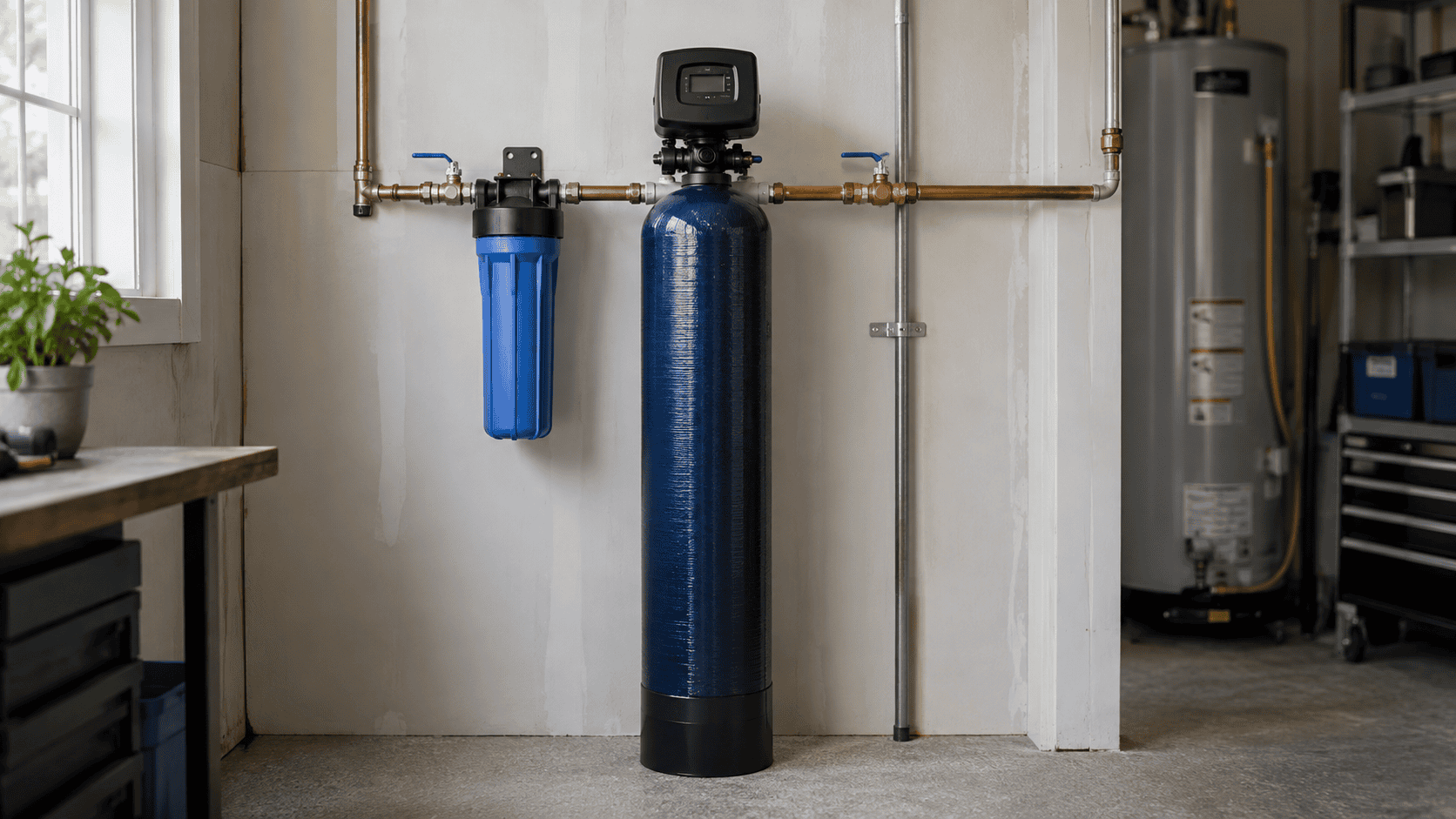
The Rhino is Aquasana’s main whole-house filter, sold today as the WH-1000 (earlier units were the EQ-1000). It goes on the main water line, so every faucet, shower and appliance gets filtered water. Water passes a 20-inch sediment pre-filter, then two tanks of KDF (a copper-zinc media) and activated carbon in an upflow design, then a post-filter. It needs no electricity, drain or backflushing.
Its strengths are capacity and cost. Aquasana rates the media for 1 million gallons or 10 years, and a replacement tank costs about $949, so the media works out to under $0.001 a gallon. The system sells for about $1,000 to $1,085, comes with a 10-year warranty, and is easy to buy on Amazon or from Aquasana.
What it lacks is certification. Aquasana says the Rhino is “independently tested to NSF/ANSI Standard 42” for up to 97% chlorine reduction, but it doesn’t name the lab, and no certifier lists the system for chlorine or any other contaminant. WQA lists the Rhino only for its structure (CSA B483.1) and Aquasana says its tank materials are certified to NSF/ANSI 61; neither covers what it removes. Our scoring credits only certified or named-lab claims, so the Rhino gets our floor score for contaminant reduction.
You’re on chlorinated city water and want better-smelling, better-tasting water at every tap, with very low running costs and no power or drain.
You want certified lead or PFAS reduction, or your water is treated with chloramine. Pair it with a certified drinking-water filter such as the Aquasana Claryum Max Flow.
How it scored
Contaminant reduction carries the most weight in the overall score. How we score filters
Contaminant reduction sits at our 1.5 floor because no certifier lists the Rhino for any reduction claim. How we checked · How we score
What it removes
Nothing below is certified. Each row says where the claim comes from.
| Contaminant | Rhino | Verification |
|---|---|---|
| Chlorine, taste and odor | Up to 97% | Aquasana’s testing |
| Sediment, rust, silt | 20-inch pre-filter | Design feature |
| Chloramine | Rhino Chloramines version | Aquasana’s claim |
| Lead, PFAS | – | Not certified |
| Hardness, scale | – | Not a softener (optional salt-free add-on) |
| Bacteria, viruses | – | Optional UV add-on |
On 8 October 2026, WQA listed the Aquasana Rhino WH-1000, WH-1010, WH-1011 and WH-1021 only under CSA B483.1, a structural standard, with no reduction claims. WQA had no Aquasana point-of-entry system under NSF/ANSI 42, and its only one under NSF/ANSI 53 was the HealthShield (WH-HS). IAPMO R&T’s Aquasana files cover an under-sink filter, the OptimH2O Whole House and an under-sink RO, not the Rhino. NSF International lists only Aquasana’s UV systems (NSF/ANSI 55), sold as a Rhino add-on.
What it costs to run
The main media lasts 1 million gallons or 10 years, and a replacement WH-1000R tank costs about $949 on Amazon (check price). The regular cost is the filters around it: Aquasana says to replace the 20-inch pre-filter every 2 months and the post-filter every 6 months. Its Low Maintenance pre-filter, a $174 option on Aquasana’s site, stretches that to 6 months.
Pros and cons
Strengths
- Filters every tap, showers included
- Media rated for 1 million gallons or 10 years
- No power, drain or backflushing
- 10-year warranty; sold on Amazon
What to know
- No certifier lists it for any reduction
- Pre-filter every 2 months on the standard setup
- Base model isn’t meant for chloramine
- No certified lead or PFAS reduction
What owners say
Owners are happy with the taste and smell of the water throughout the house. The steady complaint is how often the pre-filter needs changing.
Often praised
- Chlorine smell gone, showers included
- Easy DIY install with the bypass kit
- Brand support and long warranty
Common complaints
- Pre-filter changes every 2 months
- Pressure dips in larger, high-demand homes
- Hard to read the real price through constant sales
Recurring themes across verified buyer reviews.
Specifications
- Model
- Rhino WH-1000 (formerly EQ-1000)
- Type
- Whole-house, point of entry
- Media
- KDF and activated carbon, dual-tank upflow
- Filters
- 20″ pre-filter, 10″ post-filter
- Flow rate
- 7 gpm rated, 14.6 gpm peak
- Media life
- 1,000,000 gal or 10 years
- Certification
- WQA: CSA B483.1 (structure); no reduction claims
- Warranty
- 10 years; 90-day guarantee (Aquasana)
Alternatives worth considering
SpringWell CF1
Aquasana Claryum Max Flow

Epic Smart Shield
Common questions
Is the Aquasana Rhino NSF certified?
No. Aquasana says it’s “independently tested to NSF/ANSI Standard 42” for chlorine, but no certifier lists it for chlorine or any other reduction claim. WQA lists it only under CSA B483.1, which covers structure, and Aquasana says its tank materials are certified to NSF/ANSI 61.
Does the Rhino remove lead or PFAS?
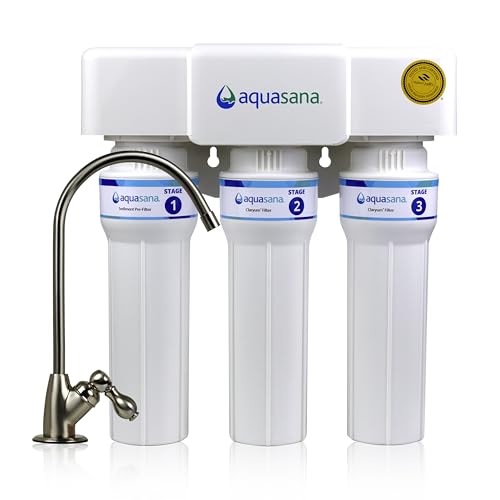
It isn’t certified for either. Aquasana’s HealthShield whole-house system is certified by WQA for PFOA, PFOS and three other PFAS. For lead at your drinking-water tap, see the Aquasana Claryum Max Flow, certified by WQA for lead and PFOA/PFOS. See our PFAS guide.
What’s the difference between the EQ-1000 and WH-1000?
The WH-1000 is the current model number for the 1-million-gallon Rhino; the EQ-1000 is the earlier one. Replacement tanks are sold as the WH-1000R.
Does it work with chloramine?
The base Rhino is designed for chlorine. Aquasana sells a separate Rhino Chloramines version for chloramine-treated water. Check your utility’s annual water report to see which it uses.
How often do the filters need changing?
Aquasana says every 2 months for the standard pre-filter (6 months with its Low Maintenance pre-filter), every 6 months for the post-filter, and 10 years or 1 million gallons for the main tank.
The bottom line
The Rhino is a simple, long-lasting way to take chlorine taste and smell out of every tap, with very low running costs and no power or drain. Buy it for that, on chlorinated city water.
Just know that no certifier backs its reduction claims. For certified lead or PFAS reduction, add a certified drinking-water filter such as the Aquasana Claryum Max Flow. Compare options in our whole-house guide.
- Certifier listings: WQA, Aquasana Inc: Rhino WH-1000, WH-1010, WH-1011 and WH-1021 under CSA B483.1 only, with no reduction claims. No Aquasana point-of-entry system under NSF/ANSI 42; under NSF/ANSI 53 only the HealthShield (WH-HS).
- Also searched: IAPMO R&T, Aquasana Inc: WP-10706 and WP-10707 (AQ-MF-1, OptimH2O Whole House EQ-OPTM), WC-31171 and WC-31172 (AQ-HSRO800). NSF International: only the AQ-UV-510L and AQ-UV-300L UV systems (NSF/ANSI 55). Searched under Rhino, EQ-1000 and WH-1000.
- Maker documents: Aquasana's Rhino product page and owner's manual ("independently tested according to NSF/ANSI 42", no lab named).
- Independent lab tests: None published with a named lab.
Sources
Prices as of October 14, 2026. Product prices and availability are accurate as of the date/time indicated and are subject to change. As an Amazon Associate we earn from qualifying purchases.