
Certified by IAPMO R&T to NSF/ANSI 42, 53 and 401 for chlorine, chloramine, lead, mercury, cysts and VOCs. It connects to your cold-water line and keeps full faucet flow, with no wastewater.
The catch: Its PFAS and microplastics figures are Epic’s own tests, not certified, and it does nothing for fluoride.
Health information, not medical advice. Guidance differs for infants, pregnancy and existing conditions. Test your own water and speak to a doctor or your local health authority. We may earn a commission when you buy through our links; it never affects our scores.
Our verdict
The Epic Smart Shield is a carbon filter that sits under the sink and connects to the cold-water line, so filtered water comes out of your normal faucet. Epic says it installs in 15 to 20 minutes with a wrench and a screwdriver. There’s no tank, no drain line and no wastewater, and minerals stay in the water.
The certifications are real and current. IAPMO R&T lists the Smart Shield (model EWFESS4-DC) under three files, all active: NSF/ANSI 42 for chlorine, chloramine, taste and odor; NSF/ANSI 53 for lead, mercury, cysts, VOCs, asbestos, MTBE and turbidity; and NSF/ANSI 401 for BPA and five pharmaceuticals and chemicals. All three certify the same 651-gallon capacity and 1.25 gpm flow, so the filter life is certified too, not just claimed. Our NSF certification guide explains how to check a certifier’s listing yourself.
What isn’t certified is the part Epic leads with. Epic says the filter reduces PFOA by 94%, PFOS by 98% and microplastics by 99.6%, but those are Epic’s own test results, and none of them appears on an IAPMO listing. If PFAS is why you’re buying a filter, choose one certified for it.
You want certified lead and chlorine reduction from your own faucet, with no wastewater and no countertop clutter, for a low upfront price.
You need certified PFAS or fluoride reduction, or you rent and can’t connect anything under the sink.
How it scored
Contaminant reduction carries the most weight in the overall score. How we score filters
What it removes
The first five rows are certified by IAPMO R&T. The rest are Epic’s own test results, which we list so you can see them, labelled for what they are.
| Contaminant | Smart Shield | Verification |
|---|---|---|
| Chlorine, chloramine, taste and odorNSF/ANSI 42 | Reduced | Certified by IAPMO R&T |
| Lead, mercuryNSF/ANSI 53 | Reduced | Certified by IAPMO R&T |
| Cysts, asbestos, turbidityNSF/ANSI 53 | Reduced | Certified by IAPMO R&T |
| VOCs, MTBENSF/ANSI 53 | Reduced | Certified by IAPMO R&T |
| BPA, estrone, ibuprofen, naproxen, nonylphenol, phenytoinNSF/ANSI 401 | Reduced | Certified by IAPMO R&T |
| PFOA / PFOS | 94% / 98% | Epic test, not certified |
| Microplastics | 99.6% | Epic test, not certified |
| Fluoride, TDS | Not reduced | Carbon doesn’t remove them |
IAPMO R&T files WP-10569 (NSF/ANSI 42), WP-10570 (NSF/ANSI 53) and WP-10571 (NSF/ANSI 401), issued to Epic Life Inc., for model EWFESS4-DC with the EWFESS4 replacement filter, at 651 gallons and 1.25 gpm. All three were active on 7 October 2026. Epic also sells a Smart Shield MAX; these listings cover the original model only.
What it costs to run
Each filter is certified for 651 gallons, which Epic puts at about 12 months for most households. Replacements cost about $99 to $115 each depending on pack size, so the filter cost works out to roughly $0.15 to $0.18 a gallon. That’s more per gallon than the cheapest pitchers, but there’s no wastewater and no pitcher to refill.
Pros and cons
Strengths
- Certified by IAPMO R&T for lead, chlorine and chloramine
- Filter life of 651 gallons is part of the certification
- Full flow from your existing faucet, no wastewater
- Low upfront price for a plumbed-in filter
What to know
- PFAS and microplastics claims aren’t certified
- Doesn’t reduce fluoride or TDS
- Filtered and unfiltered water share one faucet
- Replacement filters are Epic-only
What owners say
Owners are happy with the install and the price, and most report better-tasting water without the slow flow or wastewater of reverse osmosis.
Often praised
- Quick, tool-light install
- Strong flow from the normal faucet
- Better taste for the money
Common complaints
- Doesn’t reduce fluoride
- Shares the main faucet with unfiltered water
- Filters only from Epic
Recurring themes across verified buyer reviews.
Specifications
- Model
- Epic Smart Shield (EWFESS4-DC)
- Filter
- EWFESS4 carbon block
- Certifier
- IAPMO R&T
- Certified to
- NSF/ANSI 42, 53 and 401
- Filter life
- 651 gal, about 12 months
- Flow rate
- 1.25 gpm, at 40 to 120 psi
- Installation
- Connects to the cold-water line
- Warranty
- 3 years on the system hardware
Alternatives worth considering
AquaTru Carafe

PUR PLUS Pitcher
Brita Elite
Common questions
Is the Epic Smart Shield certified?
Yes. IAPMO R&T certifies it (model EWFESS4-DC) to NSF/ANSI 42 for chlorine, chloramine, taste and odor; NSF/ANSI 53 for lead, mercury, cysts, VOCs, asbestos, MTBE and turbidity; and NSF/ANSI 401 for BPA and five other compounds. All three listings were active on 7 October 2026.
Does it remove PFAS?
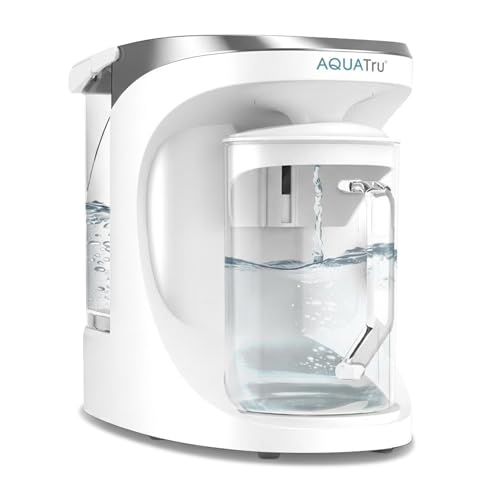
Epic reports 94% PFOA and 98% PFOS reduction from its own testing, but PFAS isn’t on any of its IAPMO listings, so it isn’t certified for it. For certified PFAS reduction, see the AquaTru Carafe or the PUR PLUS, or our PFAS guide.
Does it remove fluoride?
No. Carbon filters don’t reduce fluoride or dissolved solids. For fluoride you need reverse osmosis, such as the AquaTru Carafe, which IAPMO R&T certifies for it. See our fluoride guide.
How long does the filter last?
It’s certified for 651 gallons, which Epic puts at about 12 months for most households. Replacements cost about $99 to $115 each, or roughly $0.15 to $0.18 a gallon.
Is the Smart Shield MAX the same?
No. The MAX is a different model, and the IAPMO listings above cover the original Smart Shield (EWFESS4-DC) only. Check the model number before you buy.
The bottom line
Buy the Smart Shield if you want certified lead and chlorine reduction at your own faucet, with no wastewater, for a low price. IAPMO R&T certifies it for more than most carbon filters, including its 651-gallon life. Don’t buy it for PFAS or fluoride: neither is certified. For those, look at reverse osmosis like the AquaTru Carafe, or compare everything in our under-sink guide.
- Certifier listings: IAPMO R&T files WP-10569 (NSF/ANSI 42), WP-10570 (NSF/ANSI 53) and WP-10571 (NSF/ANSI 401), all active, for model EWFESS4-DC with the EWFESS4 filter.
- Maker documents: Epic's Smart Shield product page and its published reduction figures.
- Independent lab tests: None published with a named lab.
Sources
Prices as of October 14, 2026. Product prices and availability are accurate as of the date/time indicated and are subject to change. As an Amazon Associate we earn from qualifying purchases.