WQA certifies the Aquasential RO for lead, fluoride, arsenic V, nitrate, chromium-6 and dissolved solids, and for Total PFAS with the right cartridge. A local Culligan dealer installs and services it.
The catch: There’s no public price, and the certified claims depend on how the dealer configures it.
Health information, not medical advice. Guidance differs for infants, pregnancy and existing conditions. Test your own water and speak to a doctor or your local health authority. We may earn a commission when you buy through our links; it never affects our scores.
Our verdict
The Aquasential is Culligan’s under-sink reverse osmosis line, sold and installed only through local Culligan dealers. The dealer chooses the cartridges for your water, fits the system with a 3-gallon tank and its own faucet, and handles service. Culligan rates the standard model at 27.8 gallons a day under test conditions.
Its certified list is one of the broadest we’ve seen. WQA certifies the Aquasential RO to NSF/ANSI 58 for lead, fluoride, arsenic V, nitrate and nitrite, chromium-6 and trivalent chromium, cadmium, copper, barium, selenium, radium, cysts, turbidity and dissolved solids, and to NSF/ANSI 53 for lead and Total PFAS. Culligan adds NSF/ANSI 42, 401, 372, Canada’s CSA B483.1 and NSF Protocol P231, which covers bacteria and viruses with its Advanced Post filter.
The catch is that those claims depend on the configuration. Culligan’s owner’s guide ties PFAS reduction to the Total Defense cartridge and arsenic III to an optional AS3 cartridge. Nitrate is certified on the standard RO and the Smart RO Nitrate, but not on the plain Smart RO, and the Tankless models are certified for dissolved solids only. Culligan publishes no prices, so get a written, itemized quote that includes the yearly filter and service cost.
You want broad certified reduction, including PFAS and nitrate, with a professional install and local service, and price isn’t your first concern.
You want a published price or to install it yourself. The Aquasana SmartFlow is certified for lead, PFOA/PFOS, fluoride and nitrate at a published price.
How it scored
Contaminant reduction carries the most weight in the overall score. How we score filters
What it removes
Rows are certified by WQA for the tank-style Aquasential RO unless noted. WQA lists claims, not percentages.
| Contaminant | Aquasential RO | Certified to |
|---|---|---|
| Lead | Certified | NSF/ANSI 53 and 58 |
| Total PFASwith the Total Defense cartridge | Certified | NSF/ANSI 53 |
| Fluoride | Certified | NSF/ANSI 58 |
| Arsenic Vat 50 ppb influent | Certified | NSF/ANSI 58 |
| Nitrate / nitriteRO and Smart RO Nitrate only | Certified | NSF/ANSI 58 |
| Chromium-6, cadmium, copper, barium, selenium, radium | Certified | NSF/ANSI 58 |
| Cysts, turbidity, TDS | Certified | NSF/ANSI 58 |
| Chlorine; microplastics and 401 compounds; bacteria and viruses | Per Culligan | NSF/ANSI 42, 401; P231 |
| Arsenic III | With the optional AS3 cartridge | Per Culligan |
We saw WQA’s NSF/ANSI 58 rows for Culligan International on 7 October 2026: The Aquasential RO and RO (2 yr) carry the full list above, the Smart RO the same list without nitrate, the Smart RO Nitrate the full list, and the Tankless RO and Tankless RO with Mineral Boost+ TDS only. The NSF/ANSI 42, 401, 372, CSA B483.1 and P231 claims are from Culligan’s product page and owner’s guide. Culligan notes its remineralizer stage isn’t WQA-evaluated.
How much does a Culligan reverse osmosis system cost?
Culligan doesn’t publish prices for the Aquasential. Its own guide to reverse osmosis costs says a system can cost anywhere from a few hundred dollars to a few thousand. Your dealer’s quote covers the equipment, installation, and service, and it varies by area and by the cartridges fitted. Culligan says its RO filters last up to two years and the membrane up to five.
Systems sold online cost less up front, but you install them yourself:
| System | Price | Installation | Filters |
|---|---|---|---|
| Culligan Aquasential RO | Dealer quote | Included in the quote | Dealer-priced; cartridges last 1 to 2 years |
| Aquasana SmartFlow RO | Published on Amazon | DIY | Carbon blocks $91.99 every 6 months or 250 gallons, plus a yearly membrane |
| APEC RO-90 | Published on Amazon | DIY | About $60 to $75 a year |
| iSpring RCC7AK-BN | Published on Amazon | DIY | About $100 to $140 a year |
Current Amazon prices are on the cards in the next section. Filter costs are at each maker’s prices.
When you get a quote, ask the dealer for:
- The exact model: The tank-style Aquasential RO or Smart RO Nitrate, not a Tankless version, if you want the full certified list.
- The cartridges: The Total Defense cartridge for PFAS, and the AS3 cartridge if your water has arsenic III.
- The yearly cost: Filters, membrane, and service visits, itemized and in writing.
- Financing or rental: If the dealer offers either, the total over five years, so you can compare it with buying.
How to buy it
Culligan sells the Aquasential only through local dealers, who quote the equipment, installation and ongoing service. Ask for the tank-style Aquasential RO or Smart RO Nitrate with the Total Defense cartridge if you want the PFAS and nitrate claims, and get the yearly filter and service cost in writing. Culligan’s guide rates its cartridges for 1 year or 1,000 gallons, or 2 years or 2,000 gallons, depending on the version. Culligan’s warranty covers the manifold for life, the RO parts for 10 years and filters for 1 year.
Can you buy a similar system online?
Yes. Culligan sells only through dealers, but these under-sink reverse osmosis systems are certified for many of the same contaminants and list their prices.
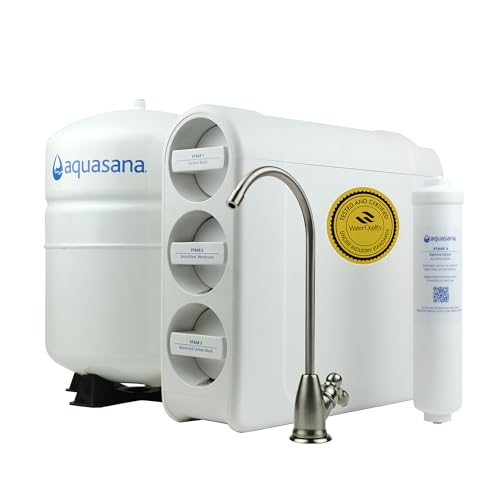
Aquasana SmartFlow RO

APEC RO-90
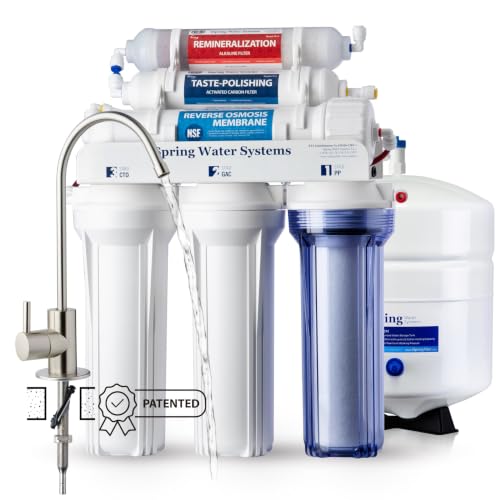
iSpring RCC7AK-BN
Pros and cons
Strengths
- Certified by WQA for lead, Total PFAS, fluoride, arsenic V and nitrate
- Professional install and local service
- Protocol P231 claim for bacteria and viruses (Culligan)
- Lifetime manifold and 10-year RO parts warranty (Culligan)
What to know
- No public price; dealer quotes vary
- Claims depend on the cartridges fitted
- Tankless models certified for TDS only
- Tied to your local dealer for service
What owners say
Owners are happy with the water and the installation. The complaints are about cost and the dealer relationship.
Often praised
- Clean-tasting water after install
- Professional installation
- Peace of mind on well and hard-to-treat water
Common complaints
- High, opaque pricing and filter costs
- Slow service scheduling and billing disputes
- Sales pressure at the quote stage
Recurring themes across verified buyer reviews.
Specifications
- Models
- Aquasential RO, RO (2 yr), Smart RO, Smart RO Nitrate, Tankless RO
- Type
- Under-sink reverse osmosis, dealer-installed
- Certifier
- WQA
- Certified to
- NSF/ANSI 42, 53, 58, 401, 372; CSA B483.1; P231 (Culligan)
- Daily production
- 27.8 gal (standard model, Culligan)
- Tank
- 3 gallons
- Cartridges
- 1 yr / 1,000 gal or 2 yr / 2,000 gal (Culligan)
- Warranty
- Lifetime manifold, 10-yr RO parts, 1-yr filters
Common questions
How much does a Culligan reverse osmosis system cost?
Culligan doesn’t publish prices; its own guide says reverse osmosis systems cost from a few hundred dollars to a few thousand. Your local dealer quotes the system, installation, and service. See what it costs.
What is Culligan Quench?
Culligan Quench is Culligan’s workplace water business. It supplies offices, hotels, schools, and healthcare sites with bottleless water coolers, ice machines, and under-sink reverse osmosis filters for a fixed monthly fee that includes service and filters. It doesn’t serve homes: For home reverse osmosis, Culligan sends you to a local Culligan dealer.
Is the Culligan Aquasential certified?
Yes, by WQA. The tank-style Aquasential RO is certified to NSF/ANSI 58 for lead, fluoride, arsenic V, nitrate and more, and to NSF/ANSI 53 for lead and Total PFAS. Culligan lists further claims under NSF/ANSI 42, 401 and Protocol P231.
Does Culligan RO remove PFAS?
Yes, with the Total Defense cartridge. WQA certifies the Aquasential RO for Total PFAS under NSF/ANSI 53. See our PFAS guide.
Which Aquasential model should I ask for?
The tank-style Aquasential RO (or Smart RO Nitrate) with the Total Defense cartridge carries the full certified list. The Tankless versions are certified for dissolved solids only.
Is it worth it compared with a DIY system?
If you want a professional install and local service, it can be. If not, the Aquasana SmartFlow and APEC RO-90 carry broad certified lists at published prices.
The bottom line
The Culligan Aquasential RO carries one of the broadest certified claim lists in reverse osmosis, with a professional install and local service. Ask for the tank model with the Total Defense cartridge, and get the yearly cost in writing. If you’d rather buy at a published price, the Aquasana SmartFlow covers lead, PFOA/PFOS, fluoride and nitrate. Compare them all in our reverse osmosis guide.
- Certifier listings: WQA, Culligan International, NSF/ANSI 58: Aquasential RO and RO (2 yr): arsenic V (50 ppb), barium, cadmium, copper, cyst, fluoride, chromium-6, lead, nitrate, nitrite, radium 226/228, selenium, TDS, trivalent chromium, turbidity. Smart RO: same without nitrate. Smart RO Nitrate: full list. Tankless RO and Tankless RO with Mineral Boost+: TDS only. WQA NSF/ANSI 53 rows for the Aquasential RO include lead and Total PFAS.
- Also searched: NSF International (Culligan): no Aquasential listing.
- Maker documents: Culligan Aquasential product page; Aquasential RO / Smart RO owner's guide with performance data (pages 19 to 31).
- Independent lab tests: None used.
Sources
Prices as of October 14, 2026. Product prices and availability are accurate as of the date/time indicated and are subject to change. As an Amazon Associate we earn from qualifying purchases.