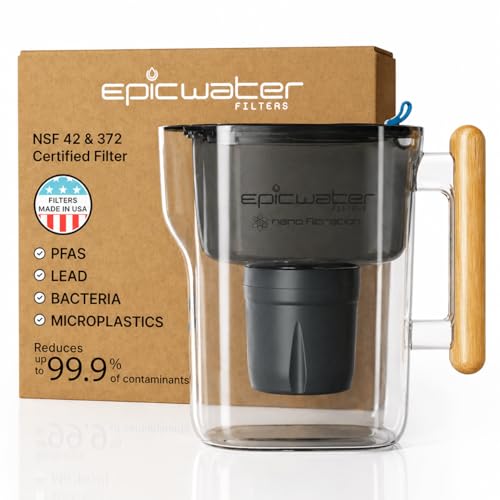
Epic’s own tests show the Nano XP reducing lead, PFAS, chlorine and microplastics, plus bacteria and cysts. Its NSF International certifications cover material safety, not reduction.
The catch: It isn’t a purifier, so don’t rely on it for water that may be unsafe to drink.
Health information, not medical advice. Guidance differs for infants, pregnancy and existing conditions. Test your own water and speak to a doctor or your local health authority. We may earn a commission when you buy through our links; it never affects our scores.
Our verdict
The Epic Nano XP comes with a long list of claims. Epic’s published results show it reducing lead (96.7%), PFAS (99.6%), chlorine (96.8%), microplastics (99.25%) and arsenic (95%), plus E. coli, Giardia and viruses, using a nano pleated filter. Epic says the pitcher is tested to several NSF/ANSI standards, but it doesn’t name the lab, and its own site gives different figures in different places.
What it’s certified for is much narrower. NSF International certifies the filter to NSF/ANSI 42 for material safety only, with no chlorine claim, and to NSF/ANSI/CAN 372 for lead-free materials. None of its reduction claims are certified. Its published virus result, 99.95%, is below the 99.99% that microbiological purifier protocols require, so it shouldn’t be used as a purifier for well, stream or other untreated water. It doesn’t reduce fluoride.
You want a pitcher with a long list of tested claims and you’re comfortable that none of them are certified.
You want certified lead or PFAS reduction, or you need to treat water that may be unsafe to drink.
How it scored
Contaminant reduction carries the most weight in the overall score. How we score filters
What it removes
None of these results are certified. They are Epic’s own published figures, from testing by a lab it doesn’t name. Where Epic’s site gives two different numbers, we show the lower one.
| Contaminant | Reduction | Verification |
|---|---|---|
| Lead | 96.7% | Epic-reported |
| PFAS | 99.6% | Epic-reported |
| Chlorine | 96.8% | Epic-reported |
| Microplastics | 99.25% | Epic-reported |
| Arsenic | 95% | Epic-reported |
| E. coli / Giardia | 99.9999% / 99.99% | Epic-reported |
| Viruses (MS2) | 99.95% | Epic-reported; below purifier level |
| Fluoride | – | No claim |
NSF International certifies the Nano XP filter to NSF/ANSI 42 for material safety only and to NSF/ANSI/CAN 372 for lead-free materials. Epic itself notes that NSF certification and contaminant-reduction claims are not the same thing. Microbiological purifier protocols require at least 99.99% virus reduction; Epic’s published result is 99.95%. Epic doesn’t break PFAS down into PFOA and PFOS.
What it costs to run
Each filter is rated for up to 100 gallons, which Epic puts at about 3 to 4 months of normal use. At epicwaterfilters.com prices, a complete Nano XP filter is $53 ($0.53 a gallon) and a replacement inner cartridge is $46 ($0.46 a gallon).
Pros and cons
Strengths
- Long list of Epic-reported reductions, including microbes
- Filter made in the US; LED timer in the lid
- Replaceable inner cartridge cuts plastic waste
- No installation
What to know
- No certified reduction claims at all
- Virus result below purifier level; not for unsafe water
- Filters cost about $0.46 to $0.53 a gallon
- No fluoride reduction
What owners say
Owners like the taste and the long list of claims. The recurring complaints are speed and filter cost.
Often praised
- Clean taste
- Broad claimed reduction
- Simple, no-install pitcher
Common complaints
- Slow to filter a full pitcher
- Frequent filter changes
- Higher running cost than basic pitchers
Recurring themes across verified buyer reviews.
Specifications
- Model
- Epic Nano XP pitcher
- Capacity
- 10 cups
- Filter life
- Up to 100 gal, about 3 to 4 months
- Certifier
- NSF International
- Certified to
- NSF/ANSI 42 (material safety only), NSF/ANSI/CAN 372
- Reduction claims
- Epic-reported, not certified
- Fluoride
- Not reduced
- Replacement filters
- $53 filter, $46 inner cartridge at epicwaterfilters.com
Alternatives worth considering

PUR PLUS Pitcher
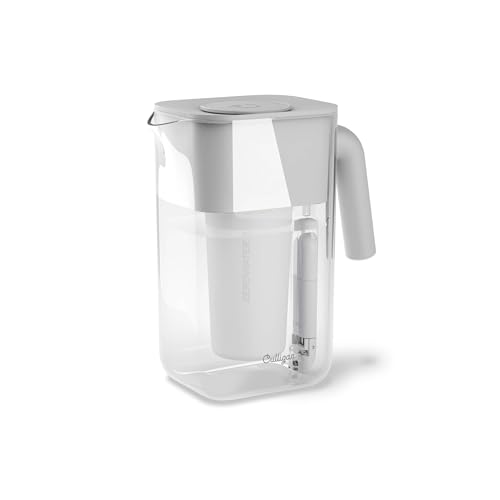
Culligan ZeroWater
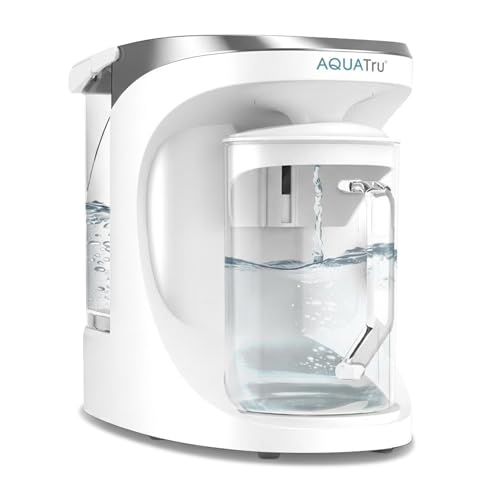
AquaTru Carafe
Common questions
Is the Epic Nano NSF certified?
Only for material safety. NSF International certifies the Nano XP filter to NSF/ANSI 42 for material safety, with no chlorine or other reduction claim, and to NSF/ANSI/CAN 372 for lead-free materials. Its reduction results are Epic’s own testing.
Can I use it on well or untreated water?
We wouldn’t rely on it for that. It isn’t certified as a microbiological purifier, and Epic’s published virus result (99.95%) is below the 99.99% purifier protocols require. If your water may be unsafe, have it tested and use a system certified for microbiological reduction, or disinfect it first.
Does it remove fluoride?
No. Epic says the Nano XP does not reduce fluoride. For certified fluoride reduction, see the Culligan ZeroWater or the AquaTru Carafe. See our fluoride guide.
How long does the filter last?
Up to 100 gallons, about 3 to 4 months of normal use according to Epic: 2 to 3 months with heavy use, 4 to 6 with light use. The lid’s LED timer counts down 90 days.
The bottom line
The Epic Nano XP has a long list of claims and almost no certification behind them. If certified reduction matters to you, the PUR PLUS is certified for lead and Total PFAS and costs less to run, and the Culligan ZeroWater for fluoride too. Don’t use any pitcher in place of a certified purifier on water that may be unsafe. Compare the options in our best water filter pitchers guide.
Sources
Prices as of October 14, 2026. Product prices and availability are accurate as of the date/time indicated and are subject to change. As an Amazon Associate we earn from qualifying purchases.