Health information, not medical advice. Guidance differs for infants, pregnancy, and existing conditions. Test your own water and speak to a doctor or your local health authority. We may earn a commission when you buy through our links; it never affects our scores.
Which is better: reverse osmosis or a carbon filter?
Reverse osmosis covers more: our top RO pick, the AquaTru Carafe, is certified by IAPMO R&T to NSF/ANSI 58 for fluoride, nitrate, arsenic and lead, while our top carbon pick, the Aquasana Claryum Max Flow (AQ-6300M), is certified by WQA to NSF/ANSI 53 for lead and PFOA/PFOS but lists no fluoride, nitrate, arsenic or dissolved-solids claim. A certified carbon-based system is still the better buy when your water report shows only contaminants it is specifically certified to reduce, such as chlorine, lead or PFOA/PFOS, because it wastes no water, keeps dissolved minerals and costs less per gallon.
The rest of this guide covers how each one works, what each is certified for, where carbon falls short, PFAS, wastewater, minerals, running cost and installation, so you can match the technology to your water rather than to a brand.
How do reverse osmosis and carbon filters work?
They work in different ways. Reverse osmosis forces water through an extremely thin barrier that separates chemicals from the water, while a carbon filter uses carbon to trap chemicals as water passes through. An RO membrane holds back most dissolved substances and flushes them away in a stream of reject water. Carbon holds contaminants on its surface, so all the water that goes in comes out treated, until the carbon is used up and has to be replaced.
Home RO systems are not membrane-only. The AquaTru Carafe, for example, uses a pre/carbon filter and a VOC carbon filter alongside its RO membrane, according to AquaTru’s performance data sheet. Here’s why: A carbon prefilter removes chlorine, which damages TFC (thin film composite) membranes, and some pesticides, solvents and volatile organic chemicals are not removed by RO, so a carbon post-filter catches them. In practice, then, the choice is between carbon alone and carbon plus a membrane. See how reverse osmosis works for the stages in detail.
What is each one certified to remove?
RO systems and carbon-based filters are commonly evaluated under different NSF/ANSI standards. NSF/ANSI 58 is the standard for point-of-use reverse osmosis systems, and NSF International lists TDS (total dissolved solids) reduction as its required claim; fluoride, nitrate/nitrite, arsenic, lead, chromium, radium and other claims are optional. Carbon-based systems may be certified under NSF/ANSI 42 for aesthetic claims such as chlorine, taste and odor, and chloramine; NSF/ANSI 53 for health-related contaminant claims such as lead, Cryptosporidium, VOCs and chromium; and NSF/ANSI 401 for certain emerging-contaminant claims. Certification to a standard does not mean a model reduces every contaminant covered by that standard, so check the exact certified claims.
Because RO systems include carbon stages, one system can carry all four. The AquaTru Carafe is certified to NSF/ANSI 42, 53, 58 and 401; the Aquasana Claryum Max Flow to NSF/ANSI 42, 53 and 401. Certification is always by model and by claim, so check the exact listing. Our guide to NSF certification explains how to read one.
| Contaminant | AquaTru Carafe (reverse osmosis) | Aquasana Claryum Max Flow (carbon) |
|---|---|---|
| Fluoride | Certified (NSF/ANSI 58) | No claim |
| Nitrate/nitrite | Certified (NSF/ANSI 58) | No claim |
| Arsenic (pentavalent) | Certified (NSF/ANSI 58) | No claim |
| Total dissolved solids | Certified (NSF/ANSI 58) | No claim |
| Lead | Certified (NSF/ANSI 58) | Certified (NSF/ANSI 53) |
| PFOA/PFOS | Certified (NSF/ANSI 53) | Certified (NSF/ANSI 53) |
| Mercury | No claim | Certified (NSF/ANSI 53) |
| Chlorine, chloramine | Certified (NSF/ANSI 42) | Certified (NSF/ANSI 42) |
| Microplastics | Certified (NSF/ANSI 401) | Certified (NSF/ANSI 401) |
| Certifier | IAPMO R&T | WQA |
| Water used up | 63% efficiency rating (AquaTru) | None |
AquaTru Carafe, models AT100 to AT140: IAPMO R&T files W-10194 (NSF/ANSI 58), W-10193 (NSF/ANSI 53), W-10188 (NSF/ANSI 42) and W-10195 (NSF/ANSI 401). The NSF/ANSI 58 claims were checked on the IAPMO R&T listing on 11 October 2026. Its arsenic claim covers pentavalent arsenic only. Aquasana Claryum Max Flow (AQ-6300M) with the AQ-C3M-R filter, 800 gallons: WQA listings for Aquasana under NSF/ANSI 42, 53 and 401. Aquasana’s performance data sheet lists no fluoride, nitrate, arsenic or TDS claim.
What can’t a carbon filter remove?
Activated carbon alone does not reliably remove bacteria or viruses, and it does not remove nitrate, fluoride or hardness minerals such as calcium and magnesium. Some carbon-based systems add submicron filtration or other media and can carry separate claims such as cyst reduction, so check the exact certification. Reverse osmosis, by contrast, can reduce sodium and many dissolved inorganic contaminants, and appropriately certified RO systems can reduce nitrate and fluoride.
Fluoride and nitrate are where the two split most clearly. The AquaTru Carafe’s data sheet shows a 96.4% average fluoride reduction and 98.3% for nitrate, both certified under NSF/ANSI 58, and the Claryum lists neither. If either is on your water report, carbon alone won’t do. See does reverse osmosis remove fluoride and our best water filters for nitrates.
Arsenic is the other common reason to choose RO. Maine’s Center for Disease Control and Prevention says reverse osmosis appears to be the most cost-effective way to remove arsenic from a home water supply, and that it is up to 95% effective at removing the most common form of arsenic in Maine well water, pentavalent arsenic. The Claryum lists no arsenic claim. Even with RO, read the claim closely: the Carafe is certified for pentavalent arsenic, and AquaTru’s data sheet says it may not remove other forms, so it’s meant for water with a free chlorine residual or water shown to contain only pentavalent arsenic.
Is reverse osmosis or carbon better for PFAS?
Reverse osmosis covers a wider range of PFAS, though carbon does well on the two most-studied ones. EPA researchers say granular activated carbon effectively removes PFAS and works well on longer-chain compounds such as PFOA and PFOS, but shorter-chain PFAS such as PFBS and PFBA don’t adsorb as well. They describe high-pressure membranes, reverse osmosis among them, as typically more than 90% effective across a wide range of PFAS, shorter-chain ones included.
Home filter research points the same way. In a study of home filters by Duke University and NC State University researchers, published in 2020, every under-sink reverse osmosis and dual-stage filter showed near-complete removal of the PFAS measured, while activated carbon filters removed PFAS variably, with long-chain compounds removed better than short-chain ones.
Both of our picks are certified for PFOA and PFOS under NSF/ANSI 53, and both lists stop there. The EPA notes that filter certifications have focused on PFOA and PFOS and do not necessarily establish removal down to the federal drinking-water limits of 4.0 parts per trillion for each. If short-chain PFAS show up on your water report, RO has stronger evidence for broad PFAS reduction than activated carbon, but check the exact system’s certified or independently tested claims because PFOA/PFOS certification does not establish performance for every short-chain PFAS. See does reverse osmosis remove PFAS and our best water filters for PFAS.
How much water does reverse osmosis waste?
A typical point-of-use RO system sends at least five gallons down the drain for every gallon it makes, the EPA estimates, and some inefficient models use up to 10. Systems that carry the WaterSense label waste 2.3 gallons or less per gallon. Carbon filters use none: filtration consumes no water during treatment, while reverse osmosis can produce a large quantity of reject water.
Efficiency varies widely between RO systems, so compare the maker’s figures. University of Nebraska extension specialists say most household RO systems are designed for 20% to 30% recovery. AquaTru gives the Carafe an efficiency rating of 63%, which its data sheet defines as the share of inlet water that comes out as treated water under typical daily use.
Does reverse osmosis remove minerals that carbon keeps?
Yes. Reverse osmosis removes much of the calcium, magnesium and other dissolved minerals naturally present in water, while activated carbon generally leaves these minerals largely unchanged. Aquasana says the Claryum keeps naturally occurring minerals including calcium, potassium and magnesium (maker’s claim). AquaTru also sells a Mineral Boost alkaline VOC filter for the Carafe. For most people, food is the primary source of these nutrients, although mineral-rich drinking water can contribute to calcium and magnesium intake. See is reverse osmosis water good for you and how to remineralize water.
Hard water matters to RO in another way. AquaTru’s data sheet sets a maximum hardness of 10 grains per gallon for the Carafe and says scale can clog the membrane above that unless the water is softened first. More generally, softening relatively hard water before RO can increase membrane life.
Which is cheaper to run?
Carbon, per gallon. At Aquasana’s $91.99 price for the AQ-C3M-R filter set and its 800-gallon rated capacity, the Claryum works out to about $0.11 a gallon. For the AquaTru Carafe, using AquaTru’s filter prices ($29.95 pre/carbon, $39.95 VOC, $59.95 RO) and the capacities on its data sheet (300, 300 and 600 gallons), every 600 gallons costs about $200 in filters, or about $0.33 a gallon. Those are our calculations from the makers’ published prices and ratings.
The yearly bill depends on how much you drink, because both use time limits too. Aquasana says to change the Claryum filters every 6 months, which is about $184 a year at Aquasana’s price. The Carafe’s filters run on 6, 12 and 24-month schedules, so a household filtering 300 gallons a year or less spends about $130 a year at AquaTru’s prices; past that, its gallon limits come first and the cost climbs toward $0.33 a gallon. A light user can spend less with the Carafe; a heavy user spends less with carbon.
Which is easier to install?
A countertop RO unit is the easiest of all. AquaTru says the Carafe needs no installation or plumbing: you fill its tap water tank by hand and plug it into a 120-volt outlet, so it suits renters. The trade-off is volume. It makes water in batches into a half-gallon glass carafe, and AquaTru rates it at 35 gallons a day.
An under-sink carbon filter is the next simplest. Aquasana says the Claryum’s faucet needs a 1/2-inch hole and that a plumber isn’t required, and since filtration uses up no water, there’s no reject stream to send to a drain. It flows at a rated 0.72 gallons a minute straight from its own faucet.
Under-sink reverse osmosis takes the most work. The reject water needs a drain line, and the system needs either a storage tank, which typically holds 2 to 5 gallons, or a pump and power for a tankless design. Waterdrop’s tankless G3P800, for example, ships with a drain saddle and lists electricity as required. Incoming pressure also has to be high enough to push water through the membrane. If you’re comparing those systems, see our reverse osmosis roundup and under-sink roundup. Renting? See the best water filters for apartments.
Does either one make unsafe water safe to drink?
Not necessarily, and neither of these two systems should be relied on to make microbiologically unsafe water safe. The CDC lists parasites, bacteria and viruses among what reverse osmosis removes, but says to check the system’s label to make sure it removes the germs you’re concerned about. The University of Nebraska says activated carbon filtration does not remove bacteria and viruses and notes that bacteria can grow in a carbon filter left idle, so run water through it for 30 seconds after it has sat unused for several hours. AquaTru’s data sheet specifically says not to use the Carafe with microbiologically unsafe water or water of unknown quality without adequate disinfection before or after the system. Neither pick is a substitute for boiling during a boil-water advisory. See water filters during a boil water advisory.
Which reverse osmosis and carbon filters do we recommend?
Our top-scoring system of each kind, ranked by our overall score. The AquaTru Carafe is certified by IAPMO R&T and the Aquasana Claryum Max Flow by WQA. How we score
| # | Filter | Score | Certified by | Lead | PFAS | Fluoride | Running cost | Price |
|---|---|---|---|---|---|---|---|---|
| 01 | AquaTru CarafeTop reverse osmosis pickCountertop RO | 4.6 | IAPMO R&T | Certified | Certified | Certified | $0.33/gal | $356.25on Amazon › |
| 02 | Aquasana Claryum Max FlowTop carbon pickUnder-sink carbon | 4.3 | WQA | Certified | Certified | No | $0.11/gal | $234.99on Amazon › |
Certified: Certified by an independent body (named in each pick). Lab test: Tested by a named independent lab, not certified. Claim: The maker's claim, not certified. No: No claim. PFAS means PFOA/PFOS, or Total PFAS where the pick says so.
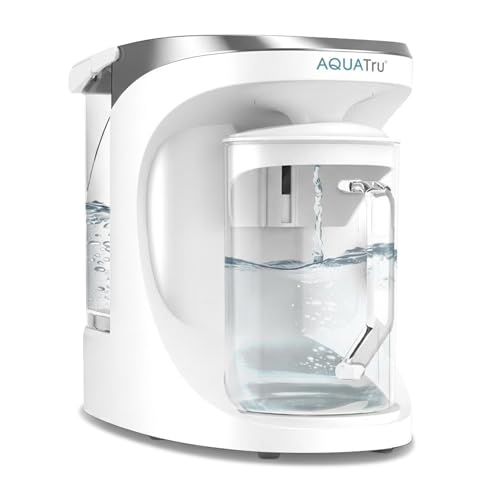
AquaTru Carafe
One of the broadest certified claim lists we've seen, including fluoride and arsenic, with no plumbing. It needs an outlet and makes half a gallon at a time, and its filters work out to about $0.33 a gallon at AquaTru's prices.
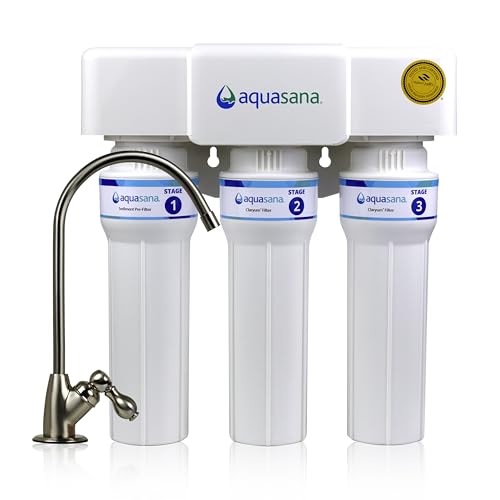
Aquasana Claryum Max Flow
Certified lead and PFOA/PFOS reduction without reverse osmosis: it keeps minerals, wastes no water and pours 0.72 gallons a minute. Filters are about $0.11 a gallon. It doesn't reduce fluoride.
Reverse osmosis or carbon: which should you buy?
Start from your water report, not the technology. If your water contains a contaminant your carbon-based filter is not certified to reduce, look for a treatment system certified for that specific contaminant. For fluoride, nitrate, many dissolved salts and pentavalent arsenic, an appropriately certified RO system is often the better fit; if your concerns are limited to contaminants your carbon-based system is certified to reduce, carbon is usually cheaper and simpler.
Choose reverse osmosis if
Fluoride, nitrate, pentavalent arsenic or high dissolved solids are on your report and the RO system is certified for the contaminant you need to reduce. For short-chain PFAS, RO has stronger evidence for broad reduction than activated carbon, but verify the exact system’s tested claims. The AquaTru Carafe needs no plumbing.
Choose carbon if
You’re on city water and your concerns are contaminants the system is specifically certified to reduce, such as chlorine taste, lead or PFOA/PFOS, and you want no wastewater, minerals kept and fast flow. See the Aquasana Claryum Max Flow.
Want RO from a faucet?
Compare under-sink systems, tank and tankless, in our reverse osmosis roundup and under-sink roundup.
Not sure what’s in your water?
Start with common tap water contaminants, then try our filter finder.
What else do people ask about RO and carbon?
Short answers on cost, water waste, installation and filter changes.
Is reverse osmosis better than a carbon filter?
For fluoride, nitrate, pentavalent arsenic and dissolved solids, an appropriately certified RO system can cover claims that a carbon-based system may not. The AquaTru Carafe is certified by IAPMO R&T to NSF/ANSI 58 for all four, while the Aquasana Claryum Max Flow lists none of those claims. For concerns such as chlorine, lead and PFOA/PFOS, a carbon-based filter certified for the specific contaminant can do the job without producing reject water.
How much water does a reverse osmosis system waste?
The EPA estimates a typical point-of-use RO system wastes at least five gallons for every gallon it makes, and WaterSense-labeled systems 2.3 gallons or less. Carbon filters waste none. AquaTru gives the countertop Carafe a 63% efficiency rating, so check each maker’s figure before you buy.
Can renters use reverse osmosis?
Yes, with a countertop unit. The AquaTru Carafe needs no plumbing, just a 120-volt outlet, and you fill its tank by hand. Under-sink RO needs a drain line and a faucet hole. An under-sink carbon filter like the Claryum needs a faucet hole too, so ask your landlord first.
How often do you change RO and carbon filters?
The Claryum’s AQ-C3M-R set every 6 months or 800 gallons, per Aquasana. The AquaTru Carafe’s pre/carbon filter every 6 months or 300 gallons, its VOC filter every 12 months or 300 gallons, and its RO membrane every 24 months or 600 gallons, per AquaTru. See how often to change a water filter.
Which is cheaper to run, RO or carbon?
Carbon, per gallon: About $0.11 for the Claryum against about $0.33 for the AquaTru Carafe, from each maker’s filter prices and rated capacity. By the year it depends on use: about $184 for the Claryum on its 6-month schedule, and about $130 for the Carafe if you filter 300 gallons or less.
Sources
- EPA: Reducing PFAS in drinking water with treatment technologies
- EPA: Reducing PFAS in your drinking water with a home filter
- EPA: PFAS National Primary Drinking Water Regulation
- EPA WaterSense: Guide to selecting water treatment systems (November 2024)
- NSF International: NSF/ANSI 58 reverse osmosis drinking water treatment systems
- NSF International: NSF/ANSI 42, 53 and 401 filtration systems standards
- CDC: About home water treatment systems
- University of Nebraska-Lincoln Extension: Drinking water treatment, activated carbon filtration (G1489)
- University of Nebraska-Lincoln Extension: Drinking water treatment, reverse osmosis (G1490)
- Maine CDC: Arsenic in drinking water
- Herkert et al. (2020), Duke University and NC State University: Point-of-use residential drinking water filters and PFAS
- AquaTru Carafe performance data sheet
- AquaTru Carafe product page
- AquaTru Carafe replacement filters
- Aquasana AQ-6300M performance data sheet
- Aquasana Claryum 3-Stage Max Flow product page
- Aquasana AQ-C3M-R replacement filters
- Waterdrop G3P800 product page (installation kit and power)
- IAPMO R&T product listing directory (AquaTru W-10188, W-10193, W-10194, W-10195)
- WQA certified product listings (Aquasana AQ-6300M)
Prices as of October 14, 2026. Product prices and availability are accurate as of the date/time indicated and are subject to change. As an Amazon Associate we earn from qualifying purchases.