
The LifeStraw Home Glass 7-Cup is certified by WQA to NSF/ANSI 42, 53 and 401 for lead, mercury, cadmium, copper, cysts, microplastics and chlorine. Its PFOA/PFOS and E. coli results come from named labs, not certification.
The catch: The carbon filter is certified for 40 gallons, so filters cost about $0.42 a gallon.
Health information, not medical advice. Guidance differs for infants, pregnancy and existing conditions. Test your own water and speak to a doctor or your local health authority. We may earn a commission when you buy through our links; it never affects our scores.
Is the LifeStraw Home pitcher any good?
Yes, if you want certified lead reduction from a glass pitcher. WQA (the Water Quality Association) certifies the LifeStraw Home Glass 7-Cup to NSF/ANSI 53 for lead, mercury, cadmium, copper, cysts and turbidity; to NSF/ANSI 401 for microplastics and nine other compounds; and to NSF/ANSI 42 for chlorine, taste and odor. Water filters through two stages, a membrane microfilter and an activated carbon and ion exchange filter, and the water is stored in glass rather than plastic.
Two things hold it back. The certification covers 40 gallons of the carbon filter, about two months, so filters cost more per gallon than a PUR PLUS or Brita Elite. And LifeStraw’s packaging leans on claims that aren’t certified: Its PFOA/PFOS and bacteria results are lab tests, and LifeStraw says the Home system doesn’t filter viruses. It holds 7 cups and takes about 20 to 25 minutes to filter a full reservoir once the filters are broken in.
You want certified lead and microplastics reduction, prefer water stored in glass, and drink about half a gallon a day or less.
How it scored
Contaminant reduction carries the most weight in the overall score. Lab-tested claims from a named lab earn half points. How we checked · How we score
What is the LifeStraw Home certified to remove?
Lead, mercury, cadmium, copper, cysts, turbidity, microplastics, chlorine and nine trace compounds, all certified by WQA. The table separates those from the claims LifeStraw backs with lab reports only.
| Contaminant | LifeStraw Home Glass 7-Cup | Verification |
|---|---|---|
| LeadNSF/ANSI 53 | Certified | WQA. LifeStraw’s data sheet reports 1.7 µg/L out from 150 µg/L in |
| Mercury, cadmium, copperNSF/ANSI 53 | Certified | WQA |
| Cysts, turbidityNSF/ANSI 53 | Certified | WQA |
| MicroplasticsNSF/ANSI 401 | Certified | WQA, with atenolol, bisphenol A, carbamazepine, estrone, linuron, meprobamate, nonylphenol, phenytoin and trimethoprim |
| Chlorine, taste and odorNSF/ANSI 42 | Certified | WQA, plus Class I particulates |
| PFOA and PFOS | Lab-tested | QFT Laboratory, under IAPMO R&T, to the NSF P473 protocol. Not certified |
| E. coli | Lab-tested | IAPMO India lab, on a new filter. Not certified |
| Chromium III, asbestos, atrazine, lindane, glyphosate | Lab-tested | Named labs, listed under “How we checked”. Not certified |
| Viruses | No | LifeStraw says the Home system doesn’t filter viruses |
| Fluoride, arsenic, nitrate | No claim | Not on the listings or LifeStraw’s data sheet |
Certifications from WQA’s NSF/ANSI 42, 53 and 401 listings for Vestergaard Frandsen Inc. (LifeStraw), which name the Home Glass 7-Cup only, with both filters, at 40 gallons. LifeStraw’s data sheet says the certified colorway is white. Lab testing is not certification: A certifier also audits the factory and retests over time.
Does the LifeStraw Home remove PFAS?
For PFOA and PFOS, a named lab says yes, but it isn’t certified. In a 2019 test by QFT Laboratory, run under IAPMO R&T’s supervision to the NSF P473 protocol, the pitcher’s filters held PFOA plus PFOS at or below 0.01 µg/L through 300 liters, twice their 150-liter rating (LifeStraw’s lab reports, report 19131). That covers two PFAS compounds, not the wider group.
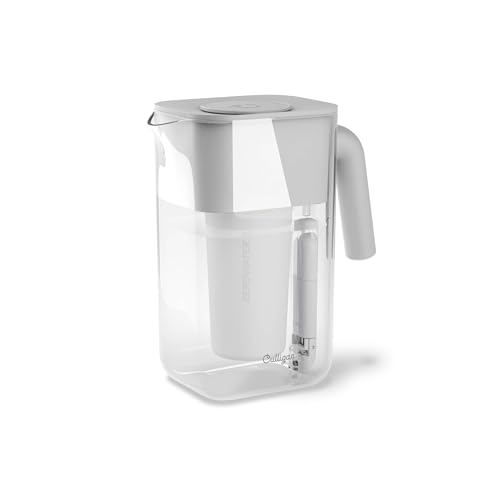
LifeStraw says the Home isn’t marketed as certified to the 2022 NSF/ANSI 53 PFAS updates, and PFAS isn’t on its WQA listing. For certified PFAS reduction in a pitcher, the PUR PLUS and Culligan ZeroWater are certified by IAPMO R&T for Total PFAS. See our PFAS guide.
Does it remove bacteria and viruses?
It reduced E. coli in one lab test, but it isn’t certified for bacteria and doesn’t filter viruses. In a 2021 test by IAPMO India’s laboratory, the pitcher filter cut E. coli by 8.74 log, leaving no viable bacteria in the sample (LifeStraw’s lab reports, report IAPMOLAB/PRTR/18531). That test used one bacterium, sampled once after 10 liters on a new filter, so it says nothing about how the membrane performs later in its life. LifeStraw lists more than 20 bacteria, but the only bacteria test in its published lab reports is this E. coli one.
LifeStraw itself says the Home system doesn’t filter viruses and that you should keep boiling water under an advisory (LifeStraw support), and its performance data sheet says not to use it on water that is microbiologically unsafe or of unknown quality without disinfecting it. Treat it as a filter for safe tap water. See our bacteria guide and boil water advisory guide.
How much does it cost to run?
About $76 a year at half a gallon a day, and about $154 at a gallon a day, at LifeStraw’s prices. It has two filters on different schedules: The activated carbon and ion exchange filter is rated for 40 gallons or 2 months, whichever comes first, and the membrane microfilter for 264 gallons or 1 year. WQA’s certification covers 40 gallons.
| How much you filter | Filters a year | Cost a year |
|---|---|---|
| Half a gallon a dayAbout 180 gallons | 6 carbon (the 2-month limit), 1 membrane | $75.95 (1-year pack) |
| 1 gallon a day365 gallons | 10 carbon, 2 membranes | About $154 |
| 2 gallons a day730 gallons, WQA’s listed rate | 19 carbon, 3 membranes | About $299 |
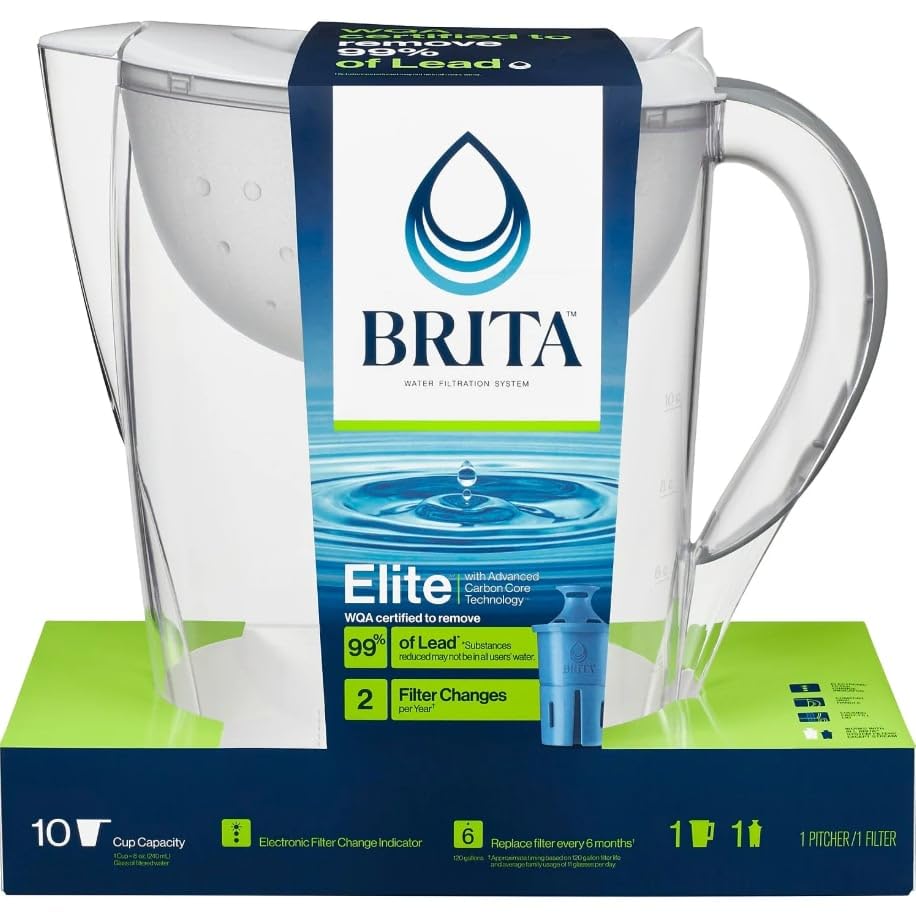
Our calculation from lifestraw.com prices on 19 October 2026, before tax and shipping: 1-year pack (1 membrane and 6 carbon filters) $75.95, 3-pack of carbon filters $39.95 (about $13.32 each), membrane $24.95. Filters beyond the 1-year pack are counted at those prices. The filters that come with the pitcher cover the first 2 months. A PUR PLUS costs about $0.25 a gallon and a Brita Elite about $0.14.
How do you set it up?
Rinse the filter housing and wash the pitcher, fit the carbon filter into the housing under its cap, and set the housing in the pitcher with the spouts lined up. Fill it, let it filter, and pour the first batch away; after that it’s ready to use. LifeStraw says filtering speeds up to about 20 to 25 minutes a reservoir once the filters are broken in.
Keep it on the counter or in the fridge. LifeStraw’s 3-year warranty covers defects, not breakage from dropping, so treat the glass with care.
Pros and cons
What we liked
- Certified by WQA for lead, mercury, cadmium and copper
- Certified for microplastics under NSF/ANSI 401
- Water stored in borosilicate glass
- PFOA/PFOS lab report from a named lab, published in full
- 3-year limited warranty
What to know
- Carbon filter certified for 40 gallons, about $0.42 a gallon
- PFAS and bacteria claims aren’t certified
- Doesn’t filter viruses or reduce fluoride
- 7 cups, 20 to 25 minutes a reservoir
- Certification names the glass 7-cup only
Specifications
- Model
- LifeStraw Home Glass 7-Cup
- Capacity
- 7 cups (56 oz, 1.65 L)
- Filters
- Membrane microfilter, plus activated carbon and ion exchange filter
- Filter life
- Carbon: 40 gal or 2 months. Membrane: 264 gal or 1 year (LifeStraw)
- Certified capacity
- 40 gal
- Certifier
- WQA: NSF/ANSI 42, 53 and 401
- Filter time
- About 20 to 25 minutes a reservoir once broken in (LifeStraw)
- Size and weight
- 11.25 x 5.8 inches, 2 lb 4 oz
- In the box
- Glass pitcher, silicone base, lid, filter housing, both filters
- Warranty
- 3 years, limited
Alternatives worth considering

PUR PLUS Pitcher
Brita Elite
Culligan ZeroWater
Common questions
Is the plastic LifeStraw pitcher certified too?
Not by name. WQA’s NSF/ANSI 42, 53 and 401 listings name only the LifeStraw Home Glass 7-Cup, and LifeStraw’s data sheet gives white as the certified colorway. LifeStraw says all its Home products use the same two filters, but a certification covers the pitcher it lists.
How often do I change the LifeStraw Home filters?
The carbon and ion exchange filter every 40 gallons or 2 months, whichever comes first, and the membrane microfilter every 264 gallons or 1 year. At a gallon a day, that’s about 10 carbon filters and 2 membranes a year, about $154 at LifeStraw’s prices.
Does the LifeStraw Home remove fluoride?
No. Fluoride isn’t on its WQA listings or LifeStraw’s data sheet. For certified fluoride reduction in a pitcher, look at the Culligan ZeroWater, or reverse osmosis. See our fluoride guide.
Can I use it during a boil water advisory?
No. LifeStraw says the Home system doesn’t filter viruses and that you should keep boiling your water under an advisory. Its bacteria result is a single lab test, not a certification. See our boil water advisory guide.
Is the LifeStraw Home dispenser certified?
No listing names it. WQA certifies only the glass 7-cup pitcher, and NSF International and IAPMO R&T have no LifeStraw listings. See our gravity filter guide for certified dispensers.
The bottom line
Buy the LifeStraw Home Glass 7-Cup if you want certified lead, metals and microplastics reduction from a glass pitcher and you filter half a gallon a day or so. For certified PFAS at a lower running cost, the PUR PLUS is the better buy. Compare them in our best water filter pitchers guide.
- Certifier listings: WQA, Vestergaard Frandsen Inc. (LifeStraw): NSF/ANSI 42 (chlorine, Class I particulates, taste and odor), NSF/ANSI 53 (cadmium, copper, cyst, lead, mercury, turbidity) and NSF/ANSI 401 (atenolol, bisphenol A, carbamazepine, estrone, linuron, meprobamate, microplastics, nonylphenol, phenytoin, trimethoprim). Model: LifeStraw Home Glass 7-Cup only, with the Activated Carbon + Ion Exchange Filter and Membrane Microfilter, 40 gallons, 2 gallons a day.
- Also searched: WQA (Vestergaard): the same three listings, nothing else. NSF International (LifeStraw, Vestergaard): no listings. IAPMO R&T (LifeStraw, Vestergaard), with a control search: no listings.
- Maker documents: LifeStraw Home performance data sheet (certified colorway: white), Home evidence dossier, product guide, product page, replacement filter prices and support pages on PFAS and boil water advisories.
- Independent lab tests: QFT Laboratory under IAPMO R&T supervision: PFOA/PFOS to NSF P473, report 19131 (May 2019), and asbestos, report 2585-21001 (Nov 2021). IAPMO India laboratory: E. coli, 8.74 log after 10 liters, report IAPMOLAB/PRTR/18531 (May 2021). Aquadiagnostics Water Research and Technology Centre (Bangalore): chromium III, atrazine and lindane (2018 to 2019). Lab-tested PFOA/PFOS credited at half points per our rubric.
Sources
- WQA listing, NSF/ANSI 42: Vestergaard Frandsen Inc. (LifeStraw), Home Glass 7-Cup (checked 19 Oct 2026)
- WQA listing, NSF/ANSI 53: Vestergaard Frandsen Inc. (LifeStraw), Home Glass 7-Cup (checked 19 Oct 2026)
- WQA listing, NSF/ANSI 401: Vestergaard Frandsen Inc. (LifeStraw), Home Glass 7-Cup (checked 19 Oct 2026)
- LifeStraw Home performance data sheet
- LifeStraw Home pitcher product guide
Prices as of October 19, 2026. Product prices and availability are accurate as of the date/time indicated and are subject to change. As an Amazon Associate we earn from qualifying purchases.