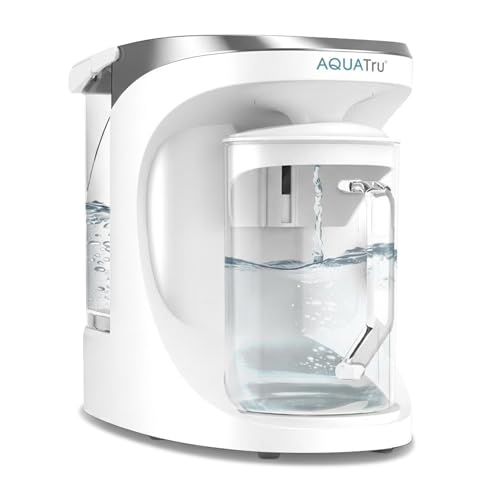
The best water filter for fluoride for most homes is the AquaTru Carafe: countertop reverse osmosis certified by IAPMO R&T to NSF/ANSI 58 for fluoride, plus lead, arsenic, nitrate, and PFOA/PFOS, with no plumbing.
The catch: It needs an outlet and counter space, and makes half a gallon at a time.
Health information, not medical advice. Guidance differs for infants, pregnancy, and existing conditions. Test your own water and speak to a doctor or your local health authority. We may earn a commission when you buy through our links; it never affects our scores.
The short answer
A water filter for fluoride should be certified for fluoride reduction by NSF International, IAPMO R&T, or WQA, usually under NSF/ANSI 58 for reverse osmosis. Every pick below is. Ordinary carbon pitchers and fridge filters aren’t certified for fluoride; the one pitcher here that is, the Culligan ZeroWater, uses ion-exchange resin. See our fluoride guide.
- Best overall: AquaTru Carafe, fluoride plus lead and PFOA/PFOS, no plumbing.
- Best under the sink: Waterdrop G3P800 (tankless) or APEC RO-90 (lowest filter cost).
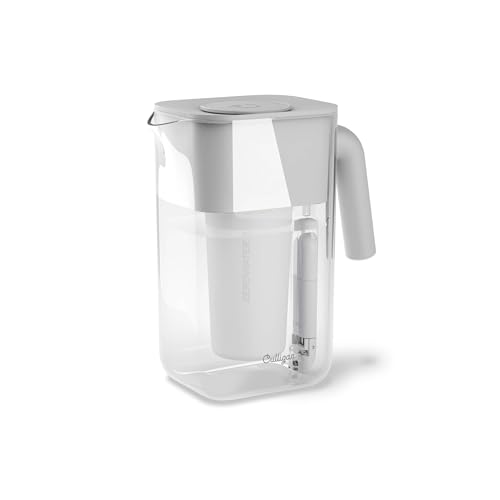
- Best pitcher: Culligan ZeroWater, certified for fluoride by IAPMO R&T.
How much fluoride is in tap water?
US community water systems that add fluoride aim for 0.7 mg/L, the level the US Public Health Service recommends. The EPA’s enforceable limit is 4.0 mg/L, and in January 2026 the EPA began a new fluoride health assessment to inform whether that standard should change. Your utility’s annual water quality report shows your level; on a private well, use a certified lab test.
How do the certified fluoride filters compare?
Seven filters certified for fluoride, ranked by overall score. How we score
| # | Filter | Score | Certified by | Lead | PFAS | Fluoride | Running cost | Price |
|---|---|---|---|---|---|---|---|---|
| 01 | AquaTru CarafeBest overallCountertop RO | 4.6 | IAPMO R&T | Certified | Certified | Certified | $0.33/gal | See priceon Amazon › |
| 02 | AquaTru ClassicBest for bigger batchesCountertop RO | 4.5 | IAPMO R&T | Certified | Certified | Certified | $0.17/gal | $475.00on Amazon › |
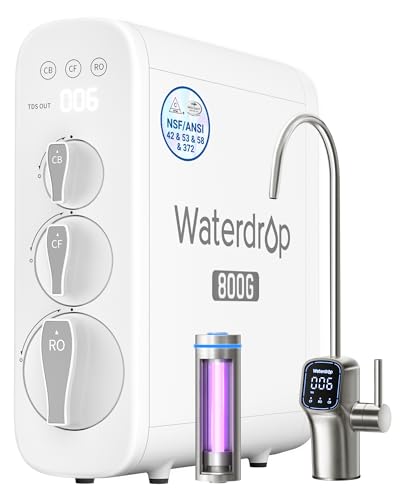
| 03 | Waterdrop G3P800Best under-sink, tanklessUnder-sink RO | 4.3 | IAPMO R&T | Certified | Certified | Certified | About $160/yr | $759.00on Amazon › |
| 04 | APEC RO-90Lowest filter costUnder-sink RO | 4.2 | WQA | Certified | No | Certified | $60 to $75/yr | $209.99on Amazon › |
| 05 | Culligan ZeroWaterBest pitcherPitcher | 4.2 | IAPMO R&T | Certified | Certified | Certified | $0.68 to $0.93/gal | See priceat Culligan › |
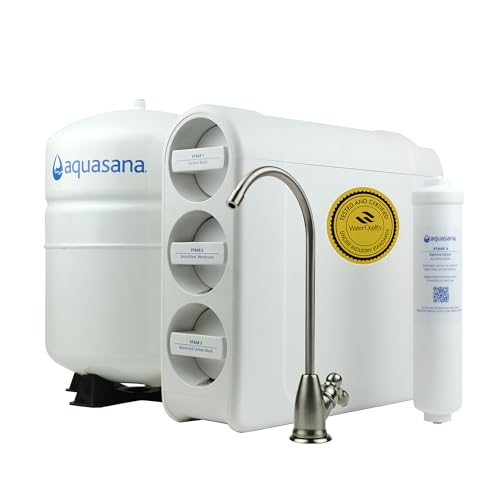
| 06 | Aquasana SmartFlow ROBest for adding minerals backUnder-sink RO | 4.1 | WQA | Certified | Certified | Certified | $0.49+/gal | See priceon Amazon › |
| 07 | iSpring RCC7AK-BNBest budget with alkaline stageUnder-sink RO | 3.9 | NSF International | Certified | Claim | Certified | $90 to $100/yr | $211.49on Amazon › |
Certified: Certified by an independent body (named in each pick). Lab test: Tested by a named independent lab, not certified. Claim: The maker's claim, not certified. No: No claim. PFAS means PFOA/PFOS, or Total PFAS where the pick says so.
Our seven picks in detail
What each filter is certified for, who certifies it, and who it suits.
AquaTru Carafe
One of the broadest certified claim lists we've seen, including fluoride and arsenic, with no plumbing. It needs an outlet and makes half a gallon at a time, and its filters work out to about $0.33 a gallon at AquaTru's prices.

AquaTru Classic
The same certified reverse osmosis claim list as the Carafe in a bigger countertop unit, about a gallon per batch. It needs a power outlet, and filters cost about $130 a year.
Waterdrop G3P800
Tankless reverse osmosis with certified lead, fluoride and PFOA/PFOS reduction from its own faucet. It needs a power outlet under the sink, and filters cost about $160 a year.

APEC RO-90
One of the broadest certified claim lists in under-sink RO, including lead, fluoride and arsenic V, and filters cost about $60 to $75 a year. No PFAS claim and no mineral stage.
Culligan ZeroWater
One of few pitchers with certified fluoride reduction, plus Total PFAS. Filters cost $0.68 to $0.93 a gallon and run out faster on hard water.
Aquasana SmartFlow RO
One of the most broadly certified under-sink RO systems we've checked, with minerals added back. The cost is the carbon blocks: $91.99 every 6 months or 250 gallons, plus the remineralizer and a yearly membrane.
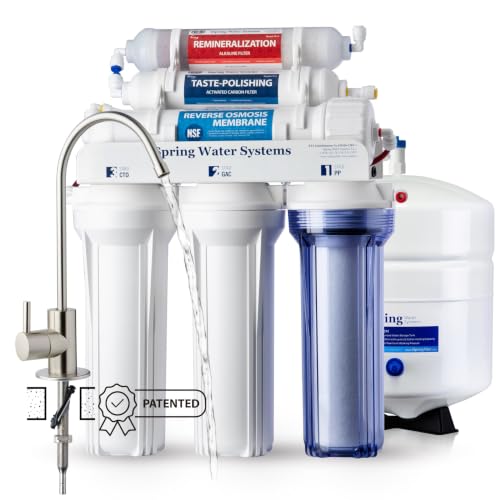
iSpring RCC7AK-BN
One of the least expensive under-sink reverse osmosis systems we found with certified lead and fluoride reduction, plus an alkaline stage that adds minerals back. Check the model: only the -BN and -BLK versions are certified for lead and fluoride. Filters run about $90 to $100 a year at iSpring's prices.
Which filters aren’t certified for fluoride?
- Brita, PUR, and standard ZeroWater pitchers. None is certified for fluoride. Brita vs PUR vs ZeroWater.
- Refrigerator filters. None of the fridge filters we checked is certified for fluoride. Our fridge filter guide.
- Clearly Filtered. Its fluoride figure comes from lab testing; only its chlorine claim is certified. AquaTru vs Clearly Filtered.
- APEC ROES-50 and plain iSpring RCC7AK. Both are certified for dissolved solids only. iSpring vs APEC ROES-50.
How to choose a water filter for fluoride
Check the listing for fluoride
Look up the exact model on NSF International, IAPMO R&T, or WQA and check that fluoride is in its reduction claims. “Removes fluoride” on the box isn’t a certification. See our guide to NSF certification.
Countertop or under the sink
Countertop RO needs no installation and suits renters. Under-sink RO gives filtered water on tap and suits bigger households.
Minerals
Reverse osmosis removes calcium and magnesium along with fluoride. The Aquasana SmartFlow and iSpring add minerals back. See how reverse osmosis works.
Pitcher filter life
The Culligan ZeroWater’s filters are certified for 20 gallons, so a pitcher costs more per gallon than RO if you drink a lot of filtered water.
Common questions
What water filter removes fluoride?
A filter certified for fluoride, usually reverse osmosis. The AquaTru Carafe, Waterdrop G3P800, APEC RO-90, and iSpring RCC7AK-BN are certified for fluoride under NSF/ANSI 58, and the Culligan ZeroWater pitcher is certified for it by IAPMO R&T.
Do Brita or refrigerator filters remove fluoride?
No. Brita filters and the fridge filters we checked aren’t certified for fluoride. See what a Brita filters out.
Does reverse osmosis remove fluoride?
Certified RO systems do. Check that fluoride is on the listing: the APEC ROES-50, for example, is certified for dissolved solids only. See our reverse osmosis guide.
Does boiling water remove fluoride?
No. Boiling doesn’t remove fluoride, and as water evaporates the fluoride that’s left is slightly more concentrated.
Does a Berkey remove fluoride?
Berkey’s fluoride figures come from lab testing with its separate fluoride filters, not certification. See our Big Berkey review.
How much does a fluoride filter cost to run?
From about $60 to $75 a year in filters for the APEC RO-90, to $0.68 to $0.93 a gallon for the Culligan ZeroWater pitcher. The AquaTru Carafe is about $0.33 a gallon.
Sources
Prices as of October 19, 2026. Product prices and availability are accurate as of the date/time indicated and are subject to change. As an Amazon Associate we earn from qualifying purchases.