Health information, not medical advice. Guidance differs for infants, pregnancy, and existing conditions. Test your own water and speak to a doctor or your local health authority. We may earn a commission when you buy through our links; it never affects our scores.
The short answer
E. coli in water means the water has likely been contaminated with human or animal feces, and the EPA’s health goal for it is zero. Most coliform bacteria are harmless on their own, but labs test for them because a positive result signals that harmful germs may also be present. If a well test comes back positive, use bottled water or another safe source, find and fix the cause, disinfect the well, and retest. If bacteria keep coming back after the well is repaired and disinfected, continuous disinfection such as a UV (ultraviolet) or chlorination system may be needed. Most pitcher and fridge filters are not designed to remove germs.
What is the difference between total coliform, fecal coliform, and E. coli?
They are nested groups, and labs use them as indicator organisms rather than as direct measures of disease-causing germs.
- Total coliform is a broad group found in soil and surface water as well as in feces. Most total coliforms are harmless themselves, though some can cause illness; their presence shows a pathway exists through which harmful germs could enter the water.
- Fecal coliform is the subgroup more closely linked to the intestines of warm-blooded animals, so it is a stronger sign of sewage or animal waste than total coliform.
- E. coli is a fecal coliform and the most specific indicator of human or animal waste in water, so a positive E. coli result is much more serious than coliform alone.
Is E. coli in water harmful?
Most E. coli are harmless and live in a healthy gut, but some strains cause diarrhea, urinary tract infections, pneumonia, and other illness, and people can be infected by swallowing contaminated water. STEC (Shiga toxin-producing E. coli) can lead to hemolytic uremic syndrome, which can cause kidney failure. Children under 5, adults 65 and older, and people with weakened immune systems are among those at higher risk.
Penn State Extension notes that a positive coliform test does not guarantee illness; it shows a pathway exists between a contamination source, such as surface water, a septic system, or animal waste, and the water supply.
What does the EPA allow for E. coli and coliform?
For public water systems, the EPA’s MCLG (health goal) for E. coli is zero (40 CFR 141.52). The enforceable rules come from the Revised Total Coliform Rule, published in 2013, with compliance starting April 1, 2016.
| Rule | Value | What it means |
|---|---|---|
| E. coli MCLG | Zero | Health goal for E. coli, in effect since April 1, 2016 |
| E. coli MCL | No number; based on sample results | A violation occurs, for example, when a repeat sample is E. coli-positive after a total coliform-positive routine sample (40 CFR 141.63) |
| Total coliform | Treatment technique | Total coliform-positive samples alone no longer cause an MCL violation. Set triggers, such as too many total coliform-positive samples in a month, require a Level 1 or Level 2 assessment, and the system must correct any sanitary defects found (40 CFR 141.859) |
These rules apply to public water systems. The quality of water from private household wells is not regulated by the federal Safe Drinking Water Act or by most states, though some states and localities set rules for well construction or testing. That leaves the owner responsible, so test a private well every year.
What should you do during a boil water advisory?
Bring water to a rolling boil for 1 minute, or 3 minutes above 6,500 feet, and boil tap water even if you filter it. Use boiled or commercially bottled water for drinking, cooking, and brushing teeth, and use ready-to-use formula if possible. Boiling is sufficient to kill pathogenic bacteria, viruses, and protozoa, but it does not remove chemicals. See our guide to filters during a boil water advisory.
What does a positive well test mean?
A high total coliform count suggests harmful germs may be present, and a positive fecal coliform or E. coli result suggests fecal contamination has likely occurred. Positive results are common. One survey of 450 private wells, reported by Penn State Extension, found coliform bacteria in about 35 percent and E. coli in about 15 percent; results vary by region and well type.
- Switch to a safe source. Use bottled water or another safe source for drinking and cooking until the problem is fixed. Boiling kills germs, but if nitrate, arsenic, or another harmful chemical was also found, don’t rely on boiling: The CDC says boiling will not remove chemicals. Ask your local health department for advice.
- Retest if the result is unexpected. It is easy to get bacteria into a test bottle by accident. If total coliform is positive, follow up with an E. coli test.
- Find and fix the cause. Check the well cap and casing for damage, make sure the ground slopes away from the well, and look for failing septic systems, standing water near the well, and animal waste. A sanitary well cap and a casing that extends above the ground keep out insects and surface water.
- Disinfect the well with shock chlorination (below).
- Retest to confirm the bacteria are gone before you go back to drinking the water untreated.
How does shock chlorination work?
Shock chlorination is a one-time disinfection of the well and plumbing with a strong chlorine solution, used after a one-time contamination incident. The CDC says wells should be disinfected by a well or pump contractor because of safety concerns. Its method works like this:
- Use unscented household liquid chlorine bleach, in an amount from a dosing table based on the well’s water depth and diameter, mixed with 3 to 5 gallons of water. The target is a chlorine concentration above 100 mg/L.
- Leave the chlorinated water in the well and plumbing for at least 12 hours.
- Flush onto an area without vegetation, not into streams or ponds, until the chlorine odor is gone, then run indoor faucets until the smell disappears.
- Wait at least 7 to 10 days before sampling, and boil water or use another safe source until the test is clear.
Penn State Extension advises retesting about 10 to 14 days after disinfection and again two to three months later. If bacteria return, check again for a contamination pathway you can fix, such as a loose cap, cracked casing, or poor drainage around the well. If contamination persists, consider a continuous disinfection system. High chlorine levels can damage or exhaust some water treatment equipment, so check whether yours should be bypassed first.
How do you test water for E. coli and coliform?
Test a private well every year for total coliform bacteria, nitrates, total dissolved solids, and pH, using a state-certified lab. Test sooner after flooding, after repairs to the well, or if the water’s taste, color, or smell changes. Your local health department may offer free private well testing. Bacteria levels vary with the weather: Wells tend to show the most bacteria after several weeks of rain. See our well water guide.
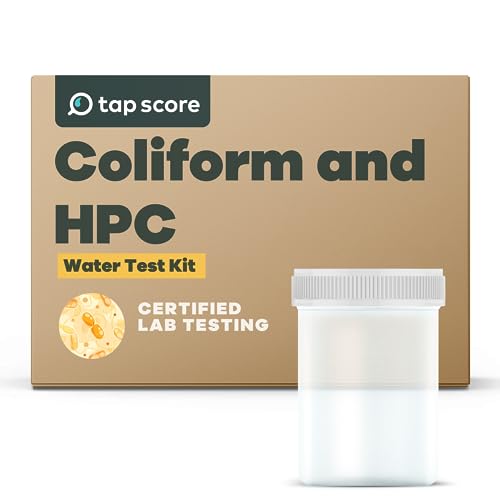
Tap Score Coliform and HPC Water Test
How do you get rid of bacteria in well water?
- UV systems work best on clear water, because sediment, cloudiness, and scale can shield bacteria from the light, so a sediment filter is often installed ahead of the unit. Water quality and flow rate should stay within the UV maker’s limits. UV leaves no residual disinfectant, and the bulb needs replacing about once a year. Penn State Extension does not recommend UV when total coliform exceeds 1,000 per 100 mL or fecal coliform exceeds 100 per 100 mL; this is extension guidance, not an EPA or NSF limit.
- Continuous chlorination feeds a chlorine solution into the water. A common design target is roughly 0.3 to 0.5 mg/L residual chlorine and about 30 minutes of contact time, which may require a larger holding tank, but the dose and contact time needed depend on chlorine demand, pH, temperature, and the system, so follow the maker’s specifications and local guidance. The water should be clear, and the system needs significant maintenance.
- Ozonation is generally not recommended for disinfection because it costs much more than chlorination or UV, though it may help where iron and manganese also need treating.
- Reverse osmosis and ultrafiltration remove bacteria, and microfiltration is only somewhat effective. Check the certification listing before relying on one for contaminated water. See how reverse osmosis works.
- Pitcher and fridge filters: Most of these are not designed to remove germs. Don’t rely on one for contaminated water.
Iron in the water can make harmful bacteria harder to get rid of.
For UV, look for NSF/ANSI 55 certification. NSF says Class A systems are designed to inactivate or kill bacteria, viruses, and cysts in contaminated water, while Class B systems only reduce non-disease-causing bacteria in water that is already disinfected. For any other filter, check the certification listing for a specific microbiological claim and the exact model and cartridge it covers. See our NSF certification guide.
Which treatment systems are certified for bacteria?
Each system below is certified for a microbiological claim in the configuration shown on its card, with the certifier and standard.
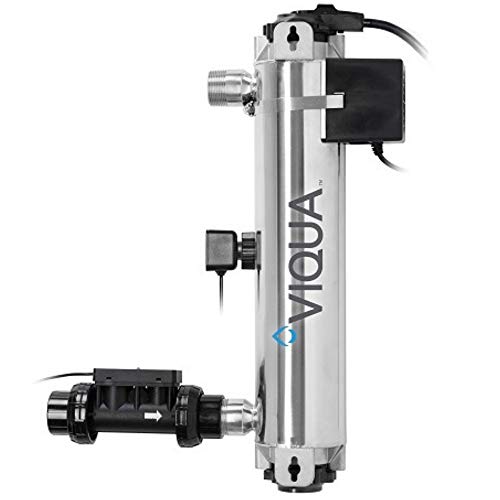
Viqua PRO10 UV System
Culligan Aquasential RO
Common questions
Does boiling kill E. coli?
Yes. Boiling is sufficient to kill pathogenic bacteria, viruses, and protozoa. The CDC advises a rolling boil for 1 minute, or 3 minutes above 6,500 feet; the EPA uses 3 minutes above 5,000 feet. Boiling does not remove chemicals such as nitrate or arsenic.
Is coliform in water dangerous if there’s no E. coli?
Most total coliforms are not harmful themselves, but they indicate a pathway through which harmful germs could enter the water. The Minnesota Department of Health advises using a safe water source after a positive coliform test until the well is disinfected and retests clean.
Will a pitcher filter remove bacteria?
Don’t count on it. Most home filters, like pitcher or fridge filters, are not designed to remove germs, so check the label for what a filter removes.
How long after shock chlorination should I retest?
Wait at least 7 to 10 days so the chlorine is flushed out. The longer schedule described above is about 10 to 14 days, then again two to three months later.
How often should I test my well for bacteria?
At least once a year for total coliform, and sooner after flooding, well repairs, or a change in taste, color, or smell.
Sources
Prices as of October 19, 2026. Product prices and availability are accurate as of the date/time indicated and are subject to change. As an Amazon Associate we earn from qualifying purchases.