
A mail-in lab kit for 116 analytes in well or city water, including coliform bacteria, E. coli, lead, arsenic, nitrate and nitrite, uranium, hardness, iron and manganese. It ships with prepaid overnight return, and results take about 5 business days at the lab.
The catch: Tap Score sends samples to a network of certified labs but doesn’t say which lab tests your kit, and it doesn’t include PFAS.
Health information, not medical advice. Guidance differs for infants, pregnancy and existing conditions. Test your own water and speak to a doctor or your local health authority. We may earn a commission when you buy through our links; it never affects our picks.
Which water test kit should you buy?
The best water test kit for most homes is the Tap Score Advanced Home Water Test: one mail-in lab kit covers 116 analytes, including coliform bacteria, E. coli, lead, arsenic, nitrate and uranium, for a private well or city water. For a smaller well panel, the Tap Score Essential Well kit covers 54 analytes, including bacteria, lead, arsenic and nitrate. If you want to know exactly which accredited lab runs your test, the WaterCheck Standard Well Water Test names its lab. For PFAS, buy a dedicated PFAS test, because none of the general kits includes it.
Instant strips are fine for a quick look at hardness or chlorine, but the CDC (Centers for Disease Control and Prevention) tells well owners to use a state-certified laboratory, and a lab is the only way to get a number you can compare with a legal limit.
How do the water test kits compare?
Every kit here is a mail-in lab test except the instant bacteria vial at the bottom. Contents and lab times are the makers’ own, checked 22 October 2026.
| Kit | Best for | Lab | Bacteria | Lead | Nitrate | PFAS | Lab time | Where to buy |
|---|---|---|---|---|---|---|---|---|
| Tap Score Advanced | Most contaminants, well or city | Network, not named per kit | Yes | Yes | Yes | No | 5 business days | Amazon |
| Tap Score Essential Well | A smaller well panel | Network, not named per kit | Yes | Yes | Yes | No | 5 business days | Tap Score, $209 |
| WaterCheck Standard Well | Wells, named lab | National Testing Laboratories | Yes | Yes | Yes | No | 7 to 10 business days | WaterCheck, $255 |
| Safe Home Ultimate | Chemicals and metals | Environmental Laboratories, Indiana (state-certified) | At-home vial only | Yes | Yes | No | 7 to 10 business days | Safe Home, $399.95 |
| Tap Score Essential City | City water | Network, not named per kit | No | Yes | Yes | No | 5 business days | Tap Score, $189 |
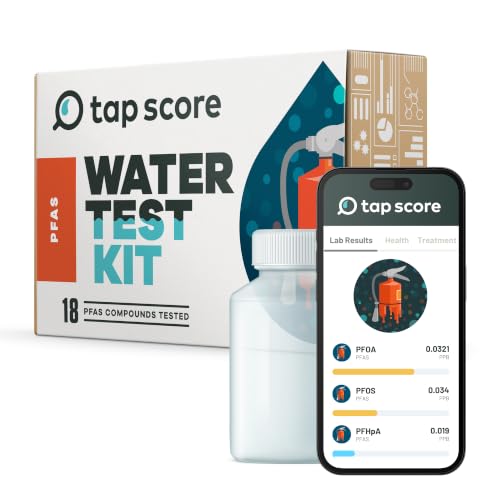
| Tap Score PFAS test | PFAS | Network, not named per kit | No | No | No | 18 PFAS (EPA Method 537.1) | 10 business days | Amazon |
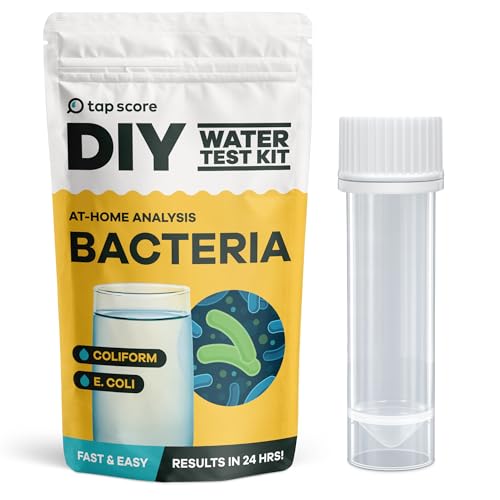
| Tap Score DIY Bacteria | Quick bacteria screen | None (instant) | Screen only | No | No | No | 24 to 72 hours at home | Amazon |
Which kit fits your water?
What each kit tests, who runs the analysis, and the one thing to know before you order.
Best overall: Tap Score Advanced Home Water Test
The Advanced Home kit is Tap Score’s broad panel for well or city water: 116 analytes, including total coliform and E. coli, lead, arsenic, nitrate and nitrite, uranium, hardness, iron and manganese, plus at-home strips for chlorine and hydrogen sulfide. It ships with a cold pack and prepaid overnight return, so a bacteria sample reaches the lab on time. Tap Score says every lab in its network of more than 250 holds accreditations from ISO to NELAC (National Environmental Laboratory Accreditation Conference) and state certification. Buy it when you move into a home or before you choose a filter.
The catch: Tap Score doesn’t say which lab tests your kit, so you can’t check that lab’s state certification before you order.
Smaller well panel: Tap Score Essential Well Water Test
The Essential Well kit covers 54 analytes, including coliform bacteria and E. coli, lead, arsenic, nitrate and nitrite, uranium, hardness, iron and manganese, with prepaid overnight return and about 5 business days at the lab. It’s sold on Tap Score’s site for $209 and suits a yearly well check or a tighter budget.
The catch: It covers fewer metals and minerals than the Advanced kit, so it’s less useful for choosing a filter.
Best named lab: WaterCheck Standard Well Water Test
The WaterCheck Standard Well kit tests for 87 contaminants, including total coliform and E. coli (presence or absence), lead, arsenic, uranium, nitrate and hardness. Results come from National Testing Laboratories in Cleveland, Ohio, which WaterCheck says holds NELAC accreditation (number E87753), ISO/IEC 17025 accreditation since 2010, and certifications in more than 35 states. That’s the clearest lab disclosure of any kit we checked. Results take 7 to 10 business days from when the lab receives your sample, and WaterCheck’s site warns that high volumes can stretch that to a few weeks. It’s sold on WaterCheck’s own site for $255.
The catch: You pay for next-day return shipping yourself, and the kit has to travel next day.
Most chemicals from a state-certified lab: Safe Home Ultimate
Safe Home is a division of Environmental Laboratories, Inc. in Madison, Indiana, which Indiana’s Department of Health lists as a certified drinking water laboratory for bacteria and for chemistry, including lead, arsenic, nitrate and nitrite. The Ultimate kit covers about 200 contaminants, most of them organic chemicals, plus 31 metals including lead, arsenic, iron and manganese, and return shipping is included. It’s sold on Safe Home’s site for $399.95.
The catch: The lab doesn’t test this kit for bacteria; it includes an at-home bacteria vial instead.
For city water only: Tap Score Essential City Water Test
Tap Score’s Essential City kit tests 49 analytes, including lead, arsenic, nitrate, uranium and hardness, for $189 on Tap Score’s site. It leaves out bacteria, which suits city water: your utility disinfects it and reports its own coliform results every year in its Consumer Confidence Report (CCR), the annual water quality report. A home test matters most for lead, which comes from your own pipes and fixtures rather than the utility’s supply.
The catch: No bacteria, nitrite or PFAS; don’t use it for a well.
Best for PFAS: Tap Score PFAS test
The general kits don’t test PFAS, the “forever chemicals,” so you need a separate test. Tap Score’s PFAS test measures 18 PFAS by EPA Method 537.1 down to below 2 parts per trillion, which is low enough to compare with the EPA’s 4 parts per trillion limits for PFOA and PFOS. Results take about 10 business days. Our PFAS guide explains what the numbers mean.
The catch: It costs more than a full general panel, so test where PFAS is likely: near airports, military bases, factories or landfills.
Quick screen: Tap Score DIY Bacteria Water Test
Tap Score’s DIY Bacteria vial screens for coliform bacteria, including E. coli, at home with no mailing: a blue or green color means a positive result, visible in as little as 24 hours and confirmed within 72. It isn’t a lab test, so treat a positive as a reason to order one, and for the yearly well check a lab test such as the Advanced kit or Tap Score’s coliform test is the better record.
How often should you test your water?
On a private well, test at least once a year for total coliform bacteria, nitrates, total dissolved solids and pH, according to the EPA (Environmental Protection Agency) and the CDC. Test again after flooding, after work on the well, or when the water’s taste, color or smell changes, and run a full panel when you move in or before you buy a filter.
On city water, start with your utility’s annual report and our tap water checker, which shows your utility’s health-based violations, PFAS results and lead levels. Test at home for lead if your home was built before 1986, when lead pipes and solder were still common, according to the EPA, or if you have a lead service line. The EPA and CDC both say to ask your water utility first, because many test for lead on request.
Is a lab test better than test strips?
Yes, for anything that affects your health. A lab reports a measured level you can compare with the EPA limit, and it can detect bacteria, arsenic, uranium and PFAS, which strips can’t measure reliably. Strips and instant kits are useful for hardness, chlorine and pH, or as a quick first look, but their accuracy claims are the makers’ own.
How do you choose a water test kit?
Four checks decide almost every case.
Match it to your water source
A well needs bacteria and nitrate every year; city water mainly needs lead. Buy the kit for your source, not the biggest one.
Check who runs the test
Look for a named lab with state drinking water certification or NELAC accreditation. The EPA’s lab certification page links to every state’s list of certified labs.
Plan the shipping
Bacteria samples have to reach the lab quickly. Mail them early in the week, and check whether next-day return shipping is included.
Then pick the filter
Use your results to choose a filter certified for what you found. Our guide to choosing a water filter walks through it, and the well water guide covers well treatment.
Common questions
The questions we hear most about testing water at home.
Can I get my water tested for free?
Sometimes. On city water, ask your utility first: the EPA and CDC both tell residents to contact it about lead testing. The EPA itself doesn’t test home water; it points people to state-certified labs, and your state or county health department can tell you which ones serve your area.
How much does a well water test cost?
A full lab panel for a well costs about $200 to $400. The Tap Score Essential Well kit costs $209 and the WaterCheck Standard Well kit $255 on the makers’ sites; check the current Amazon price for the Tap Score Advanced kit on the buttons above. A bacteria-only lab test for the yearly check costs less.
Do home water test kits test for bacteria?
Lab kits for wells do: the Tap Score Advanced, Tap Score Essential Well and WaterCheck Standard Well all test for total coliform bacteria. City kits usually don’t, and instant vials only screen for coliform; confirm a positive with a lab.
Do water test kits test for PFAS?
Not the general kits on this page. Buy a dedicated PFAS test such as Tap Score’s, which measures 18 PFAS by EPA Method 537.1. See our PFAS guide for the limits.
Sources
Prices as of November 1, 2026. Product prices and availability are accurate as of the date/time indicated and are subject to change. As an Amazon Associate we earn from qualifying purchases.