Health information, not medical advice. Guidance differs for infants, pregnancy, and existing conditions. Test your own water and speak to a doctor or your local health authority. We may earn a commission when you buy through our links; it never affects our scores.
The short answer
Nitrates in water come mostly from fertilizer, septic systems, and animal waste, and shallow or older private wells near farms or septic systems are especially vulnerable. The main risk is to infants under six months who drink water above the limit: they can become seriously ill, with symptoms that include shortness of breath and blue-baby syndrome, according to the EPA. Bottle-fed babies are at the highest risk, Minnesota says. The EPA limit is 10 mg/L for nitrate and 1 mg/L for nitrite, both measured as nitrogen. You can’t see, smell, or taste nitrate, so testing is the only way to know. Reverse osmosis, ion exchange, and distillation reduce it; boiling does not, and can raise levels.
Where do nitrates in water come from?
Both nitrate and nitrite come from fertilizer runoff, leaking septic tanks and sewage, and erosion of natural deposits. Chemical fertilizers, human sewage, and animal waste can reach wells through runoff, seepage, and groundwater movement. Nitrate builds up in farm watersheds where inorganic fertilizer and animal manure are spread on cropland, while septic systems and lawn fertilizer are sources in rural communities. Shallow wells and springs are especially prone to contamination.
The most vulnerable wells are shallow wells, wells in sand, karst, or fractured rock aquifers, dug wells whose casings are not watertight, and wells with damaged or leaking casings or fittings, especially older wells (built before 1974) and wells near septic systems or in agricultural areas.
Are nitrates in water harmful?
The EPA says infants below the age of six months who drink water with nitrate or nitrite above the limit could become seriously ill and, if untreated, may die. Symptoms include shortness of breath and blue-baby syndrome. The medical name is methemoglobinemia, a condition in which nitrate and nitrite reduce the blood’s ability to carry oxygen.
Bottle-fed babies under six months are at the highest risk, and bluing of the lips and skin can be hard to spot in infants, according to the Minnesota Department of Health. If you’re preparing formula, see our guide to water for baby formula.
Long-term exposure below the standard has been associated with thyroid problems, adverse pregnancy outcomes, and some cancers, particularly colorectal, but more research is needed (Minnesota Department of Health). High nitrate in water has also been linked to low birth weight (Penn State Extension).
What are the limits for nitrates in drinking water?
The numbers look different because agencies report nitrate in two ways. The EPA measures it as nitrogen, while the WHO measures it as the nitrate ion. To convert, 1 mg/L of nitrate-nitrogen equals about 4.43 mg/L as nitrate, and 1 mg/L of nitrite-nitrogen equals about 3.28 mg/L as nitrite, per University of Georgia Extension.
| Agency | Value | What it’s for |
|---|---|---|
| EPA | 10 mg/L nitrate (measured as nitrogen) | MCL (maximum contaminant level), enforceable for public water systems; the MCLG (maximum contaminant level goal), a health goal, is also 10 mg/L |
| EPA | 1 mg/L nitrite (measured as nitrogen) | Enforceable MCL; the MCLG (health goal) is also 1 mg/L |
| WHO | 50 mg/L as nitrate ion | Guideline to protect against methemoglobinemia and thyroid effects in the most sensitive group, bottle-fed infants (WHO fact sheet) |
| WHO | 3 mg/L as nitrite ion | Guideline; when both are present, the ratios of each to its guideline should add up to no more than 1 |
You may also see a limit of 45 mg/L nitrate. Penn State Extension, describing the EPA and Pennsylvania standards for public water supplies, says supplies should not contain more than 45 mg/L of nitrate or 10 mg/L of nitrate-nitrogen. Check which unit your lab report uses before comparing.
How do you test for nitrates in well water?
Nitrate and nitrite are colorless, odorless, and tasteless, so testing is the only way to detect them. Test a private well for nitrate and nitrite every year (New Jersey Department of Health), and test for nitrate before bringing a new baby home (Minnesota Department of Health). Use an accredited laboratory. A result above 1 mg/L suggests further testing may be worthwhile, because other contaminants such as pesticides may be present.
On city water? Look up your utility in our tap water checker to see whether it has broken the federal nitrate limit (10 mg/L) since 2016.
The federal limits apply to public water systems. Private wells are not federally regulated, but meeting the same limits is generally advised. See our well water guide for more on well testing and treatment. Our water test kit guide compares lab kits that test nitrate and nitrite.

Tap Score Advanced Home Water Test
How do you remove nitrates from water?
- Reverse osmosis uses a semi-permeable membrane to filter out unwanted molecules. It removes an estimated 83 to 92 percent of nitrate, so water with very high starting levels may still exceed the limit after treatment. See how reverse osmosis works.
- Ion exchange works like a water softener but swaps chloride for nitrate. Sulfate in the water can interfere, and the brine it produces is high in nitrate.
- Distillation removes nitrate by boiling water, then cooling and condensing the vapor. It is slow and uses a lot of energy.
- Boiling does not work. It concentrates nitrate as water evaporates.
The WHO lists biological denitrification and electrodialysis as treatment options, alongside ion exchange and reverse osmosis, and says conventional municipal treatment (coagulation, sedimentation, filtration, and chlorination) is not effective for nitrate. Other options include bottled water, removing the source, or switching water supplies.
Look for certification. NSF/ANSI 58, the standard for reverse osmosis systems, includes an optional nitrate/nitrite reduction claim, and NSF’s listings show “Nitrate/Nitrite Reduction” as a claim for reverse osmosis systems. Because the claim is optional, an RO system certified to NSF/ANSI 58 is not automatically certified for nitrate. Check the listing. For our picks, see the best water filters for nitrates, and our guide to NSF certification.
Which filters are certified for nitrate?
Each filter below is certified for nitrate reduction, with the certifier and standard on each card. Pitchers and carbon filters without a nitrate claim are not on the list. The full comparison is in our guide to the best water filters for nitrates.
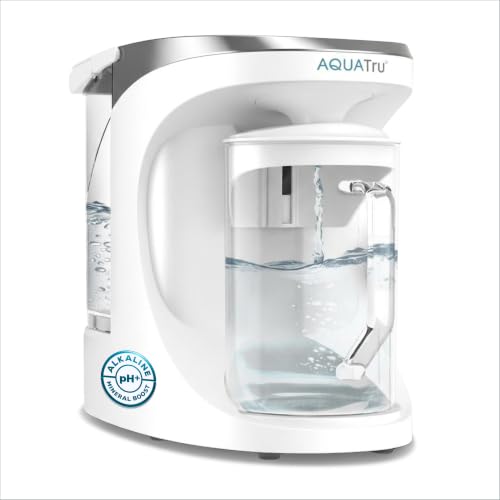
AquaTru Carafe

AquaTru Classic
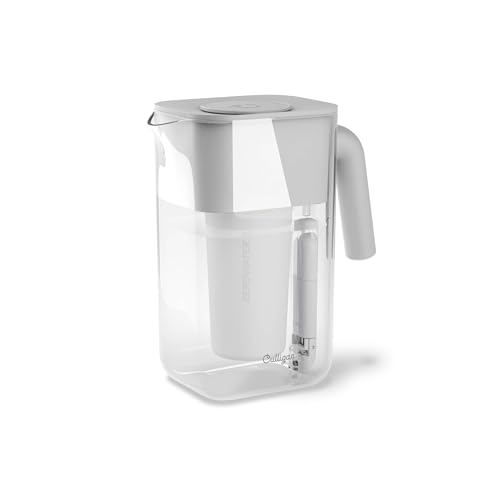
Culligan ZeroWater
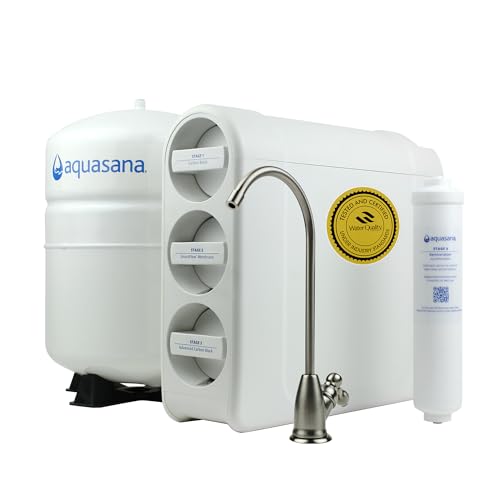
Aquasana SmartFlow RO
Culligan Aquasential RO
Common questions
Does boiling remove nitrates from water?
No. Boiling does not reduce nitrate or nitrite and can increase levels as water evaporates. The WHO advises that when you boil water for other reasons, such as killing germs, you heat it only until it reaches a rolling boil, because extra boiling concentrates nitrate.
Can I mix baby formula with well water that has nitrate?
If nitrate is above 10 mg/L, Minnesota advises using a safe alternative such as bottled water until the problem is fixed, which matters most for formula. Even with home treatment, it advises that babies under six months not drink the treated water, because bottled water may be safer for them in case the treatment stops working.
Is 10 mg/L nitrate the same as 45 mg/L?
Both figures are used for the same public supply standard, written in different units: 45 mg/L of nitrate or 10 mg/L of nitrate-nitrogen. The EPA’s 10 mg/L is measured as nitrogen.
Are nitrates in water a risk for adults?
Penn State Extension says studies by the WHO and the National Academy of Sciences show nitrate in drinking water is not a significant risk for adults. Minnesota notes possible links between long-term exposure and thyroid problems, pregnancy outcomes, and some cancers, while saying more research is needed.
How often should I test my well for nitrates?
Test for nitrate and nitrite every year, and test for nitrate again before bringing a new baby home. Also test after installing treatment to make sure it works.
Sources
Prices as of November 1, 2026. Product prices and availability are accurate as of the date/time indicated and are subject to change. As an Amazon Associate we earn from qualifying purchases.