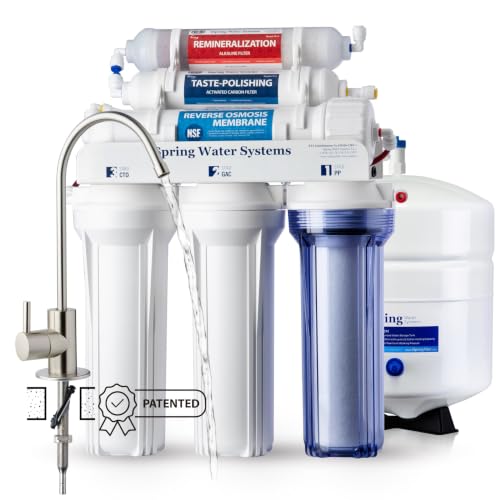
iSpring RCC7AK vs APEC ROES-50: the iSpring RCC7AK-BN is certified by NSF International to NSF/ANSI 58 for lead, fluoride, and dissolved solids, while the APEC ROES-50 is certified by WQA for dissolved solids (TDS) only. Both are under-sink reverse osmosis systems at a similar price.
The catch: Only the -BN and -BLK versions carry those claims; the plain RCC7AK is certified for TDS only, so check the model before you buy.
Health information, not medical advice. Guidance differs for infants, pregnancy, and existing conditions. Test your own water and speak to a doctor or your local health authority. We may earn a commission when you buy through our links; it never affects our scores.
How Do the iSpring RCC7AK and APEC ROES-50 Compare?
Two of the most popular budget under-sink RO systems. Both are certified to NSF/ANSI 58, but for very different claim lists, which is why their scores are far apart. How we score
| # | System | Score | Lead | PFAS | Fluoride | Filter life | Cost per gallon | Price |
|---|---|---|---|---|---|---|---|---|
| 01 | iSpring RCC7AK-BNBest of the two | 3.9 | Certified | Claim | Certified | Pre-filters 6 to 12 mo (maker) | Not rated | $234.99on Amazon › |
| 02 | APEC ROES-50Lowest filter cost | 3.2 | Claim | Claim | Claim | Pre-filters 6 to 12 mo (maker) | Not rated | $179.99on Amazon › |
Certified: Certified by an independent body (named in each pick). Lab test: Tested by a named independent lab, not certified. Claim: The maker's claim, not certified. No: No claim. PFAS means PFOA/PFOS, or Total PFAS where the pick says so.
What Is Each One Certified to Remove?
| Contaminant | iSpring RCC7AK-BN | APEC ROES-50 |
|---|---|---|
| Dissolved solids (TDS) | Certified (NSF International, NSF/ANSI 58) | Certified (WQA, NSF/ANSI 58) |
| Lead | Certified (NSF/ANSI 58) | APEC’s claim, not certified |
| Fluoride | Certified (NSF/ANSI 58) | APEC’s claim, not certified |
| Asbestos, barium, cadmium, chromium, copper, selenium | Certified (NSF/ANSI 58) | No claim |
| PFAS | iSpring’s claim, not certified | APEC’s claim, not certified |
| Arsenic | Not certified | APEC’s claim, not certified |
iSpring: NSF International listing for the RCC7AK-BN and RCC7AK-BLK (made in Nanjing); the plain RCC7AK (made in Taiwan) is certified for TDS only. APEC: WQA listing for the ROES-50 under NSF/ANSI 58 for TDS, plus NSF/ANSI/CAN 372 for lead-free materials; WQA doesn’t list the ROES-50X.
Are Both Actually Certified?
Both are certified to NSF/ANSI 58, the reverse osmosis standard, but a certification only covers the claims the certifier lists. The iSpring RCC7AK-BN’s listing names lead, fluoride, and several metals. The APEC ROES-50’s names dissolved solids only, so its lead, fluoride, and arsenic figures are APEC’s own. If you want an APEC with certified lead and fluoride reduction, the APEC RO-90 has them.
The Two in Detail
iSpring RCC7AK-BN
The cheapest fully certified under-sink reverse osmosis we found, with an alkaline stage that adds minerals back. Check the model: only the -BN and -BLK versions are certified for lead and fluoride. Filters run about $100 to $140 a year.
APEC ROES-50
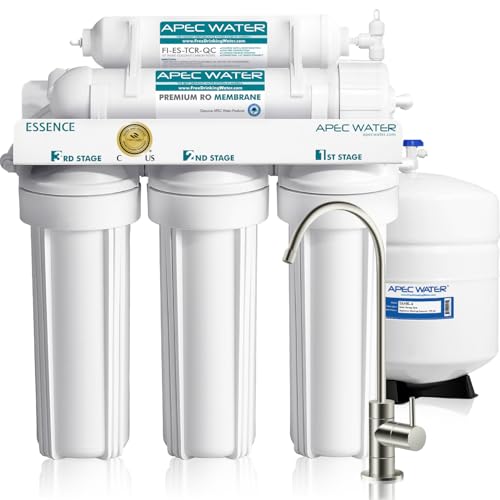
Cheap to run, at about $45 to $90 a year in filters, but WQA certifies it for dissolved solids only. For certified lead and fluoride reduction at a similar price, look at the iSpring RCC7AK-BN or APEC's own RO-90.
iSpring or APEC: Which Should You Buy?
Pick the iSpring RCC7AK-BN if
You want certified lead and fluoride reduction from a budget under-sink RO, and you like its alkaline stage, which adds minerals back.
Pick the APEC ROES-50 if
You mainly want lower dissolved solids and the cheapest filters, about $45 to $90 a year.
Consider the APEC RO-90 if
You prefer APEC and want certified lead, fluoride, and arsenic reduction. Our APEC RO-90 review.
Can’t install under the sink?
The AquaTru Carafe is countertop RO certified for lead, fluoride, and PFOA/PFOS, with no plumbing.
Common questions
iSpring RCC7AK or APEC ROES-50: which should I buy?
The iSpring RCC7AK-BN, for most homes: NSF International certifies it for lead, fluoride, and dissolved solids, while WQA certifies the APEC ROES-50 for dissolved solids only. Buy the -BN or -BLK version of the iSpring.
Do they remove fluoride?
The iSpring RCC7AK-BN is certified for fluoride under NSF/ANSI 58. The APEC ROES-50’s fluoride figure is APEC’s own claim. See our fluoride guide.
Do they remove PFAS?
Neither is certified for PFAS; both PFAS figures are the makers’ own. For certified PFOA/PFOS reduction under the sink, see the Waterdrop G3P800 or our PFAS filter guide.
Which costs less to run?
The APEC ROES-50, at about $45 to $90 a year in filters, against about $100 to $140 a year for the iSpring.
Which tastes better?
That’s personal. The iSpring has an alkaline stage that adds minerals back after reverse osmosis; the APEC ROES-50 delivers plain RO water with the minerals removed.
Sources
Prices as of October 14, 2026. Product prices and availability are accurate as of the date/time indicated and are subject to change. As an Amazon Associate we earn from qualifying purchases.