Health information, not medical advice. Guidance differs for infants, pregnancy, and existing conditions. Test your own water and speak to a doctor or your local health authority. We may earn a commission when you buy through our links; it never affects our scores.
The short answer
Radium in water is a naturally occurring radioactive metal from rock and soil that can end up in groundwater, including private wells. The EPA limits radium 226 and radium 228 combined to 5 pCi/L (picocuries per liter) in public water and lists the health effect as an increased risk of cancer. Private wells aren’t regulated, so it’s up to the owner to have the water tested by a certified lab. Water softeners (cation exchange) and reverse osmosis can both remove radium, and NSF lists a “Radium 226/228 Reduction” claim for both product types.
Where does radium in water come from?
Radium forms when uranium and thorium decay in the environment: Radium 226 comes from the uranium series and radium 228 from the thorium series. It’s present at trace levels in nearly all rock, soil, and water, and areas with more radium in rock and soil tend to have more in their groundwater. In drinking water, its source is erosion of natural deposits.
A USGS study sampled 1,270 wells in 15 principal aquifer systems across 45 states between 1990 and 2005. Combined radium was above the 5 pCi/L limit in about 3 percent of them, or 40 of 1,266 wells. In two aquifer systems, the Mid-Continent and Ozark Plateau Cambro-Ordovician and the Northern Atlantic Coastal Plain, more than 20 percent of sampled wells met or exceeded the limit.
The highest radium concentrations in that study were linked to water that is low in oxygen, acidic (low pH), or high in dissolved solids. No single radium isotope was consistently the one that pushed a well over the limit.
Is radium in water harmful?
The EPA lists the potential health effect of radium 226 and 228 above the limit as an increased risk of cancer. More broadly, and not specific to drinking water, chronic exposure to high levels of radium can result in an increased incidence of bone, liver, or breast cancer, according to the EPA.
Radium is a health hazard when ingested: Part of it may build up in bone, which over time can increase the risk of bone cancer, leukemia, and lymphoma (Massachusetts). Iowa HHS, citing the EPA and the National Academy of Sciences’ Committee on Biological Effects of Ionizing Radiation, says radium is a known human carcinogen. The federal health goal for combined radium is zero.
What are the limits for radium in drinking water?
The federal radium standards date from the Radionuclides Final Rule, published December 7, 2000.
| Agency | Value | What it’s for |
|---|---|---|
| EPA | 5 pCi/L | MCL (maximum contaminant level), enforceable, for radium 226 and radium 228 combined in public water |
| EPA | 15 pCi/L | Enforceable limit for gross alpha, not including radon and uranium |
| EPA | Zero | MCLG (maximum contaminant level goal), the health goal, for combined radium; not enforceable |
These limits apply to community water systems. Federal limits apply only to public water systems. Massachusetts notes there are no federal or state standards for private wells, and local boards of health typically use the public system standards.
How do you test for radium in water?
Use only laboratories certified for drinking water testing. Massachusetts recommends asking the lab to run a gross alpha test first: If gross alpha is 5 pCi/L or higher, order a radium test; if it’s below 5 pCi/L, radium testing isn’t needed. It also suggests at least two samples taken a month or two apart, and puts the cost of a radium 226 and 228 test at about $200 per sample.
Community water systems must report radionuclide information to customers each year in their Consumer Confidence Report. For a private well, see our well water guide.
How do you remove radium from water?
- Water softeners (cation exchange) remove about 95 percent of radium, according to the EPA, and are typically installed to treat all the water entering the home. They swap calcium and magnesium for sodium, which may matter for people on low-salt diets. See our hard water guide for how softeners work.
- Reverse osmosis removes radium at the tap but produces only small volumes, so it can’t treat a whole house. Radium generally needs removing only from water that will be consumed or used in food, so a point-of-use system at the kitchen tap may be all you need. See how reverse osmosis works and our reverse osmosis picks.
- Manganese greensand filters are another radium treatment option.
Look for a “Radium 226/228 Reduction” claim. NSF lists it as an optional claim under NSF/ANSI 58 for reverse osmosis systems, and its certified product listings offer the same claim under NSF/ANSI 44 for cation exchange water softeners. Not every certified unit carries it, so check the listing. More in our NSF certification guide.
Radium collects in treatment media. In smaller water supply systems that use ion exchange to soften water, radionuclides build up in the beads with prolonged use, and disposal of reverse osmosis reject water and used membranes is handled at the state level.
Which filters are certified for radium?
Each reverse osmosis system below is certified for radium 226/228 reduction under NSF/ANSI 58, with the certifier on each card.
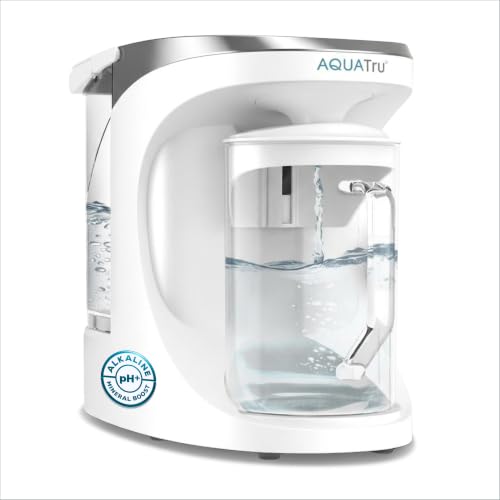
AquaTru Carafe

AquaTru Classic
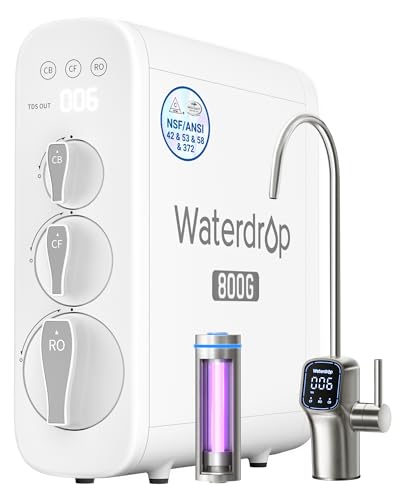
Waterdrop G3P800

APEC RO-90
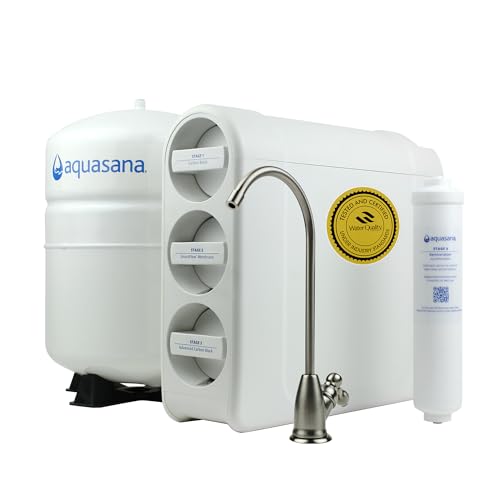
Aquasana SmartFlow RO
Common questions
Does a water softener remove radium?
Yes. Ion exchange units, also known as water softeners, can remove radium, and NSF/ANSI 44 has a “Radium 226/228 Reduction” claim for softeners.
Does reverse osmosis remove radium?
It can. NSF/ANSI 58 includes an optional Radium 226/228 reduction claim for reverse osmosis systems. Reverse osmosis treats small volumes, not the whole house.
What is the difference between gross alpha and radium?
Gross alpha is a separate measurement with its own 15 pCi/L limit, which does not include radon and uranium. One approach uses a gross alpha result of 5 pCi/L or more as the trigger to test for radium itself.
Is radium in private wells regulated?
No. Federal limits cover radium in community water systems, but private wells are not regulated. In Massachusetts, a local board of health may set private well standards.
Does radium in water turn into radon?
Radium decays into radon gas, which the EPA calls the second leading cause of lung cancer in the United States. Radon in water needs its own test, using a special sample vial, separate from the gross alpha test.
Sources
Prices as of November 1, 2026. Product prices and availability are accurate as of the date/time indicated and are subject to change. As an Amazon Associate we earn from qualifying purchases.