Health information, not medical advice. Guidance differs for infants, pregnancy, and existing conditions. Test your own water and speak to a doctor or your local health authority. We may earn a commission when you buy through our links; it never affects our scores.
The short answer
TDS (total dissolved solids) in water is the amount of inorganic salts and small amounts of organic matter dissolved in it. The EPA’s secondary standard is 500 mg/L, a non-enforceable guideline for taste, staining, and deposits. The WHO proposes no health-based guideline for TDS, and a TDS number alone doesn’t tell you which substances are in your water. Home TDS meters estimate the level from electrical conductivity. Reverse osmosis lowers TDS, and TDS reduction is the required claim in NSF/ANSI 58, the reverse osmosis standard.
What is TDS in water?
TDS covers the inorganic salts and small amounts of organic matter dissolved in water. The main ones are usually calcium, magnesium, sodium, and potassium, with carbonate, hydrogencarbonate, chloride, sulfate, and nitrate. To count toward TDS, a dissolved compound has to be small enough to pass through a 2-micrometer sieve.
Where does TDS in water come from?
TDS comes from natural sources, sewage, urban and agricultural runoff, and industrial wastewater. Other contributors include bedrock and salt deposits, saltwater intrusion in coastal areas, septic systems, road de-icing compounds, and wastewater from mining and gas drilling.
Is high TDS in water harmful?
TDS isn’t a health measure by itself. The WHO says reliable data on health effects of TDS in drinking water aren’t available and proposes no health-based guideline value.
What matters is what makes up the TDS. A TDS test measures the amount but doesn’t identify the individual compounds or their sources. Elevated TDS may point to potentially harmful contaminants such as nitrates, metals, or agricultural or industrial chemicals. Because the test doesn’t identify what’s dissolved, neither a high nor a low reading tells you which substances are present.
Different dissolved solids cause different problems:
- Calcium and magnesium: Hard water, scale, and soap scum. See hard water.
- Sodium and chloride: Salty taste and corrosion of pipes and water heaters.
- Iron and manganese: Metallic taste and staining. See manganese.
- Sulfur compounds: Odor, bitter or salty taste, and a possible laxative effect.
What is a good TDS level for drinking water?
The EPA’s secondary standard for TDS is 500 mg/L, tied to hardness, deposits, colored water, staining, and salty taste. Secondary standards aren’t federally enforced.
Taste panels have rated water by TDS level as follows:
| TDS (mg/L) | Taste rating |
|---|---|
| Less than 300 | Excellent |
| 300 to 600 | Good |
| 600 to 900 | Fair |
| 900 to 1,200 | Poor |
| Greater than 1,200 | Unacceptable |
Water below 1,000 mg/L is usually acceptable to consumers, though that can vary. These bands are about taste, not safety.
How do you test TDS in water?
TDS meters. Water conducts electricity because of the dissolved minerals (ions) in it. A TDS meter measures electrical conductivity and estimates TDS by multiplying that reading by a conversion factor. That factor varies with the type of water, and meters need regular calibration.
Private wells. The EPA says to test private wells every year for total coliform bacteria, nitrates, total dissolved solids, and pH. It also suggests testing for TDS if there’s a salty taste and seawater or a heavily salted road nearby, or if a dump, junkyard, landfill, factory, gas station, or dry-cleaning operation is nearby. If annual testing shows a significant increase in TDS compared to a prior year, Virginia Tech suggests more testing to check for dangerous contamination. See our well water guide.
How do you lower TDS in water?
- Reverse osmosis is often used to reduce total dissolved solids. See how reverse osmosis works.
- Distillation removes sodium, calcium, magnesium, and other dissolved solids.
- Activated carbon doesn’t remove hardness minerals, fluoride, nitrate, and many other compounds.
The right treatment depends on the specific compounds present, so test first.
TDS reduction is the one required claim in NSF/ANSI 58, the standard for reverse osmosis systems. Look for NSF/ANSI 58 certification on the certifier’s listing, and compare systems in our reverse osmosis guide.
Is zero TDS water good to drink?
Very low TDS isn’t ideal for taste. Water with extremely low TDS may be unacceptable to consumers because of its flat, insipid taste, and it’s often corrosive to water-supply systems. People often describe distilled water as flat or bland. For the debate over minerals and remineralizing filters, see is reverse osmosis water good for you?
Which filters are certified to lower TDS?
Each reverse osmosis system below is certified for TDS reduction under NSF/ANSI 58, with the certifier on each card.
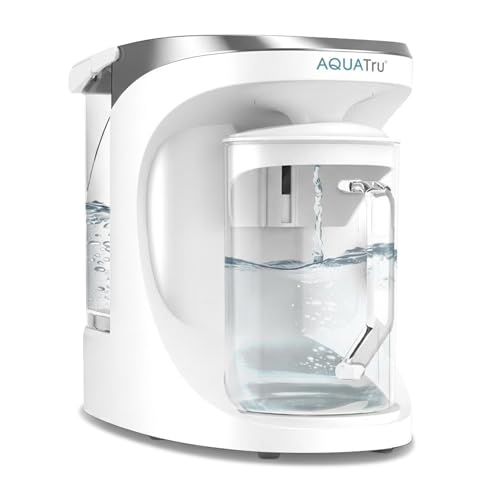
AquaTru Carafe

AquaTru Classic
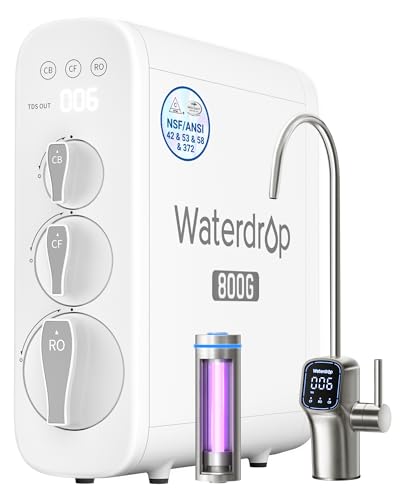
Waterdrop G3P800

APEC RO-90
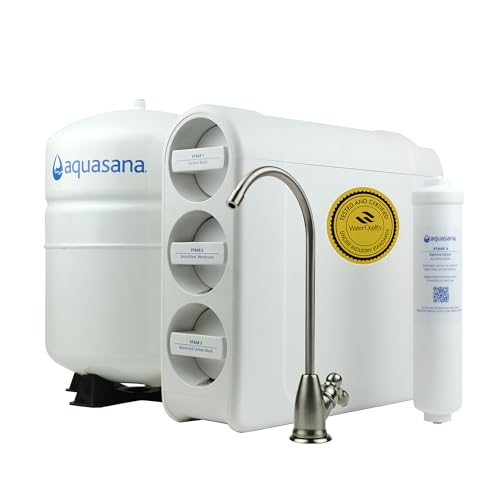
Aquasana SmartFlow RO
Common questions
What is a safe TDS level for drinking water?
The EPA’s 500 mg/L secondary standard is a non-enforceable guideline for taste and staining. Reliable data on the health effects of TDS in drinking water aren’t available.
Does a low TDS reading mean my water is safe?
No. A TDS test measures the amount of dissolved compounds but doesn’t identify them. Test for specific contaminants at a certified lab.
How does a TDS meter work?
It measures electrical conductivity and multiplies it by a conversion factor to estimate TDS.
Does reverse osmosis remove TDS?
Yes, it’s often used to reduce TDS, and TDS reduction is required for NSF/ANSI 58 certification.
How often should I test my well for TDS?
Every year, along with total coliform bacteria, nitrates, and pH, the EPA says.
Sources
- EPA: Secondary drinking water standards
- EPA: Protect your home’s water
- WHO: Total dissolved solids in drinking-water (background document)
- Virginia Tech Extension: 442-666, Total dissolved solids
- NDSU Extension: WQ1923, EC and TDS meters
- Nebraska Extension: G1490, Reverse osmosis
- Nebraska Extension: G1493, Distillation
- Nebraska Extension: G1489, Activated carbon filtration
- NSF: NSF/ANSI 58
Prices as of October 14, 2026. Product prices and availability are accurate as of the date/time indicated and are subject to change. As an Amazon Associate we earn from qualifying purchases.