Health information, not medical advice. Guidance differs for infants, pregnancy, and existing conditions. Test your own water and speak to a doctor or your local health authority. We may earn a commission when you buy through our links; it never affects our scores.
The short answer
Copper in water usually comes from your own plumbing, when corrosive water dissolves copper pipes and fittings. Signs include blue-green stains on fixtures and a metallic or bitter taste. The EPA’s action level and health goal are both 1.3 mg/L, and too much copper can cause nausea, vomiting, and diarrhea (ATSDR). Running the cold tap before use lowers levels when water has sat in the pipes. Reverse osmosis, distillation, and filters certified for copper reduction can reduce it; boiling cannot.
Where does copper in water come from?
Copper in drinking water comes from corrosion of household plumbing and erosion of natural deposits. Levels can be high when a home has copper plumbing and acidic water. Water chemistry plays a part too: Connecticut says acidic (low pH) water tends to be corrosive, and that water softeners can make water more corrosive.
Common signs are blue-green stains on plumbing fixtures and a bitter metallic taste. Pinholes and pitting in pipes can also point to corrosive water (Minnesota). The WHO says copper stains laundry and sanitary ware above 1 mg/L and gives water an undesirable bitter taste above 2.5 mg/L. For other staining causes, see how to remove hard water stains.
Is copper in water harmful?
Copper is an essential nutrient found in many foods, but too much can make you sick. Above the action level, the EPA says, short-term exposure can cause gastrointestinal distress and long-term exposure can cause liver or kidney damage. ATSDR says drinking water high in copper can cause vomiting, nausea, abdominal pain, or diarrhea.
Some people are more sensitive to copper, including people with Wilson’s disease and some infants (babies under one year old), Minnesota says. The EPA says anyone with Wilson’s disease should consult their doctor if their water exceeds the action level. The WHO notes some uncertainty about long-term effects in sensitive groups, including carriers of the Wilson disease gene. Massachusetts advises using bottled or filtered water for infant formula when tap water copper is known to be high. See our baby formula water guide.
What are the limits for copper in drinking water?
Copper has no MCL. Like lead, it is regulated under the Lead and Copper Rule by a treatment technique that requires water systems to control how corrosive their water is; if more than 10 percent of tap samples exceed the action level, the system must take more steps. The action level is exceeded when the 90th percentile of samples is above 1.3 mg/L.
| Agency | Value | What it’s for |
|---|---|---|
| EPA | 1.3 mg/L | Action level that triggers corrosion control steps for public water systems |
| EPA | 1.3 mg/L | MCLG (health goal); not enforceable |
| EPA | 1.0 mg/L | Secondary guideline for metallic taste and blue-green staining; not enforced |
| WHO | 2 mg/L | Guideline set to protect against acute gastrointestinal effects (WHO) |
The Lead and Copper Rule Improvements, published in October 2024, lower the lead action level but keep the copper action level at 1.3 mg/L. As of October 2026, the rule’s compliance date is November 1, 2027. Under the rule, a water system’s tap monitoring schedule depends on both its lead and its copper results. For the lead changes, see our lead page.
How do you test for copper in water?
Use a certified laboratory; Massachusetts puts the typical cost at $20 to $40. Take a first-draw sample from the cold tap, with the aerator removed, after the water has sat unused in the plumbing for at least six hours, then a second sample after flushing. If the first draw is much higher, the copper is likely coming from your household plumbing; if both are about the same, the source is likely outside the house. Testing is important if an infant or someone with Wilson’s disease drinks the water.
How do you remove copper from water?
- Flush stagnant water. If water has not been used for more than six hours, let it run for at least 30 to 60 seconds before drinking or cooking. Flushing only works as a fix when flushed samples show little or no copper.
- Use cold water for drinking, cooking, and formula, because hot water dissolves more copper from pipes.
- Reverse osmosis, distillation, or ion exchange with a resin designed for copper can treat water at the tap. See how reverse osmosis works.
- Corrosion control fixes the cause. On a private well, a system that raises low pH, such as a whole-house calcite unit, may help, and copper plumbing parts can be replaced with approved plastic where practical. Public water systems are required to control corrosiveness under the Lead and Copper Rule.
- Boiling does not remove copper and may increase copper levels.
Look for a copper reduction certification. NSF/ANSI 58 (reverse osmosis) includes copper reduction as an optional claim, and copper reduction is also certified under NSF/ANSI 53 for some filters. WQA, for example, certifies the LifeStraw Home Glass pitcher for copper under NSF/ANSI 53. Not every certified filter carries this claim, so check the listing for the exact model. See our NSF certification guide.
Which filters are certified for copper?
Each filter below is certified for copper reduction, with the certifier and standard on each card.
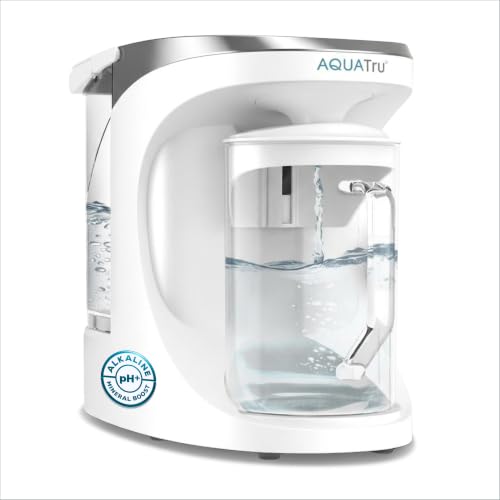
AquaTru Carafe

AquaTru Classic
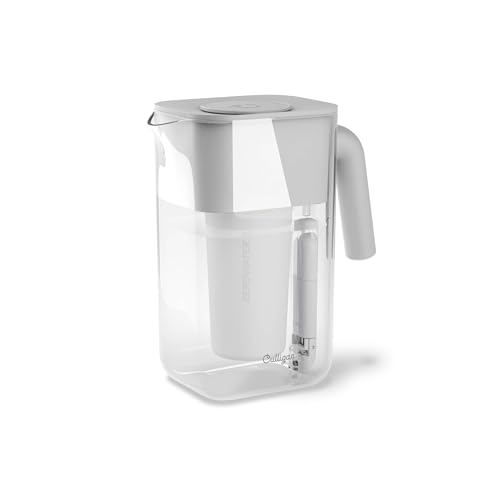
Culligan ZeroWater

APEC RO-90
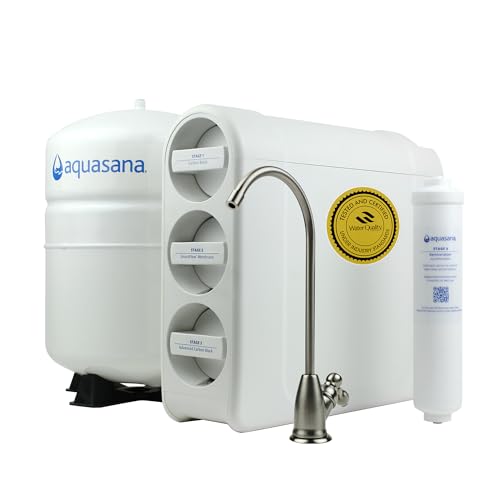
Aquasana SmartFlow RO
Common questions
Does boiling water remove copper?
No. Boiling does not eliminate copper, and it may increase copper levels (Massachusetts).
What causes blue-green stains in sinks and tubs?
Blue-green stains on plumbing fixtures are a sign of high copper, usually from corroding household plumbing. The EPA’s secondary guideline for copper staining and taste is 1.0 mg/L.
Is there an EPA limit for copper in drinking water?
There is no MCL. The EPA uses a 1.3 mg/L action level, which triggers corrosion control steps for public water systems, and a 1.3 mg/L health goal.
Did the 2024 lead rule change the copper limit?
No. The Lead and Copper Rule Improvements lower the lead action level, while the copper action level stays at 1.3 mg/L.
How long should I run the tap to flush out copper?
If the water has not been turned on in over six hours, Minnesota advises at least 30 to 60 seconds. Connecticut suggests running cold water until it feels as cold as it gets, or about 1 minute, after it has sat unused for more than six hours.
Sources
Prices as of November 1, 2026. Product prices and availability are accurate as of the date/time indicated and are subject to change. As an Amazon Associate we earn from qualifying purchases.