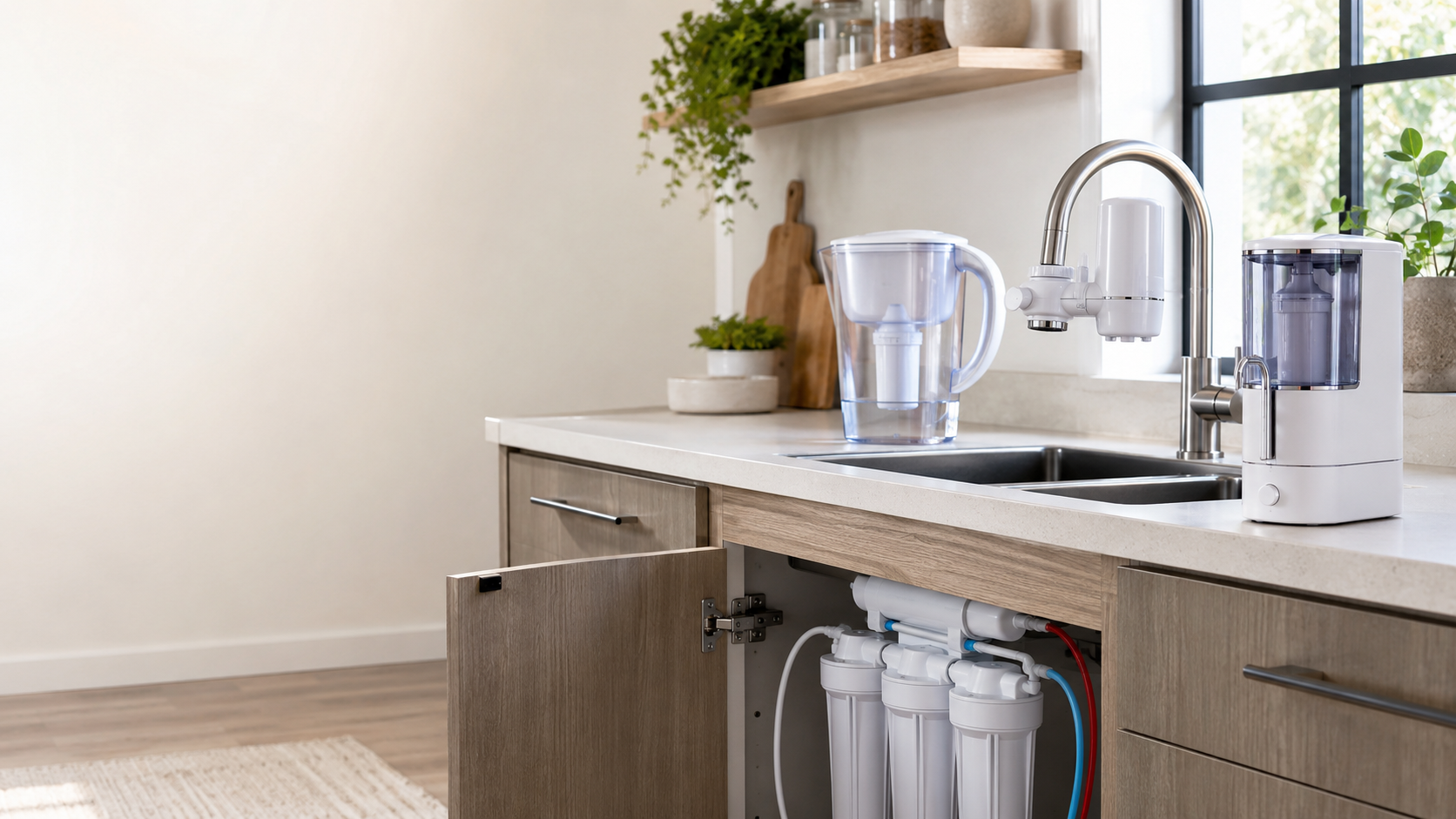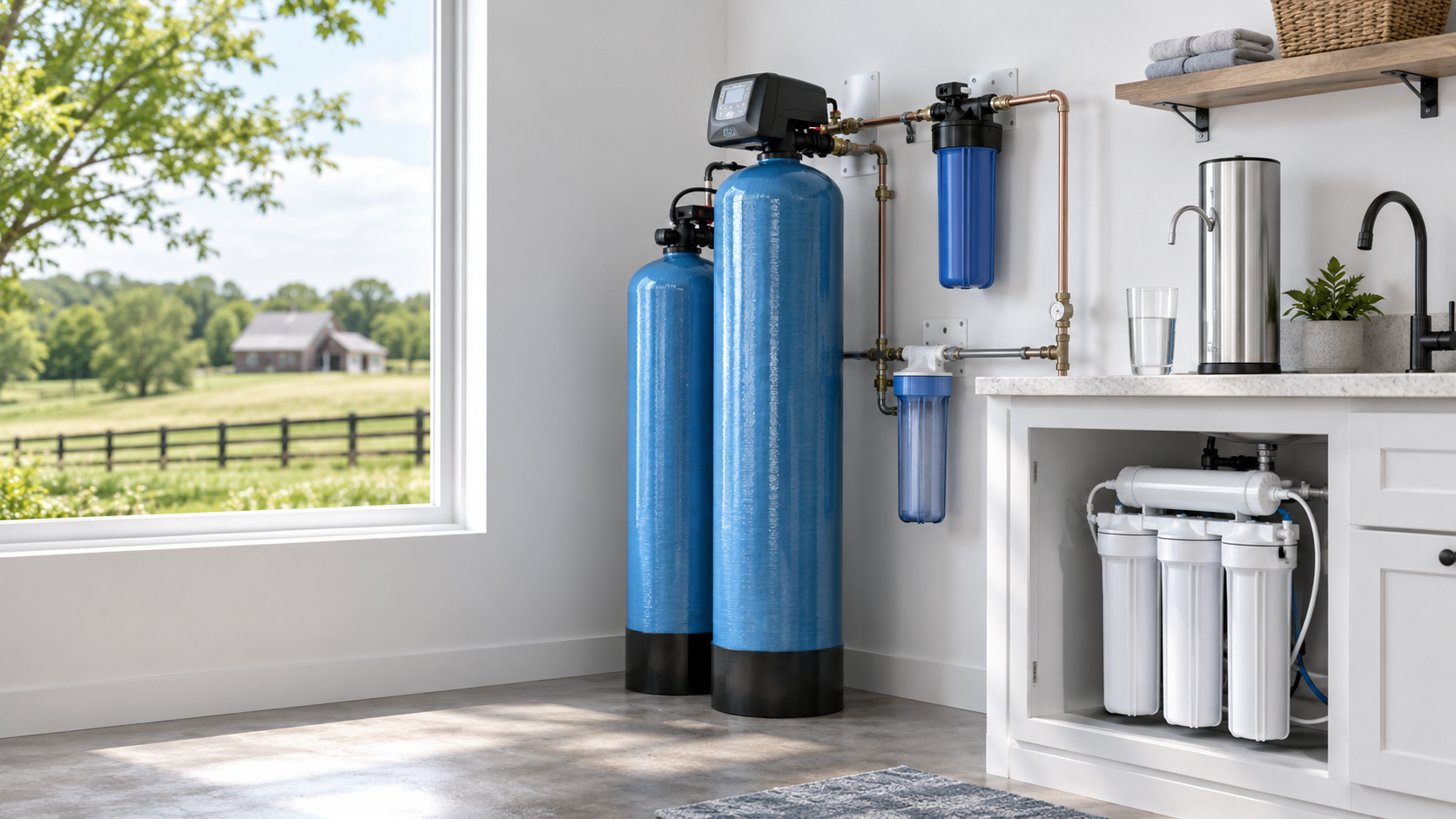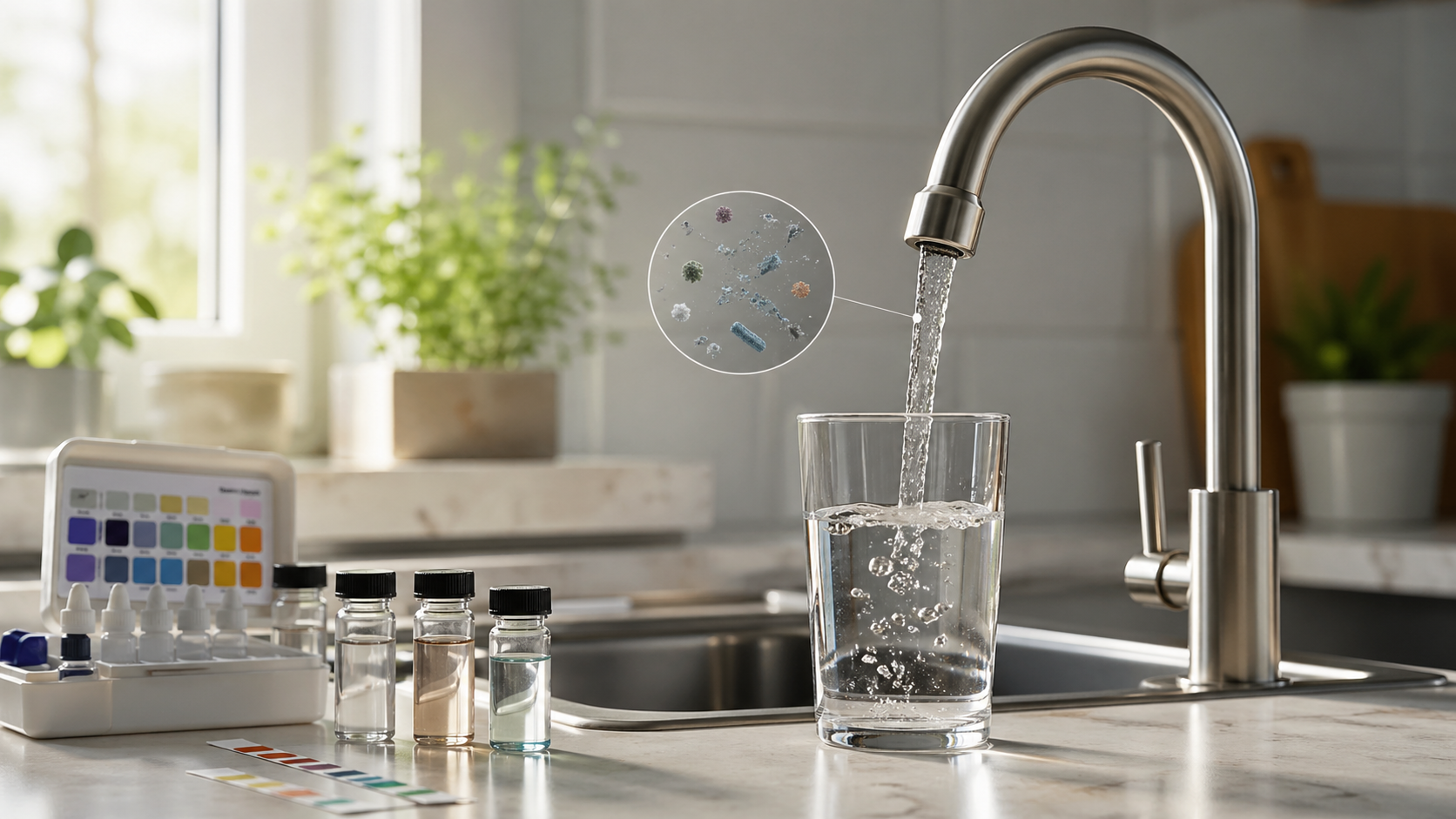
Most Americans turn on the tap expecting clean water. And for the most part, they get it — US municipal water treatment is among the most advanced in the world, and waterborne disease outbreaks from treated public water are rare. But “treated” and “pure” are not the same thing. The EPA’s most recent analysis of drinking water data identified 324 distinct contaminants in US tap water across community water systems. The agency currently regulates about 90 of them.
That gap — between what’s in the water and what’s regulated — is where most tap water concerns live. Some of the unregulated contaminants are benign. Others, like PFAS and certain disinfection byproducts, have been linked to serious long-term health effects even at concentrations below current legal limits. And even where regulations exist, many of the EPA’s maximum contaminant levels (MCLs) haven’t been updated in decades, meaning the legal standard reflects 1990s science rather than current health research.
This guide covers every major contaminant category found in US tap water: where it comes from, what health effects it’s linked to, how common it is, and what filter technology removes it. It’s designed to help you read your water quality report intelligently and understand exactly what you’re dealing with before choosing a filter.
How Tap Water Gets Contaminated
Understanding where contamination comes from helps explain why it’s so widespread. There are four main pathways.
The first is the source water itself. Lakes, rivers, reservoirs, and groundwater aquifers absorb runoff from agriculture (pesticides, nitrates, animal waste), industrial discharge (heavy metals, solvents, PFAS), and natural geological sources (arsenic, radon, uranium, fluoride). Even before treatment, source water can carry a wide range of contaminants.
The second is the treatment process. Water treatment plants add disinfectants — primarily chlorine or chloramine — to kill pathogens. This is essential for public health, but when these disinfectants react with natural organic matter in the water, they form disinfection byproducts (DBPs) like trihalomethanes and haloacetic acids. Treatment introduces new contaminants even as it removes others.
The third is the distribution system. Water travels through hundreds or thousands of miles of pipe between the treatment plant and your tap. Older pipes can leach lead, copper, and iron. Pipe materials and corrosion conditions vary enormously, which is why the same utility’s water can have very different lead levels at different addresses within the same city.
The fourth is household plumbing. In homes built before 1986, lead solder and lead-containing fixtures may still be present. Even in newer homes, brass faucets and fixtures can contain trace amounts of lead and copper. This is why testing your tap directly — not just reading your utility’s report — is the only reliable way to know what’s actually coming out of your faucet.
The Major Contaminant Categories
Disinfectants and Disinfection Byproducts
Chlorine and chloramine are intentionally added to municipal water to prevent waterborne illness. At the concentrations used, the EPA considers them safe for drinking. Most people notice the smell and taste before any health concern arises, and basic carbon filtration removes both effectively.
The concern is what happens when these disinfectants react with naturally occurring organic matter in the water. Trihalomethanes (THMs) — including chloroform, bromodichloromethane, and bromoform — form from this reaction. So do haloacetic acids (HAAs). Together, these are called disinfection byproducts, and the EPA regulates them as groups (Total THMs at 80 ppb and HAA5 at 60 ppb). Long-term exposure to elevated DBP levels has been associated with increased bladder cancer risk and other health effects.
DBPs are nearly universal in chlorinated municipal water. They’re found at legally compliant levels in the vast majority of systems, but health researchers — including the EWG — argue that the legal limits don’t adequately reflect what long-term exposure at those concentrations does to human health. Activated carbon filtration reduces DBPs reliably.
Lead
Lead does not typically originate in source water or at the treatment plant. It enters drinking water through corrosion of household plumbing — lead service lines (the pipes that connect a home to the water main), lead solder used in copper pipe joints prior to 1986, and brass fixtures and faucets. There is no safe level of lead exposure, particularly for children and pregnant women. It causes irreversible neurological damage.
An estimated 9 to 12 million homes in the US still receive water through lead service lines. Millions more have lead solder in their interior plumbing. Because lead contamination comes from household plumbing rather than the utility’s treatment plant, your Consumer Confidence Report can show clean lead levels while your tap water contains elevated lead. The only way to know for certain is to test your specific tap.
NSF/ANSI 53-certified filters reliably reduce lead. All pitcher filters claiming lead removal, quality faucet mounts, under-sink systems, and RO systems with this certification have been independently verified.
PFAS (Per- and Polyfluoroalkyl Substances)
PFAS are a family of over 12,000 synthetic chemicals used since the 1940s in non-stick cookware, firefighting foam, food packaging, stain-resistant fabrics, and countless industrial applications. They’re called “forever chemicals” because they don’t break down in the environment or in the human body. They accumulate in tissue over time.
More than 143 million Americans are estimated to have PFAS in their drinking water. Contamination is concentrated near military bases (where AFFF firefighting foam was used extensively), industrial facilities, airports, and certain agricultural areas. In April 2024, the EPA finalized the first enforceable PFAS drinking water standards in US history, setting limits of 4 parts per trillion (ppt) for PFOA and PFOS. The compliance deadline for public water systems is 2031.
PFAS exposure has been associated with kidney cancer, testicular cancer, thyroid disease, immune system disruption, reduced vaccine effectiveness, and developmental harm in children. In April 2026, PFAS were added to the EPA’s draft sixth Contaminant Candidate List, potentially opening the door to broader regulatory action, though any new enforceable standards are likely years away.
Effective removal requires either reverse osmosis or NSF 473-certified carbon block filters. Standard activated carbon pitcher filters do not reliably remove PFAS.
Nitrates
Nitrates are compounds containing nitrogen and oxygen that enter drinking water primarily from agricultural fertilizer runoff, animal waste, and septic system discharge. They’re most prevalent in rural areas near farmland and in private wells. Municipal water systems test for and treat nitrates, but private well owners receive no monitoring and may be unaware of contamination.
At elevated levels, nitrates are particularly dangerous for infants under six months old, causing “blue baby syndrome” (methemoglobinemia), a potentially fatal condition where nitrates interfere with the blood’s ability to carry oxygen. The EPA’s MCL for nitrates is 10 mg/L (10 ppm). In many agricultural states, private well testing has found nitrate levels well above this threshold.
Reverse osmosis and full ion exchange systems (like ZeroWater) remove nitrates effectively. Standard activated carbon filters do not.
Arsenic
Arsenic is a naturally occurring element found in certain rock formations. It dissolves into groundwater in affected geological areas and is also released through industrial processes, mining, and agricultural use of arsenic-based pesticides. Arsenic is classified as a human carcinogen, associated with bladder, lung, and skin cancers at elevated exposure levels.
The EPA MCL for arsenic is 10 ppb, but health researchers have argued that this limit — last updated in 2001 — is too permissive given more recent cancer risk data. The EWG recommends a health guideline of 0.004 ppb, far below the legal limit. Arsenic at levels between the EWG guideline and the EPA limit is legally compliant but associated with some increase in cancer risk over a lifetime of consumption.
Arsenic is particularly common in the Southwest, New England, parts of the Midwest, and areas with specific geological characteristics. Well water testing is essential in affected regions. Reverse osmosis removes 90 to 99% of arsenic.
Heavy Metals
Beyond lead and arsenic, several other heavy metals appear regularly in US drinking water.
Copper enters water primarily through household plumbing corrosion. The EPA action level is 1.3 mg/L (1,300 ppb). At high levels, copper causes gastrointestinal distress and, with long-term exposure, liver and kidney damage. It’s most common in homes with newer copper pipes where water is corrosive.
Chromium-6 (hexavalent chromium) is a known carcinogen most famously associated with the Hinkley, California groundwater contamination case. It occurs naturally in some geological formations and is also released from industrial facilities. The EPA currently regulates total chromium at 0.1 mg/L but does not set a separate limit for chromium-6. The EWG’s health guideline is 0.02 ppb, far below the legal limit.
Barium, cadmium, mercury, and selenium also appear in water systems at varying concentrations. Barium comes from drilling and industrial discharge; cadmium from corrosion of galvanized pipes and industrial runoff; mercury from industrial and mining operations. All are regulated by the EPA at varying MCLs.
Reverse osmosis and NSF 53-certified filters address most heavy metals. Specific performance varies by product and certification scope.
Microplastics
Microplastics (particles smaller than 5 millimeters) have been found in 94% of US tap water samples tested. They originate from the breakdown of larger plastic waste in the environment, synthetic textile fibers, plastic pipe materials, and manufacturing processes. In April 2026, the EPA added microplastics to its draft Contaminant Candidate List for the first time — a step toward potential future regulation, though enforceable standards are likely years away.
The health effects of microplastic ingestion from drinking water are still being studied. A 2024 study in the New England Journal of Medicine found patients with microplastics in carotid artery plaque had significantly elevated rates of cardiovascular events. A 2025 study found detectable microplastics in human brain tissue. Causal pathways are not yet fully established, but concern among researchers is increasing.
An important counterintuitive finding: bottled water contains significantly more microplastics than tap water in most tests, because particles leach from the plastic bottle and cap itself.
Reverse osmosis and NSF 401-certified sub-micron filters remove microplastics. Standard carbon pitcher filters do not provide certified microplastic reduction.
Volatile Organic Compounds (VOCs)
VOCs are a class of chemicals that vaporize easily at room temperature and include solvents, fuel components, and industrial chemicals. Common ones found in drinking water include trichloroethylene (TCE), tetrachloroethylene (PCE), benzene, and MTBE (methyl tert-butyl ether). Sources include underground storage tank leaks, industrial spills, dry cleaning facilities, and contaminated groundwater near industrial sites.
Many VOCs are classified as possible or probable human carcinogens. TCE and PCE, both dry cleaning and degreasing solvents, have been associated with kidney cancer, non-Hodgkin lymphoma, and neurological effects. MTBE, a gasoline additive, affects taste and odor at very low concentrations and is a possible carcinogen at higher levels.
Activated carbon filtration — particularly solid carbon block filters with longer contact time — is effective at removing most VOCs. This is one area where pitcher and under-sink carbon filters perform well.
Pharmaceuticals and Emerging Contaminants
Pharmaceuticals enter water systems through human excretion, improper medication disposal, and runoff from livestock operations. Water treatment plants are generally not designed to remove pharmaceutical compounds, and many pass through conventional treatment into finished drinking water. Common detections include hormones, antibiotics, antidepressants, blood pressure medications, and pain relievers.
In April 2026, the EPA added pharmaceuticals to its draft sixth Contaminant Candidate List alongside microplastics — the first time either has been formally considered for drinking water regulation. Research into health effects at the concentrations typically found in drinking water is ongoing. Most individual detections are at very low concentrations, but the long-term effects of chronic low-level exposure to mixtures of pharmaceutical compounds are not well understood.
Some advanced carbon block filters and RO systems reduce pharmaceutical concentrations. NSF 401 certification covers some pharmaceutical compounds.
Radon and Radiological Contaminants
Radon is a naturally occurring radioactive gas that dissolves into groundwater from uranium-containing rock. It’s most prevalent in New England, the Appalachians, parts of the Rocky Mountain region, and areas with granite bedrock. The primary radon exposure concern is inhalation (in which context it’s the second leading cause of lung cancer in the US), but ingested radon from water also carries cancer risk.
Uranium also occurs naturally in groundwater in certain geological formations, particularly in the Southwest and Plains states. Both radium-226 and radium-228 appear in water from some aquifers, particularly in the Midwest.
These contaminants are more relevant for well water than for most municipal systems, which treat for them. RO systems remove radium and uranium effectively. Radon in water can be partially removed by activated carbon (it adsorbs to the carbon over time) but aeration is more effective.
Fluoride
Approximately 63% of Americans receive fluoridated municipal water at the recommended level of 0.7 mg/L, which the CDC and other health agencies have endorsed as safe and beneficial for dental health. The EPA’s MCL for fluoride is 4.0 mg/L (10 times the recommended level), and a non-enforceable secondary standard of 2.0 mg/L addresses cosmetic effects like dental fluorosis.
In areas with naturally occurring fluoride in groundwater (particularly in the Southwest, parts of the Mountain West, and some rural areas), levels can significantly exceed the recommended range without any utility adding it. Naturally occurring fluoride at high concentrations is a different concern from low-level municipal fluoridation and is associated with dental and skeletal fluorosis and, at very high levels, developmental effects.
The regulatory picture around fluoride is actively shifting in 2026. Utah banned fluoride in public water, Florida restricted local fluoridation programs, and federal health officials have initiated a review of current recommendations. Whether your utility fluoridates is disclosed in your Consumer Confidence Report.
Reverse osmosis and full ion exchange (ZeroWater) reliably remove fluoride. Activated alumina add-on filters (like Berkey’s PF-2) provide additional fluoride reduction in gravity systems. Standard carbon filters do not remove fluoride.
Hardness Minerals
Calcium and magnesium are the minerals responsible for “hard water.” They’re not health hazards at typical concentrations in drinking water — in fact, calcium and magnesium from water contribute usefully to dietary mineral intake. Their problems are practical rather than medical: scale buildup in pipes and appliances, poor soap lather, spots on dishes and glassware, and accelerated wear on water-using appliances.
Hard water affects roughly 85% of US homes. Concentration varies significantly by region: the Southwest, Great Plains, and parts of the Midwest have the hardest water, while the Pacific Northwest and New England tend to have softer water.
Water softeners using ion exchange remove calcium and magnesium. Salt-free conditioners change their form to prevent scale without removing them. RO systems and full ion exchange pitchers (ZeroWater) also remove hardness minerals alongside everything else.
The Gap Between “Legal” and “Safe”
One of the most important things to understand about tap water quality is the difference between water that meets EPA legal standards and water that is free from health risk. These are not the same thing, and the gap between them is significant.
The EPA currently regulates about 90 contaminants. EWG’s tap water database has identified 324 contaminants in US water systems. Most of those unregulated contaminants are present at low concentrations where health effects are uncertain or contested. But some — PFAS being the most prominent example — were present at concentrations associated with real health risk for years before any regulatory limit was set.
Even for regulated contaminants, MCLs reflect a balance between health protection and what’s feasible for water utilities to achieve technically and economically. They are not set purely on health grounds. The EPA’s Maximum Contaminant Level Goals (MCLGs) — which are set on health grounds alone, without feasibility constraints — are often much lower than the enforceable MCLs. For lead, the MCLG is zero. For PFOA, the MCLG is also zero. The enforceable limits are higher, reflecting what’s technically achievable.
For most people, city tap water meeting all EPA MCLs poses minimal acute health risk. The concerns are primarily about long-term, chronic exposure to low concentrations of compounds where health effects accumulate over time. The decision to filter is ultimately a personal risk tolerance decision, informed by what your specific water contains and what level of precaution you want to take.
How to Find Out What’s in Your Water
The EWG Tap Water Database (ewg.org/tapwater) is the most accessible starting point for municipal water users. Enter your zip code to see which contaminants have been detected in your utility’s water, at what concentrations, and how those levels compare to both the EPA’s legal limits and EWG’s stricter health guidelines.
Your utility’s Consumer Confidence Report (CCR), published annually and available on your utility’s website, is the primary source document. It lists all detected contaminants and whether any exceed EPA limits. By law it must be made available to every customer.
If you’re on a private well, neither of these resources applies. Testing is entirely your responsibility. A certified laboratory test covering the most relevant contaminants for your area and land use is the only reliable way to know what’s in your well water.
For city water users who want to know what’s coming out of their specific tap — particularly for lead, which varies based on household plumbing — at-home testing kits from services like Tap Score or SimpleLab provide the most accurate picture of your actual drinking water.
Contaminant Quick Reference
The table below summarizes the major contaminants covered in this guide, their primary source, and the filter technologies that remove them.
| Contaminant | Primary Source | Filter That Removes It |
|---|---|---|
| Chlorine / Chloramine | Added by utility | Activated carbon / Catalytic carbon |
| THMs / HAAs (DBPs) | Treatment reaction | Activated carbon |
| Lead | Household plumbing | NSF 53-certified carbon, RO |
| PFAS | Industrial / military | RO, NSF 473-certified carbon block |
| Nitrates | Agricultural runoff | RO, ion exchange |
| Arsenic | Geological, industrial | RO |
| Copper | Household plumbing | NSF 53-certified carbon, RO |
| Chromium-6 | Geological, industrial | RO |
| Microplastics | Environmental plastic breakdown | RO, NSF 401/244 sub-micron filters |
| VOCs | Industrial, fuel leaks | Activated carbon block |
| Pharmaceuticals | Excretion, disposal | RO, NSF 401 carbon |
| Fluoride | Added by utility, geological | RO, ion exchange, activated alumina |
| Radon | Geological | Activated carbon (partial), aeration |
| Uranium / Radium | Geological | RO |
| Hardness (Ca/Mg) | Geological (source water) | Ion exchange softener, RO |